
Expédier ses effets personnels en Nouvelle-Zélande
Planifiez votre déménagement autour des règles douanières néo-zélandaises et des contrôles de biosécurité du MPI.
Vous préparez un déménagement en Nouvelle-Zélande ?
Déménager en Nouvelle-Zélande : douane, biosécurité et franchise
Cette page s’adresse aux personnes qui expédient des effets personnels et biens domestiques usagés vers la Nouvelle-Zélande.
Les douanes néo-zélandaises accordent souvent une franchise sur les biens usagés si vous vous installez pour la première fois ou revenez après au moins 21 mois d’absence, à condition que vous déteniez un document autorisant la résidence et que les biens aient été possédés et utilisés avant le départ. Les titulaires d’un visa d’étudiant n’y ont pas droit.
Les biens neufs ou non utilisés ne sont pas couverts. Les voitures, scooters, motos, bateaux, avions et biens commerciaux sont exclus.
Le vrai point de friction est souvent le MPI : équipements d’extérieur, chaussures, bois, graines, terre et matières organiques peuvent être inspectés, nettoyés ou retardés.
Un devis sérieux doit inclure l’emballage au départ, le fret, la douane, le risque MPI, la manutention portuaire ou aéroportuaire et la livraison finale.
La Nouvelle-Zélande est relativement claire sur les exonérations douanières et relativement stricte sur la biosécurité. Cette combinaison compte. Le volet douanier est souvent gérable si les faits de propriété et de résidence sont solides. Le côté MPI, lui, est la source habituelle des délais évitables et des coûts supplémentaires.
L'objectif opérationnel n'est pas seulement d'acheminer l'envoi à Auckland ou Christchurch. C'est de présenter un dossier et un profil de fret que les agents des douanes et de la biosécurité peuvent comprendre sans avoir à émettre des hypothèses en votre nom.
Les sections ci-dessous en font un plan de travail concret : qui est éligible aux exonérations, quels biens déclenchent une inspection supplémentaire, comment se comparent les principaux gateways, et à quel moment les coûts commencent à bouger.
Notre processus d’importation
Nous construisons les déménagements vers la Nouvelle-Zélande autour de l’éligibilité douanière, du risque MPI et du bon gateway avant le départ du fret.
Mois de pointe pour les expéditions vers la Nouvelle-Zélande
Si vos dates sont flexibles, évitez les périodes de déménagement les plus chargées et prévoyez suffisamment de marge pour le contrôle douanier et l'inspection MPI :
- Novembre à janvier
Les déménagements estivaux, les envois de fin d'année et la pression de clôture peuvent réduire l'espace sur les navires et accroître le risque de retards de livraison. - Janvier à février
Les déménagements liés à la rentrée scolaire et les mouvements post-fêtes maintiennent les équipes d'entreposage et de livraison locale sous pression. - Juillet à août
Les conditions hivernales et la volatilité des transbordements peuvent provoquer des glissements d'horaire sur certaines routes maritimes. - Toute période juste avant une remise de clés prévue
En Nouvelle-Zélande, les coûts de stockage et de re-livraison augmentent rapidement si votre date d'arrivée, la date d'accès au logement et le délai de dédouanement ne sont pas alignés.
Comprendre la douane néo-zélandaise
Le dédouanement des effets personnels en Nouvelle-Zélande comporte deux couches distinctes : l'éligibilité à l'exonération douanière néo-zélandaise et le contrôle de biosécurité du Ministry for Primary Industries (MPI). Vous devez satisfaire les deux, pas seulement l'une.
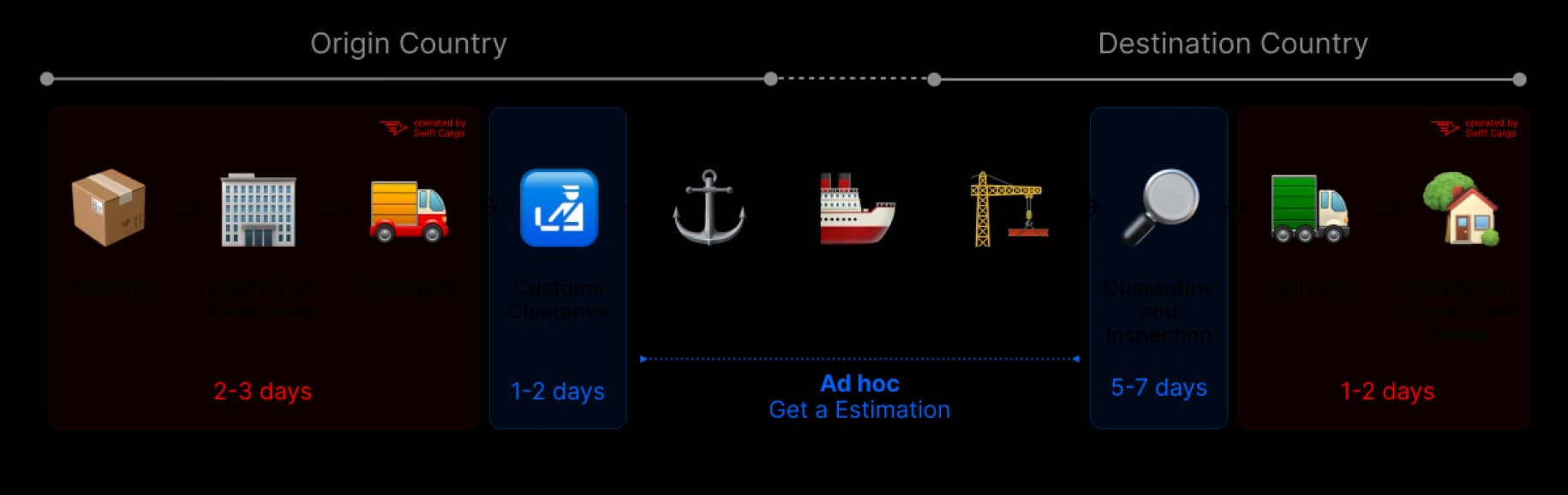
Documents requis pour importer des effets personnels en Nouvelle-Zélande
Le dossier standard pour un envoi d'effets personnels en Nouvelle-Zélande comprend généralement :
- Connaissement maritime ou lettre de transport aérien correspondant au destinataire et aux détails de l'envoi
- Copie du passeport et visa ou document de résidence qui vous donne droit à l'exonération
- Preuve que vous vous installez en Nouvelle-Zélande pour la première fois ou que vous revenez après un séjour suffisant à l'étranger lors de la demande d'exonération
- Inventaire détaillé de l'emballage indiquant le contenu de chaque carton ou colis
- Preuve que les biens étaient personnellement possédés et utilisés avant votre départ si la douane vous demande des justificatifs
- Déclaration NZCS 218 (Unaccompanied Personal Baggage Declaration, déclaration pour effets personnels non accompagnés) et Supplementary Biosecurity Declaration du MPI (déclaration biosécuritaire complémentaire), ainsi que toute procuration de courtier requise par votre transitaire. Vous devez demander le dédouanement avant l'arrivée des biens ou dans les 20 jours suivant leur arrivée.
- Adresse de livraison en Nouvelle-Zélande et coordonnées locales
Biosécurité MPI et risques de retard
Le MPI peut intervenir sur de nombreux articles ménagers courants s'ils ne sont pas propres et exempts de contamination biosécuritaire. Les catégories à risque élevé sont :
- Chaussures, chaussures de randonnée, tentes, équipements de camping, clubs de golf, vélos et équipements de sport en plein air avec de la terre, des graines ou des résidus organiques
- Outils de jardin, équipements de tonte, mobilier d'extérieur, barbecues et articles de garage
- Articles en bois, fibres naturelles, matières animales et articles fabriqués à partir de végétaux non traités
- Aliments, épices, graines, compléments alimentaires, produits médicinaux à base de plantes et produits agricoles
- Accessoires pour animaux de compagnie, sellerie, cages, équipement d'équitation et tout article ayant été en contact avec de la terre ou des animaux
Pour les arrivées accompagnées et non accompagnées
La Douane néo-zélandaise indique que vous n'avez pas à être physiquement présent en Nouvelle-Zélande lors de l'arrivée de votre envoi d'effets personnels. Ce qui compte, c'est que les éléments justifiant l'exonération et les documents de dédouanement tiennent la route au moment du traitement du fret.
Ce que vous pouvez importer en Nouvelle-Zélande

Effets personnels

Vêtements usagés

Appareils électroménagers

Objets fragiles

Objets de valeur

Meubles et objets volumineux

Bagages supplémentaires

Animaux de compagnie
Chats/chiens : permis et quarantaine de 10 jours minimum, sauf arrivées conformes d’Australie par avion

Véhicules
Certification et inspection ; volant à droite en général
Produits soumis à des restrictions en Nouvelle-Zélande

Plantes, graines, terre, bois non traité et fibres naturelles

Aliments, compléments alimentaires et produits d'origine agricole ou animale

Alcool, tabac et produits soumis à accise

Médicaments, stupéfiants et produits de santé contrôlés

Armes, armes à feu et équipements contrôlés

Ivoire
Permis requis ; peaux et corail inclus
Taille minimale et maximale de l'envoi
Nous sommes les plus performants sur les déménagements d'effets personnels plutôt que sur la redirection de colis :
- Envoi minimum : 6 cartons
C'est généralement le volume minimum à partir duquel la coordination douanière, la planification du fret et la livraison finale justifient encore un flux de déménagement complet.
- Pas de maximum pratique
Nous pouvons gérer des déménagements d'appartements, de maisons familiales complètes et de relocalisations multi-conteneurs lorsque l'inventaire et la stratégie de dédouanement sont solides.
En Nouvelle-Zélande, le facteur limitant est rarement la taille de l'envoi. C'est de savoir si les biens ressemblent toujours à des effets personnels défendables aux yeux des agents de la Douane et du MPI.
Guides officiels des douanes et de la biosécurité
Contacts utiles

Points de contact officiels des douanes et de la biosécurité néo-zélandaises pour la planification des effets personnels
Taxes et droits lors de l'importation en Nouvelle-Zélande
La Nouvelle-Zélande peut être très favorable pour les effets personnels usagés authentiques qui respectent les règles d'exonération et très directe sur tout ce qui en sort. La différence tient à la propriété, à l'usage antérieur, au statut migratoire et à l'éligibilité ou non de l'article au régime d'exonération.
Règles générales pour les marchandises entrant en Nouvelle-Zélande
- La plupart des effets personnels usagés peuvent être admis en franchise de TVA et de droits lorsque vous êtes éligible à l'exonération néo-zélandaise pour effets personnels.
- Les articles neufs et non utilisés ne sont pas éligibles et des droits de douane et la TVA s'appliquent.
- Les voitures, scooters, motos, bateaux, aéronefs et articles à usage commercial sont exclus du régime d'exonération pour effets personnels.
Conditions d'exonération
- Les personnes s'installant en Nouvelle-Zélande pour la première fois peuvent bénéficier du régime d'exonération pour la plupart des effets personnels usagés, à condition de détenir, au moment de l'importation des biens, un document autorisant la résidence : un passeport néo-zélandais ou australien, un visa de résidence néo-zélandais (ou de résident de retour) en cours de validité, un visa de résidence permanente australien en cours de validité, un visa de travail délivré pour au moins 12 mois (ou au titre de la catégorie Work to Residence ou Long Term Business) ou un visa de visiteur délivré pour au moins 3 ans (un visa à entrées multiples pour des séjours de six mois maximum ne compte pas). Les titulaires d'un visa d'étudiant n'y ont pas droit, sauf pour les articles nécessaires aux études, comme un bureau, des manuels ou un ordinateur.
- Les résidents de retour peuvent être éligibles s'ils ont été absents de Nouvelle-Zélande pendant 21 mois ou plus, détiennent un document autorisant la résidence (un passeport néo-zélandais suffit) et satisfont au critère de propriété et d'usage.
- Si les marchandises sont importées plus de 5 ans après votre arrivée en Nouvelle-Zélande, le régime d'exonération peut n'être accordé qu'avec le consentement d'un agent des douanes.
Coûts subsistant même lors d'un déménagement avec exonération
Même lorsque vous bénéficiez d'exonérations douanières, certains coûts demeurent opérationnellement réels :
- Prélèvement (Goods Levy) des douanes et du MPI sur chaque envoi, depuis le 1er avril 2026 : 118,44 NZ$ par voie maritime ou 51,81 NZ$ par voie aérienne pour des biens d'une valeur supérieure à 1 000 NZ$, et 2,09 NZ$ par voie maritime ou 2,21 NZ$ par voie aérienne jusqu'à 1 000 NZ$, hors TVA
- Frais d'inspection, de nettoyage, de traitement ou de stockage MPI lorsqu'une intervention de biosécurité est requise
- Frais portuaires, terminaux, de dévannage, de livraison et éventuellement de stockage en dehors de l'exonération fiscale proprement dite
Les exonérations néo-zélandaises pour effets personnels sont généreuses sur les biens personnels usagés, mais elles ne constituent pas une règle d'importation en franchise totale. Les articles neufs, les véhicules exclus et les articles déclenchant des contrôles de biosécurité peuvent encore devenir rapidement coûteux.
C'est pourquoi la discussion sur le coût de débarquement pour la Nouvelle-Zélande doit porter sur le risque d'inspection et les articles exclus, et pas seulement sur l'exonération de TVA et de droits.
Assurer votre envoi
L’importation d’effets personnels au-delà des frontières comporte toujours un certain niveau de risque. C’est pourquoi l’assurance cargo est vivement recommandée lors de l’expédition d’effets personnels et d’articles de valeur vers la Nouvelle-Zélande.
Pourquoi souscrire une assurance cargo
Le déménagement d’effets personnels par voie maritime ou aérienne expose votre envoi à des risques potentiels lors du transport et de la manutention internationaux.
- Conditions météorologiques difficiles en transit maritime ou aérien
- Stockage ou manutention inappropriés dans les ports, terminaux ou entrepôts
- Traitements de fumigation ou de quarantaine requis lors du dédouanement
- Perte accidentelle, casse ou dommages pendant le transport
Ce qui est couvert
La couverture dépend de votre assureur et des conditions de la police. La plupart des polices d’assurance cargo pour l’importation d’effets personnels comprennent :
- Protection pendant le transport international par voie maritime ou aérienne
- Couverture pour des risques spécifiques tels que l’incendie, le vol ou les dommages causés par l’humidité
- Limites, exclusions et conditions de la police basées sur la valeur déclarée de votre envoi
Examinez toujours attentivement les conditions de la police, les exclusions et les valeurs déclarées avec votre courtier ou assureur avant de finaliser la couverture.
Comment souscrire une assurance via Swift Cargo
Vous pouvez organiser une assurance cargo pour votre envoi en Nouvelle-Zélande auprès de :
- Une compagnie d’assurance générale proposant une assurance maritime ou cargo
- Un courtier spécialisé en assurance cargo ou de déménagement
- Votre banque ou établissement financier, si disponible
- Le programme d’assurance cargo propre à Swift Cargo.
Remarque : notre assurance est facturée à 3 % de la valeur déclarée de votre envoi.
Visas et statut de résidence pour s'installer en Nouvelle-Zélande
Le statut migratoire est important parce que votre exonération douanière est liée à la réalité effective d'un déménagement, et non à une vague intention future. Réglez la question migratoire avant de laisser partir le fret.
Principales catégories de visas
Les catégories d'immigration néo-zélandaises les plus courantes en matière de déménagement sont :

Visas de visiteur
Les séjours courts constituent généralement une base trop fragile pour un déménagement complet d'effets personnels.
Visas de travail
Catégories adossées à un employeur ou basées sur les compétences pour les personnes qui déménagent autour d'un emploi.
Visas d'étudiant
Catégories liées aux études pour l'enseignement supérieur ou les formations agréées. Les titulaires d'un visa d'étudiant n'ont pas droit à l'exonération pour effets personnels, sauf pour les articles nécessaires aux études.
Visas de résidence et familiaux
Statuts de résidence, de partenariat et familiaux qui permettent une délocalisation à long terme.
Remarque : alignez le calendrier de votre fret sur une position migratoire ou de résidence défendable, et non sur le seul résultat prévu d'une demande en cours.
Combinez Immigration Nouvelle-Zélande et votre courtier pour que le dossier douanier et le dossier migratoire racontent la même histoire.
Principaux hubs d'importation en Nouvelle-Zélande
La plupart des déménagements d'effets personnels en Nouvelle-Zélande sont planifiés autour d'Auckland pour le fret maritime et aérien, avec un acheminement secondaire via Tauranga, Lyttelton, Wellington ou Christchurch selon la destination et le service maritime.
Principaux ports et aéroports
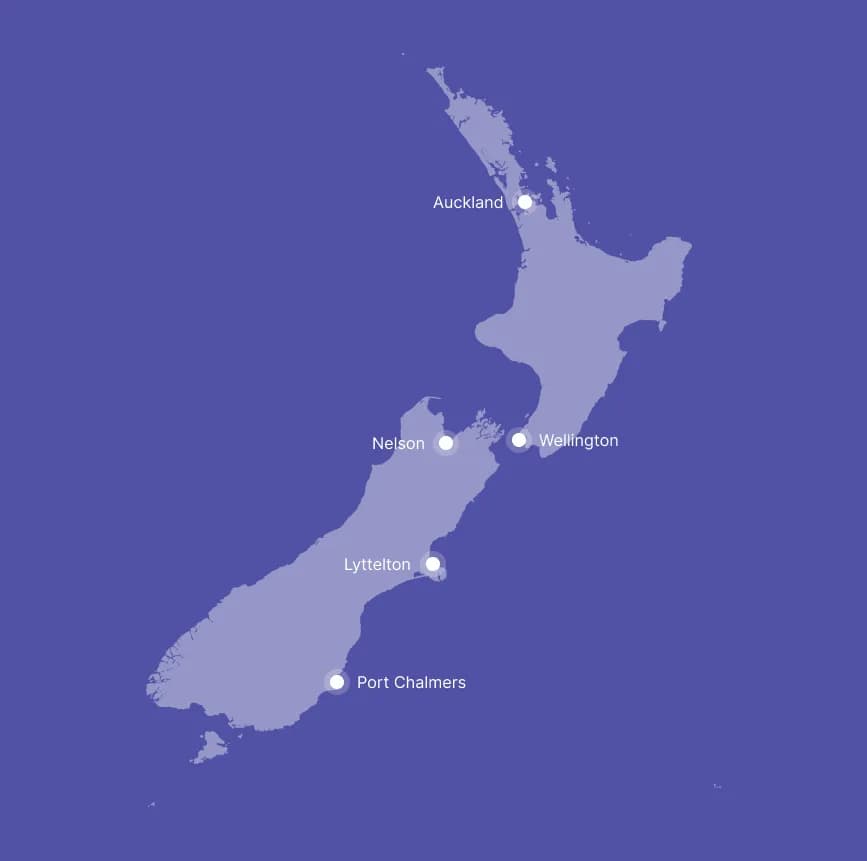
Principaux ports et aéroports
- Port d'Auckland – principal gateway pour de nombreux envois d'effets personnels en direction de l'Île du Nord
- Port de Tauranga – option de fret importante pour certaines routes maritimes et la distribution intérieure
- Port de Lyttelton – principal point d'entrée pour l'Île du Sud, desservant la région de Christchurch
- Port de Wellington – option secondaire pour les acheminements vers le centre de la Nouvelle-Zélande
- Aéroport d'Auckland (AKL) – principal gateway aérien pour les effets personnels urgents
- Aéroport de Christchurch (CHC) – option aérienne secondaire pour les livraisons en Île du Sud
Délais de transit internationaux
| De | Vers | Délai de transit estimé |
|---|---|---|
| London, United Kingdom | Auckland, New Zealand | 45-55 days |
| New York City, United States | Auckland, New Zealand | 35-45 days |
| Los Angeles, United States | Auckland, New Zealand | 25-35 days |
| Singapore | Auckland, New Zealand | 18-25 days |
| Shanghai, China | Auckland, New Zealand | 22-30 days |
| Sydney, Australia | Auckland, New Zealand | 10-16 days |
| Bangkok | Auckland, New Zealand | 20-28 days |
| Tokyo, Japan | Auckland, New Zealand | 18-24 days |
Service de déménagement porte-à-porte de Swift Cargo
Depuis 1999, nous abordons les déménagements vers la Nouvelle-Zélande comme des projets douaniers et de biosécurité avant tout, et comme des projets de transport ensuite. C'est le bon ordre pour un pays où un inventaire propre et un fret propre comptent autant.
1. Emballage de vos effets personnels
Nous emballons en tenant compte à la fois de la protection physique et de la lisibilité biosécuritaire :
- Cartons d'emballage
Pour les livres, les vêtements, la vaisselle et les articles ménagers courants. - Emballage protecteur
Pour les articles fragiles, l'électronique et les objets à risque élevé de casse. - Préparation ciblée pour les articles sensibles au MPI
Nous identifions et séparons les articles de plein air, en bois, d'origine animale et à risque de contamination du sol avant qu'ils ne deviennent des problèmes à destination.
2. Enlèvement à l'origine
Nous collectons les marchandises, rapprochons l'inventaire de ce qui est effectivement chargé et isolons tout article susceptible de déclencher un traitement supplémentaire du MPI ou des douanes.
3. Fret maritime ou aérien et dédouanement en Nouvelle-Zélande
Nous coordonnons le trajet de transport principal, préparons le dossier pour la Douane et le MPI, et séquençons le plan de dédouanement avant l'arrivée du fret.
4. Livraison à votre nouvelle résidence
Une fois l'envoi libéré, nous organisons la livraison, le déchargement et la remise à votre adresse en Nouvelle-Zélande.
5. Déballage et installation optionnels
Pour les déménagements en service complet, nous pouvons contribuer à réduire le délai entre la libération finale et l'installation dans votre nouveau logement.
Équipe de support
Le modèle de suivi de Swift Cargo repose sur un point de contact unique pour chaque envoi. Vous travaillez avec un seul spécialiste logistique qui connaît votre fret, votre situation douanière et votre calendrier. Vous n’êtes pas transféré d’agent en agent et vous n’avez pas à répéter votre situation à chaque fois.
Ce spécialiste gère la coordination de l’emballage, la réservation du fret, les déclarations douanières et le séquencement de la livraison dans un seul flux de travail. Vous recevez des mises à jour claires à chaque étape et vous savez toujours qui contacter en cas de question.
Pour les déménagements vers la Nouvelle-Zélande en particulier, la préparation biosécuritaire et douanière commence avant que le fret ne quitte l’origine, pas après son arrivée. Cette préparation fait partie du rôle de votre spécialiste. Si la situation change entre la réservation et la livraison, c’est le même spécialiste qui s’en occupe.
Parler à un conseiller maintenant
Importer un véhicule en Nouvelle-Zélande
L'importation de véhicules en Nouvelle-Zélande ne fait pas partie du régime standard d'exonération pour effets personnels. Un véhicule personnel relève de son propre régime douanier (formulaire NZCS 80c) : il peut être importé en franchise de droits et de TVA si vous avez vécu hors de Nouvelle-Zélande pendant plus de 21 mois, si vous détenez un document autorisant la résidence et si vous avez possédé et utilisé personnellement le véhicule à l'étranger pendant au moins 1 an avant la première de ces deux dates : votre départ pour la Nouvelle-Zélande ou la remise du véhicule pour l'expédition. Les véhicules importés comme cadeau, destinés à la vente ou à l'échange, à usage commercial, appartenant à une société ou loués n'y ont pas droit, et si le véhicule arrive avant vous, vous devez prouver que vous arriverez dans les 6 mois. Les véhicules suivent aussi une procédure de conformité distincte impliquant le NZTA (NZ Transport Agency), le MPI et les Douanes, et méritent leur propre processus de décision.
L'essentiel pour l'importation d'un véhicule
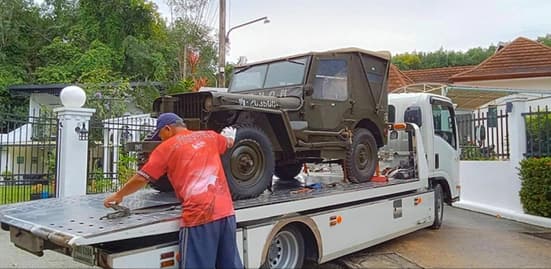
L'essentiel pour l'importation d'un véhicule
- Documentation de propriété et d'importation du véhicule
Documents d'immatriculation, documents de transport, preuves de valeur et documents d'identité de l'importateur. - Procédure de conformité NZTA
Les véhicules d'occasion importés en Nouvelle-Zélande doivent satisfaire aux normes véhicules applicables avant de pouvoir être immatriculés pour circuler sur la voie publique. La procédure du NZTA pour le véhicule d'un immigrant (immigrant's vehicle) exige que vous ayez vécu hors de Nouvelle-Zélande pendant au moins 21 mois, que vous ayez possédé et immatriculé personnellement le véhicule à l'étranger pendant au moins 1 an et que vous déposiez votre demande dans les 18 mois suivant votre arrivée. Vous ne pouvez ni vendre ni louer le véhicule pendant au moins 1 an après sa première immatriculation en Nouvelle-Zélande. Ces véhicules sont dispensés de certaines normes, mais pas de toutes. Les véhicules avec volant à gauche ne peuvent être immatriculés que dans une courte liste de catégories définies par le NZTA : confirmez le côté du volant avec votre spécialiste avant l'expédition. - Exigences de propreté et de punaise diabolique du MPI
Les véhicules et les machines sont des articles à risque biosécuritaire élevé et peuvent nécessiter une inspection et un nettoyage, à vos frais. Pendant la saison de la punaise diabolique (du 1er septembre au 30 avril), les véhicules, machines et pièces exportés depuis un pays à risque figurant sur la liste du MPI nécessitent en général un traitement approuvé par le MPI avant l'expédition, avec un certificat de traitement. Les règles dépendent à la fois de la date d'exportation et de la date d'arrivée. Votre spécialiste confirme la liste actuelle des pays et les dates limites exactes avant votre réservation.
Coûts à prévoir
- Fret et manutention
Transport RoRo ou en conteneur, manutention portuaire et livraison locale. - Coûts de conformité
Inspection, certification, modification et travaux d'immatriculation selon les règles NZTA. - Nettoyage ou traitement MPI
Si le véhicule arrive avec un risque de contamination, le coût d'intervention peut être significatif. Au départ d'un pays à risque pendant la saison de la punaise diabolique (du 1er septembre au 30 avril), le traitement avant l'expédition s'ajoute aux coûts.
Les exonérations néo-zélandaises pour effets personnels ne règlent pas automatiquement le volet véhicule du déménagement. Traitez les voitures et motocyclettes comme un projet de coût de débarquement distinct.
Nous pouvons vous aider : Swift Cargo peut coordonner le transport et le volet documentaire, mais la bonne réponse est souvent de comparer le coût total de débarquement et de conformité avec l'achat d'un véhicule en Nouvelle-Zélande.
Déménager en Nouvelle-Zélande avec vos animaux de compagnie
La Nouvelle-Zélande dispose de l'un des systèmes d'entrée d'animaux de compagnie les plus stricts de la région. Les points de contrôle sont l'éligibilité du pays d'origine, l'identité par puce électronique, le calendrier des vaccinations antirabiques et sanitaires, et le traitement correct du permis et du processus pré-export.

Principales exigences pour l'importation d'animaux de compagnie en Nouvelle-Zélande :
- Vérifications préalables d'éligibilité et de permis
Confirmez que votre pays d'origine, votre espèce et, pour un chien, sa race sont éligibles avant de réserver le transport. La Nouvelle-Zélande interdit cinq races et types de chiens : Brazilian Fila, Dogo Argentino, Japanese Tosa, Perro de Presa Canario et le type American Pit Bull Terrier, y compris les chiens qui appartiennent en totalité ou en grande partie à ces races. Un animal conforme arrivant d'Australie par avion est dédouané à la frontière, sans permis ni quarantaine. Les animaux en provenance d'autres pays éligibles doivent obtenir un permis d'importation du MPI, à demander au moins 8 semaines à l'avance selon le MPI, et passer au moins 10 jours dans une installation de quarantaine agréée par le MPI. Votre spécialiste confirme les règles applicables à votre pays d'origine. - Conformité puce électronique et vaccination
L'identité et les antécédents sanitaires doivent correspondre exactement aux exigences d'importation de la Nouvelle-Zélande. - Documents vétérinaires officiels et délais
La certification sanitaire et les éventuels tests doivent être préparés dans les délais requis, et ces délais se comptent à rebours à partir de la date d'expédition de votre animal, et non de sa date d'arrivée. Selon le pays d'origine, cela signifie qu'un vétérinaire officiel contrôle la puce électronique au moins 6 mois avant l'expédition, ou qu'un prélèvement pour le test de titrage des anticorps antirabiques (RNATT) est effectué 3 à 12 mois avant l'expédition. La norme sanitaire d'importation du MPI pour les chats et les chiens (Import Health Standard: Cats and Dogs 2026) est entrée en vigueur le 1er juillet 2026. Jusqu'au 1er avril 2027, vous pouvez encore respecter la norme de 2021 à la place, et après cette date seule la norme de 2026 s'applique. Votre spécialiste confirme quelle norme et quelles dates s'appliquent à votre animal. - Coordination avec les compagnies aériennes et à destination
L'entrée d'animaux de compagnie doit être alignée avec l'itinéraire approuvé et les éventuelles exigences d'inspection à l'arrivée.
Note 4,87 par nos clients
Avis vérifiés de personnes ayant déménagé leurs effets personnels avec Swift Cargo :
Préparer votre déménagement en Nouvelle-Zélande
La Nouvelle-Zélande attire des familles, des travailleurs qualifiés, des résidents de retour, des étudiants et des personnes cherchant un nouveau cadre de vie, mais le profil de déménagement pratique diffère de la plupart des destinations sans friction. Le déménagement est rarement une question de rêve. C’est une question de calendrier, de conformité et de réussite de l’atterrissage.
C’est pourquoi une page de déménagement vers la Nouvelle-Zélande qui se veut compétitive doit aller au-delà du langage générique. Les personnes cherchent généralement à résoudre la question de l’éligibilité douanière, du risque biosécuritaire MPI, de la complexité véhicule, du calendrier scolaire et de la question de savoir si Auckland ou une route par l’Île du Sud change le plan.
Le pays est tout à fait gérable lorsqu’on le planifie correctement. La paperasse est structurée, le réseau logistique est solide et les règles sont suffisamment claires pour qu’on puisse s’y conformer, à condition que le profil du fret soit honnête et bien préparé.
21 mois
Durée d’absence pouvant déterminer l’éligibilité à l’exonération pour résidents de retour
1 000 NZ$
Valeur déclarée au-delà de laquelle le prélèvement majoré des douanes et du MPI s’applique (depuis le 1er avril 2026)
2 couches
L’exonération douanière et la biosécurité MPI conditionnent toutes deux le résultat du dédouanement
Comprendre le coût de la vie en Nouvelle-Zélande
La Nouvelle-Zélande est rarement un déménagement bon marché une fois le logement, les dépôts de garantie et les coûts d’installation inclus. Les points de pression sont généralement le loyer ou les remboursements hypothécaires, les factures de services et le prix général des biens importés ou haut de gamme.
Auckland est généralement le plus grand choc budgétaire, tandis que les centres régionaux peuvent paraître plus abordables mensuellement, mais comportent toujours des coûts d’installation élevés si le déménagement implique des véhicules, une scolarisation ou une livraison intérieure longue. La planification des coûts compte ici plus que le marketing lifestyle.
Pour la budgétisation du déménagement, le chiffre de la première année est plus pertinent que le chiffre mensuel. L’expédition, l’hébergement temporaire, les lacunes en ameublement et la mise en place du transport peuvent sensiblement modifier l’économie du déménagement.
Sécurité et risques liés à la vie en Nouvelle-Zélande

Sécurité et risques liés à la vie en Nouvelle-Zélande
La Nouvelle-Zélande est généralement perçue comme un lieu de vie sûr selon les normes de l’OCDE, ce qui aide les familles à se sentir en confiance pour un déménagement longue distance.
Les risques de déménagement les plus réalistes ne sont pas des risques dramatiques de criminalité. Ce sont la pression sur le logement, les coûts d’assurance, les perturbations météorologiques et la sous-estimation du volet opérationnel de l’installation après l’arrivée.
Pour les déménageurs, le message principal est simple : la Nouvelle-Zélande est ordonnée, mais elle ne pardonne pas une planification vague. Une bonne préparation logistique a un impact disproportionné.
Infrastructures et services
La Nouvelle-Zélande est opérationnellement forte sur les ports, aéroports, routes, services publics et services courants, mais l’échelle de la population et la géographie comptent toujours. Certaines régions sont faciles au quotidien tout en étant plus lentes ou plus chères pour la livraison et l’accès aux services.
Cela est important pour les déménagements, car la différence de coût et de délai entre Auckland, Wellington, Christchurch et les destinations plus petites peut être plus significative que ce que les primo-déménageurs n’anticipent.
Questions fréquentes
Souvent, oui, si vous remplissez les conditions. La Douane néo-zélandaise indique que la plupart des effets personnels usagés peuvent bénéficier du régime d'exonération si vous détenez un document autorisant la résidence (par exemple un visa de résidence, un visa de travail délivré pour au moins 12 mois ou un visa de visiteur délivré pour au moins 3 ans), si vous vous installez en Nouvelle-Zélande pour la première fois ou si vous revenez après 21 mois ou plus d'absence, et que les biens étaient personnellement possédés et utilisés avant votre départ. Les titulaires d'un visa d'étudiant n'y ont pas droit.
Les articles neufs et non utilisés ne sont pas éligibles.
Le contrôle de biosécurité du MPI est généralement la principale source de retard. La terre, les graines, le bois non traité, les équipements de plein air usagés et tout article présentant un risque de contamination peuvent déclencher une inspection, un nettoyage, un traitement ou un entreposage.
Pas nécessairement. La Douane néo-zélandaise indique que vous n'avez pas à être physiquement présent en Nouvelle-Zélande lors de l'arrivée de votre envoi d'effets personnels, mais le dossier d'exonération et les documents de dédouanement doivent être solides au moment du traitement.
Non. La Douane stipule que les articles neufs et non utilisés ne sont pas éligibles au régime d'exonération pour effets personnels ; des droits de douane et la TVA peuvent donc s'appliquer.
Non. Les voitures, scooters, motocyclettes, bateaux, aéronefs et articles à usage commercial sont exclus du régime d'exonération pour effets personnels.
La couche de biosécurité. La Nouvelle-Zélande peut être relativement claire sur les exonérations douanières et rester stricte sur la propreté et les risques de contamination selon le MPI. C'est pourquoi les articles de plein air ou en bois usagés nécessitent une préparation plus soignée.
Auckland est le principal hub logistique pour de nombreux déménagements, avec Tauranga, Lyttelton, Wellington et Christchurch selon l'itinéraire et la destination finale.
Un prélèvement (Goods Levy) des douanes et du MPI s'applique à chaque envoi. Depuis le 1er avril 2026, il remplace les anciens frais de dossier d'entrée à l'importation (IETF) : 118,44 NZ$ par voie maritime ou 51,81 NZ$ par voie aérienne (hors TVA) pour des biens d'une valeur supérieure à 1 000 NZ$, et 2,09 NZ$ par voie maritime ou 2,21 NZ$ par voie aérienne jusqu'à 1 000 NZ$. Vous pouvez aussi avoir à payer des frais d'inspection MPI, de nettoyage, de traitement, d'entreposage, terminaux et de livraison.
Pour la plupart des déménagements familiaux, le fret maritime est le mode principal et l'aérien est utilisé uniquement pour les essentiels ou les articles urgents. Un modèle hybride est courant lorsque le déménagement requiert de la rapidité sans faire exploser le budget.
Pour de nombreuses familles, oui. L'argument qualité de vie peut être solide, mais le déménagement fonctionne mieux lorsque le logement, le calendrier douanier, la scolarité et les coûts de la première année sont gérés de façon réaliste.
Les délais de transit du fret maritime vers la Nouvelle-Zélande dépendent du pays d'origine et du port d'entrée. Depuis la France et l'Europe du Nord, comptez environ 30 à 45 jours vers Auckland ou Tauranga via transbordement. Depuis l'Australie, le fret maritime prend généralement 7 à 14 jours. Depuis la côte ouest des États-Unis, comptez 20 à 30 jours. Depuis l'Asie du Sud-Est, le transit est habituellement de 14 à 25 jours. Ces estimations couvrent uniquement la traversée maritime. Ajoutez le traitement douanier, l'inspection MPI et la livraison finale lors de la planification de votre date de prise de possession.
La Douane néo-zélandaise indique que les résidents de retour peuvent bénéficier de l'exonération pour effets personnels s'ils ont été absents pendant 21 mois ou plus et que les biens étaient personnellement possédés et utilisés avant leur départ. Les 21 mois se comptent à rebours à partir de votre arrivée, et vous devez avoir vécu hors de Nouvelle-Zélande pendant toute cette période, hormis de brefs séjours de vacances ou d'affaires en Nouvelle-Zélande. La Douane ne décrit aucune tolérance pour une durée légèrement inférieure à 21 mois : ne comptez pas sur une telle marge. Si vous avez quitté la Nouvelle-Zélande il y a moins de 21 mois, des droits de douane et la TVA pourraient s'appliquer à votre envoi. Confirmez votre situation spécifique auprès d'un courtier en douane agréé avant de réserver votre fret.
Checklist pour votre déménagement en Nouvelle-Zélande
Checklist pour votre déménagement en Nouvelle-Zélande
Listez les biens à expédier et isolez tout article neuf, extérieur, en bois ou sensible côté biosécurité.
Vérifiez la logique de franchise avant de réserver le fret.
Choisissez mer, air ou solution hybride selon l’urgence et le budget.
Préparez tôt inventaire, passeport, documents de transport et mandat de dédouanement.
Laissez une marge réelle pour le MPI et n’alignez pas la livraison trop serré avec la remise des clés.
Suivez le dossier jusqu’au dédouanement et à la livraison finale.