
Shipping Household Goods to Vietnam: Customs Cleared, Delivered to Your Door
Swift Cargo handles Vietnamese customs, tờ khai hải quan paperwork, and door-to-door delivery — rated 4.87 by 25k+ customers.
Planning a move to Vietnam?
Moving to Vietnam: customs, shipping times & duty-free rules
Applies to people shipping their own used household and personal goods to Vietnam as personal effects or unaccompanied shipments.
You must submit a standard Vietnam import declaration through VNACCS/VCIS and provide a detailed inventory, your transport document, and valid photo ID.
Quarantine checks may apply, especially for goods that include plant, animal, soil, or wood materials. Clean used outdoor items and use compliant wood packaging to reduce inspection risk.
Vietnam applies duty by HS code and VAT to most imports unless you qualify for a specific exemption regime. The VAT exemption for low value express consignments ended on February 18, 2025.
Minimum shipment size: small studio apartment. No maximum size limit.
There are important things to know before you pack your boxes. Vietnam’s customs and quarantine rules can be complex, so a smooth move starts with good preparation and a specialist who checks your documents before you ship.
This page covers what you need to know before shipping belongings to Vietnam: customs clearance via VNACCS/VCIS, quarantine requirements for wood and agricultural products, seasonal peaks around Tet and typhoon season, and minimum shipment size. You will also find details on door to door service options and cargo insurance.
Work relocations, family moves, and study-abroad placements: Swift Cargo and our local partners manage your move end to end. We handle tờ khai hải quan paperwork, Cat Lai and Hai Phong port coordination, and last-mile delivery, so your focus stays on settling into your new city.
Our Process
Tell us your route, shipment volume, and destination city in Vietnam. Most customers complete the form in under ten minutes. A Move Manager will review your inventory and confirm your customs documentation checklist.
Request a Quote
Tell us your route and inventory. You get a clear plan, timeline, and cost upfront.
Get Connected
Your Move Manager builds the plan, checks documentation, and makes sure nothing is missed before shipment.
Finalise your Plan
We execute the move. Packing, shipping, customs, delivery. Everything runs to plan.
Peak Months
Planning your shipments around Vietnam’s peak seasons can save time and reduce costs. Here is what to expect through the year:
- January & February
In the weeks before Tet and Lunar New Year, freight volumes rise and clearance can slow. Booking early and confirming paperwork helps avoid last minute congestion. - December
Late year demand often increases as businesses restock and households plan moves. Ports and airlines can be busier, so allow extra buffer for transit and local handling. - June to November
During monsoon season, storms can affect central and northern coasts. Sea schedules may shift and air cargo may face weather delays, so plan with flexibility.
Customs
Vietnam Customs requires accurate declarations and matching documents for all imports, including household goods and personal effects. Clear inventories and correct classification help reduce the chance of inspection delays.
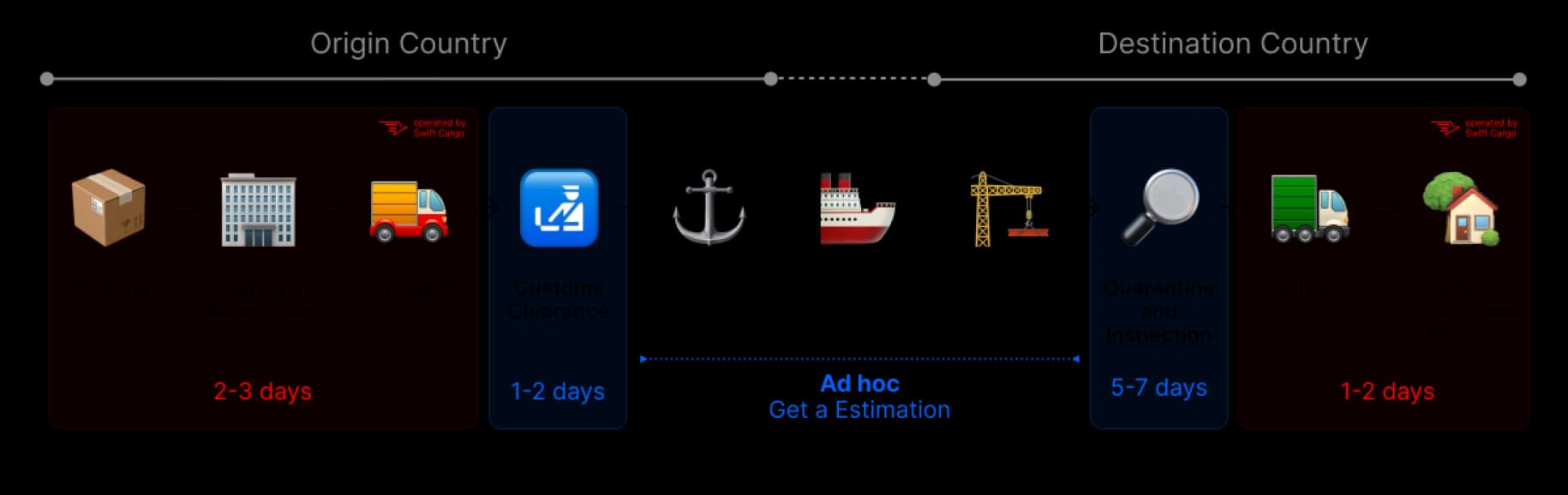
Documents you need for personal goods
To clear your items through Vietnam Customs, you will need:
- Ocean Bill of Lading or Airway Bill
- Completed Vietnam import declaration submitted via VNACCS/VCIS
- Passport ID and any required signature page
- Detailed inventory list, in English or Vietnamese
- Each package labelled with a list of contents, in English or Vietnamese
- Copy of your visa and passport identification page
- Visa or residence evidence , if additional proof is requested
- Commercial Invoices (if applicable)
Quarantine and delays
Goods entering Vietnam may be subject to plant or animal quarantine checks supervised by agencies under the Ministry of Agriculture and Rural Development (MARD).
- Inspection and clearance time varies by cargo type and whether quarantine is directed.
- To reduce the risk of delays, clean items thoroughly before packing, especially anything that may have touched soil, plants, or outdoor materials.
For sea freight travellers
If you are travelling by sea, be prepared to complete any passenger or arrival declaration requested at the port of entry.
What you can import to Vietnam

Personal belongings
Work permit or proof of return required

Used clothing

Household appliances
Eligible movers only; one duty-free per type

Fragile items
Used items only as moving assets

High-value items
Moving-asset rules; artwork may be checked

Large items & furniture
Used furniture only as moving assets

Excess luggage

Pets
Health certificate, rabies vaccine and border check
Restricted goods

Explosives

Seeds and Plants

Chemicals

Corrosives

Used Consumer Goods
Only as moving assets of eligible movers

Firearms

Drugs

Precious Metals

Tobacco

Hazardous

E-cigarettes & vapes

Vehicles
Used motorbikes banned; cars very limited

Banned publications & media
May be inspected for content
Minimum shipment size for Vietnam
When shipping to Vietnam with Swift Cargo, a small minimum shipment volume applies to ensure efficient handling and delivery.
- Minimum shipment: Studio Apartment
This is the smallest shipment size accepted for freight or relocation services to Vietnam.
- No maximum size limit
Swift Cargo can manage shipments of any size, from small moves to full household relocations.
These minimums apply to shipments entering Vietnam.
Download the customs forms
- Vietnam import declaration form: Vietnam Trade Portal
- Declaration form for Temporary Import for Re-export (or Temp. Export for Re-import): Vietnam Trade Portal
Contact Vietnam Customs

Taxes and duties
Understanding Vietnam’s import taxes can help you avoid surprises during customs clearance. Here is what you need to know:
General tax rules
- Personal items and gifts valued up to VND 10M+ (approx. USD 390$) are allowed duty-free, with specific exceptions like watches or precious metals.
- Vietnam applies VAT at a general rate of 10%, temporarily reduced to 8% for most goods under current policy. The VAT exemption for low value express consignments ended in February 2025.
Tax exemptions
- Some personal effects may be exempt only under specific regimes. Otherwise, duty and VAT generally apply, and sensitive items like alcohol or tobacco often face additional controls.
- Any exemption is regime specific and must meet Vietnam Customs conditions.
Duty free status for official use
Some people or organisations may import goods without paying duties if they qualify under Vietnam’s official use regimes, including:
- Diplomatic missions and embassy staff
- Government posts and official delegations
- Official administrative or humanitarian staff under recognised missions
To qualify, you must:
1. Contact Vietnam Customs for guidance
2. Confirm your eligibility regime
3. Provide documents to support the exemption
This status may apply to embassy staff, foreign aid workers, or volunteers under specific missions recognised by Vietnam.
Cargo insurance
Shipping goods across borders always comes with some risk. Cargo insurance is strongly recommended when sending valuable items to Vietnam, especially if your shipment is large or time sensitive.
Why you need insurance
Moving cargo by sea or air exposes your shipment to potential damage. Insurance can protect you against:
- Rough weather and storm damage en route, particularly during typhoon season for northern and central Vietnam
- Improper storage or rough handling during port transfers or intermediate warehouse stops
- Mandatory fumigation treatments applied at Vietnamese ports, which can damage sensitive electronics or organic materials
- Accidental loss or damage at busy terminals such as Cat Lai (Ho Chi Minh City) or Hai Phong
What is covered
Coverage depends on your insurance provider. Most policies include:
- Physical protection during transport by sea or air
- Coverage for specific risks such as fire, theft, water ingress, or moisture damage
- Limitations and exclusions based on your declared value — read the policy schedule carefully
Always review the terms before finalising your policy. Vietnam port inspections can involve repackaging — confirm whether your policy covers goods during customs examination.
How to get insured
You can arrange cargo insurance through:
- A general insurance company
- A specialist marine or cargo broker
- Your bank (if they offer travel or trade insurance)
- Swift Cargo’s own insurance program — charged as a small percentage of your declared shipment value
Visa requirements for moving to Vietnam
If you are planning to relocate to Vietnam, you will need a valid visa or residence status. Visa types vary by purpose and length of stay. The most reliable way to choose the right option is to check official immigration guidance and confirm which category you are eligible for.
Main visa categories
Most Vietnam visas fall into one of these categories:

Visitor visas
For short stays, tourism, or business visits
Working and skilled visas
For employment or long term work
Student and training visas
For education or professional training
Family and partner visas
For joining relatives or spouses in Vietnam
Note: If you are moving to Vietnam for a long term stay, a working visa or family based visa is often the most appropriate.
For detailed and up to date information, visit Vietnam’s official immigration website.
List of shipping ports in Vietnam
Swift Cargo operates through Vietnam’s major international ports and airports. We provide sea freight and air freight options for relocations and commercial shipments to the destinations below.
Ports and shipping methods
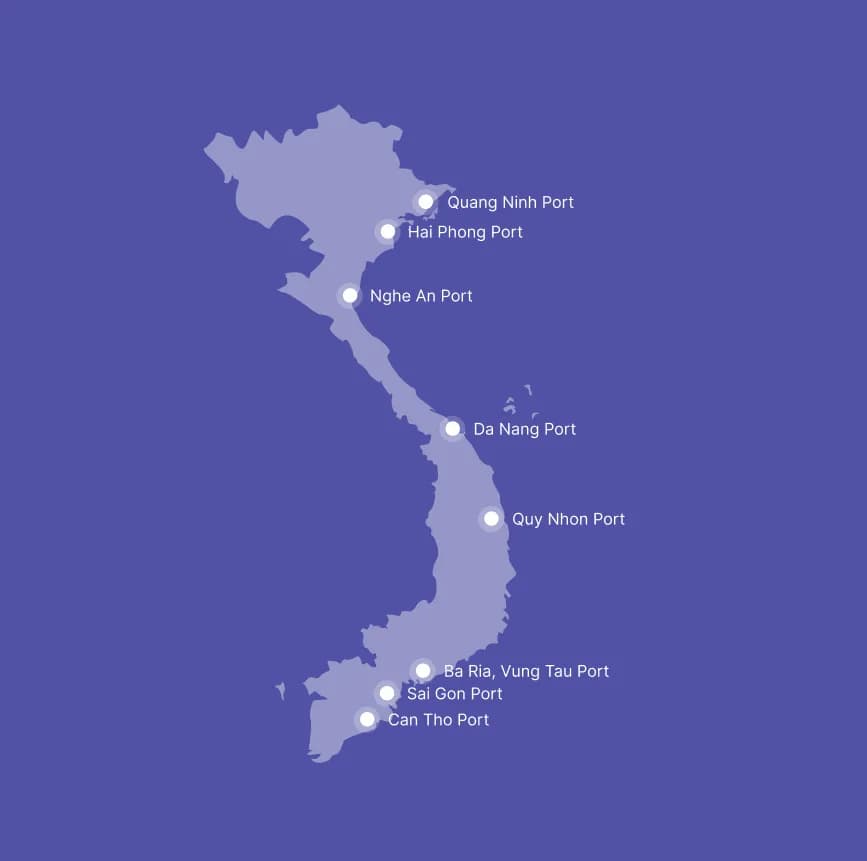
Ports and shipping methods
- Ho Chi Minh City (Saigon Port) – Sea freight and air freight available
- Hanoi (Hai Phong Port) – Sea freight and air freight available
- Da Nang – Sea freight and air freight available
- Quang Ninh – Sea freight and air freight available
- Nghe An – Sea freight and air freight available
- Can Tho – Sea freight available
- Ba Ria (Vung Tau) – Sea freight available
- Quy Nhon – Sea freight available
Transit time per destination
| From | To | Est. Transit time |
|---|---|---|
| London, United Kingdom | Ho Chi Minh City, Vietnam | 28-33 days |
| Los Angeles, United States | Ho Chi Minh City, Vietnam | 18-22 days |
| Paris, France | Ho Chi Minh City, Vietnam | 28-33 days |
| Milan, Italy | Ho Chi Minh City, Vietnam | 26-31 days |
| Seoul (Incheon), South Korea | Hanoi, Vietnam | 5-7 days |
| Moscow, Russia | Ho Chi Minh City, Vietnam | 22-28 days |
| Sydney, Australia | Ho Chi Minh City, Vietnam | 18-22 days |
| Singapore | Ho Chi Minh City, Vietnam | 4-6 days |
Door to door relocation service
Swift Cargo offers a full door to door moving service to Vietnam. From packing your goods to unpacking them in your new home, we take care of every step of the process.
1. Packing and loading.
We offer professional packing services to keep your items safe during transport to Vietnam. Common packing materials:
- Packing boxes
Available in different sizes and built to protect standard household items during international transport. - Bubble wrap
Used for fragile items such as glassware, ceramics, and electronics to prevent breakage. - Wooden crates
Ideal for large or sensitive items. Use ISPM 15 compliant wood packaging to reduce the risk of holds during Vietnam inspections.
Full Packing Service: Do not want to pack yourself? No problem. Our team can pack all types of goods, including furniture and oversized items. Fill out the contact form and a consultant will organise your packing needs.
2. Pickup
Our agents collect the packed goods from your location or warehouse. All movements are tracked and documented, ensuring your shipment is handled securely.
3. Customs clearance
We manage the customs process for Vietnam. See the Customs section above for required documents and inspection details.
4. Delivery and unloading
Once your shipment arrives in Vietnam, we deliver it directly to your home. Our team unloads all boxes at your doorstep.
5. Unpacking and setup
We also offer unpacking services. Our team places your goods where you want them, so your home is ready to use on arrival.
Support team
You work with one dedicated specialist from your first quote to final delivery confirmation. This removes handover errors, keeps communication consistent, and means the person answering your questions already knows your shipment.
Your specialist coordinates pickup, prepares your VNACCS/VCIS declaration and inventory, manages customs clearance at Cat Lai or Hai Phong, and arranges last-mile delivery, so you are not passed between departments and do not have to repeat the same details.
You get clear updates at each stage, including shipment status, customs progress, and delivery timing, and your specialist flags any documentation gaps before your goods reach a Vietnamese port.
Talk to an agent now
Import your vehicle
Bringing a car into Vietnam is possible but requires prior approval and strict compliance with Vietnam Customs and transport rules.
What you need
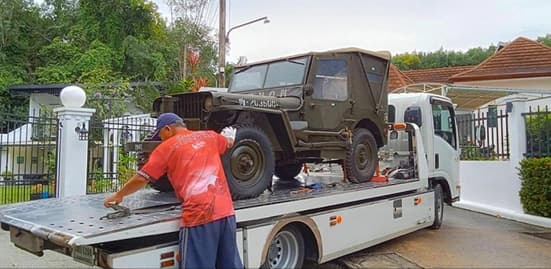
What you need
- Vehicle import approval – Apply before the car arrives
- Key documents – Passport, registration papers, bill of lading, sales invoice, Vietnam import declaration
- Compliance – Your car must meet Vietnam safety and emissions requirements
Costs to expect
- Import duty (HS based)
- VAT may apply
- Additional vehicle taxes may apply depending on type and value
Extra fees may apply for inspection, cleaning, or required modifications.
We Can Help - Swift Cargo handles the process from start to finish, including paperwork, transport, and customs guidance.
Import your pets
Vietnam applies health and quarantine rules to protect public health and agriculture. Pets must meet documented vaccination and health requirements, and additional permits or checks may be required depending on origin and species.
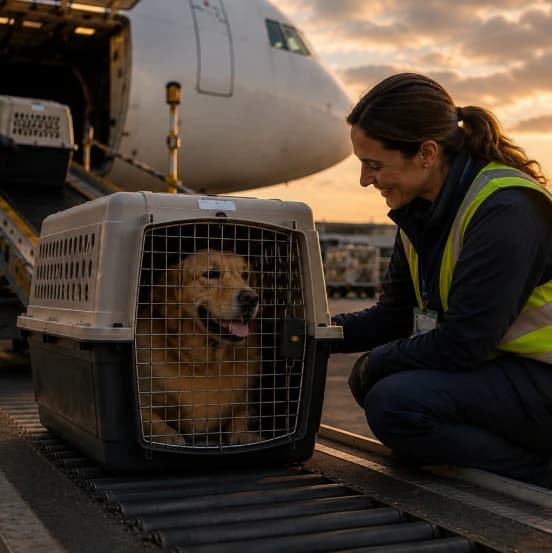
Key requirements
- Valid import permit
Check Vietnam’s animal health and import requirements before travel. - Microchip and vaccinations
Your pet should be microchipped and up to date on rabies and core vaccines. - Rabies blood test
A rabies titer test may be required in an approved lab. - Quarantine
Quarantine may be required at an approved facility on arrival, and conditions can vary.
Banned dog breeds in Vietnam
Breed restrictions can apply. Confirm current rules for:
- American Pit Bull Terrier (may face restrictions, confirm before shipping)
- Fila Brasileiro (confirm eligibility with Vietnam authorities)
- Japanese Tosa (check any breed controls before travel)
- Perro de Presa Canario (rules may vary by origin and purpose)
- All wolfdog hybrids (often subject to strict controls)
We Can Help - From paperwork and vet checks to booking flights and quarantine coordination, we help your pet arrive safely and in line with Vietnam’s requirements.
Rated 4.87 by customers
What our customers say - Vietnam moves
About Vietnam
Shipping activity in Vietnam
Vietnam is a busy regional logistics hub for sea and air freight. Major gateways include Ho Chi Minh City, Cai Mep–Thi Vai, Hai Phong, and Da Nang for sea cargo, with air links through SGN, HAN, and DAD.
National freight volume (all operators):
375,000
cargo shipments handled weekly
100,000+
containers processed daily nationwide
~30T
air freight volumes managed monthly
Vietnam cost of living
Relocating to Vietnam often means adjusting to a different cost structure. Everyday expenses can be relatively affordable compared with many Western countries, while major cities like Ho Chi Minh City and Hanoi tend to be more expensive than provincial areas. Housing is usually the biggest variable for newcomers, especially in central districts or near international schools. Costs also depend on lifestyle, whether you choose local services or imported goods, and the area you settle in.
Utilities and internet are generally accessible in most urban areas, though costs can rise with higher use of air conditioning or premium service packages. Groceries are widely available through local markets and supermarkets, and prices vary depending on whether you buy local produce or imported brands. Eating out ranges from low cost street food to international dining in city centres. Planning your budget around neighbourhood and habits helps keep spending predictable.
Transportation costs in Vietnam depend on city and commute style. Motorbikes, ride hailing services, and buses are common in major cities, while longer commutes and private cars can raise monthly costs.
The upside is that living costs can be manageable on many local and expatriate salaries, especially outside premium districts. How far your income goes depends on your profession, employment terms, and the city or neighbourhood you choose.
Overall, moving to Vietnam can be cost effective, but expenses vary widely by city and lifestyle. Plan your budget early, compare neighbourhoods, and expect one time relocation costs such as deposits, moving services, and setup fees. With good preparation, Vietnam offers vibrant cities, strong community life, and a practical base for work or study.
Security in Vietnam

Security in Vietnam
Vietnam is generally regarded as a safe destination for expatriates, with most people experiencing day to day life without serious issues. As with any country, safety levels can vary by city and neighbourhood.
English language national crime dashboards are limited, so most guidance relies on practical, lived patterns. Petty theft and phone or bag snatching can occur in busy urban areas, and traffic safety is a common concern for newcomers. Violent crime affecting expatriates is less common, but it is still sensible to stay aware of surroundings, especially at night or in crowded spaces.
It is important to stay alert in urban centres, where petty theft is more likely. Choose a secure neighbourhood, keep valuables out of sight, lock your home and vehicle, and follow local safety advice. With basic preparation and awareness, most people enjoy a safe and comfortable life in Vietnam.
Infrastructure and public services in Vietnam
Vietnam has a broad network of public facilities, with quality and access varying between major cities and rural provinces. Education includes public schools and a growing number of private and international options in larger cities. Families moving with children often compare districts based on school availability and commute times.
Healthcare in Vietnam includes both public and private hospital systems. Major cities provide the widest range of services, including international standard private clinics, while provincial areas may have fewer specialty options. Foreign residents typically rely on private insurance or employer coverage for easier access to higher tier facilities.
Public services such as government administration, emergency response, and social support are concentrated in city centres and provincial capitals. Rural regions may require longer travel for specialised services, so your choice of location can affect day to day access.
For many expatriates, Vietnam’s major cities offer reliable infrastructure and a wide range of private services. Access is strongest in Ho Chi Minh City, Hanoi, and Da Nang. In smaller cities and rural areas, expect fewer international services and longer waits for specialised care. Choosing your city and neighbourhood carefully helps match services to your needs.
Salary and income in Vietnam
Salary levels in Vietnam vary significantly by industry, city, and whether you are on a local contract or an international expat package. Technology and finance in Ho Chi Minh City and Hanoi command the highest pay for expat hires. Corporate assignees on international packages typically receive housing allowances, school fee support, and home leave flights — understand exactly what your package covers before making relocation decisions based on headline salary figures alone.
Personal Income Tax (PIT) in Vietnam is levied on a graduated scale from 5% to 35% across seven brackets. Tax residency is established after 183 days in any 12-month period. Residents are taxed on worldwide income from Vietnamese sources; non-residents pay a flat 20% on Vietnam-sourced income only. Vietnam has double taxation treaties with over 80 countries including the UK, Australia, France, Germany, Italy, South Korea, and Russia — these treaties determine how cross-border income is treated.
Mandatory social insurance for foreign workers holding work permits was introduced in 2018. The combined employer and employee contribution rate is approximately 32%, capped at 20 times the monthly minimum wage. This covers basic healthcare, pension, and other social benefits. For corporate assignees whose packages include a tax equalisation clause, your company HR should be handling the calculations — but confirm this before you arrive, as the first payslip in Vietnam can come as a surprise.
Taxes in Vietnam
Personal Income Tax (PIT) applies to all Vietnam-sourced income. The graduated rate runs from 5% to 35% for residents. Tax residency is established after 183 days in any rolling 12-month period — once resident, worldwide income attributable to Vietnamese sources becomes taxable. Non-residents pay a flat 20% only on income generated in Vietnam. Annual tax finalisation is required for residents each year.
There is no wealth tax in Vietnam. Property transfers are subject to a 2% tax on the transfer value — not capital gains tax. VAT is levied at 10% on most goods and services (some categories have been temporarily reduced to 8% under government relief packages). Value-added tax on imports applies at the same rate. Business owners operating through a Vietnamese company are also subject to corporate income tax at 20%.
Foreign asset and income reporting obligations vary by nationality — check with a qualified adviser in your home country before moving, as your home country may impose its own foreign income reporting requirements. Keep precise records of the date your Vietnamese tax residency begins, as this affects obligations in both Vietnam and your country of origin. Vietnam's double taxation treaties with most major expat-source countries prevent double taxation but do not eliminate your Vietnamese PIT obligation.
Jobs and working in Vietnam
Working in Vietnam requires a work permit (Giấy phép lao động), which must be sponsored by a licensed Vietnamese employer before or shortly after you arrive. You cannot legally work in Vietnam on a tourist or business visa. The work permit process requires your employer to first obtain approval for a foreign worker quota, then apply for the individual permit. Processing typically takes 3–6 weeks once all documentation is in order.
Sectors with strong demand for foreign hires include technology and software (HCMC and Hanoi), manufacturing management (Binh Duong, Dong Nai, Bac Ninh, Bac Giang industrial zones), international education (English teachers and school administrators nationwide), hospitality (coastal resorts: Da Nang, Phu Quoc, Nha Trang), and finance (HCMC's financial district). Vietnam's growing domestic tech ecosystem — with companies like FPT, VNG, and foreign-invested firms including Samsung, Intel, and LG — is creating increasing demand for experienced engineers and product professionals.
Some multinational companies employ foreign staff through licensed employment agencies rather than directly. This affects how PIT and social insurance contributions are processed. Clarify your employment structure with your employer before signing a contract, as it has direct implications for your tax filings and entitlements in Vietnam. Internal transferees within multinationals may qualify for a work permit exemption, but this must be applied for separately and confirmed before arrival.
Money and banking in Vietnam
Vietnam's currency is the Vietnamese Dong (VND). Notes range from 1,000 to 500,000 VND, and USD 1 equals roughly 25,000 VND. While USD is informally accepted in some tourist areas, it is legally prohibited for domestic retail pricing — pay in VND. Cash is still relevant for markets, street food vendors, and smaller transactions outside major cities.
Opening a Vietnamese bank account requires your passport and either a TRC or work permit. Vietcombank has the most extensive ATM network and widest provincial coverage; Techcombank and VPBank have the strongest digital banking platforms in English. USD accounts are available — useful for salary deposits and international transfers. Wise is available and functional in Vietnam, making transfers faster and cheaper than SWIFT for many currencies. Vietnam does not impose annual individual transfer limits equivalent to China's USD 50,000 cap.
Mobile payments via MoMo, ZaloPay, and Grab Pay are widely accepted across Ho Chi Minh City and Hanoi. QR code payments are common in restaurants, convenience stores, and supermarkets. Foreign Visa and Mastercard cards are accepted at ATMs and international-facing businesses, but coverage is inconsistent in smaller cities and rural areas. Setting up a local bank account and linking it to MoMo within your first two weeks makes daily life significantly more convenient.
Climate in Vietnam
Vietnam spans over 1,600km from north to south, and climate varies sharply by region. Hanoi in the north has four distinct seasons: cool, damp winters (15–20°C in December–February), hot and humid summers (35–38°C from June to August), and pleasant spring and autumn windows. Typhoon season affects the north and central coast from October to November — shipping and port operations can slow during this period.
Ho Chi Minh City in the south has two seasons: dry (November–April) and wet/rainy (May–October). Year-round temperatures sit between 28–35°C with consistently high humidity. The central region (Da Nang, Hoi An, Hue) experiences its own wet season from October to January — opposite to the south — with typhoon exposure peaking in October and November. Da Nang summers (July–August) are hot and dry, making the period ideal for shipping arrivals.
For shipping timing, two periods require extra planning. First, the Tet holiday (Vietnamese Lunar New Year, usually January–February): port operations, customs staffing, and trucking services slow significantly for 1–2 weeks before and after Tet. Allow extra time or aim to complete customs clearance before the holiday window. Second, typhoon season for Hanoi and Da Nang-bound shipments (September–November): schedule arrivals either side of the peak if flexibility allows.
Frequently Asked Questions (FAQ)
Shipping times to Vietnam depend on the origin country, the carrier, and the method you choose.
- Sea freight: Transit time varies by route, port dwell, and whether quarantine or customs inspection is directed on arrival.
- Air freight: Faster door to door delivery is available to SGN, HAN, or DAD, with timing affected by clearance and last mile delivery.
Keep in mind that peak seasons in Vietnam, especially pre Tet and year end, plus monsoon or typhoon weather, can cause delays. Our team will provide a personalised estimate based on your shipment.
Vietnam's customs allowances for personal baggage arriving with you differ from the rules that apply to shipped unaccompanied cargo.
Standard duty-free allowances on arrival:
- Alcohol: 1.5 litres of spirits, or 2 litres of wine, or 3 litres of beer
- Tobacco: 200 cigarettes, 100 cigars, or 500g of other tobacco
- Gifts and personal goods: Items with a combined value under VND 10,000,000 (approximately USD 400) are generally admitted duty-free. Amounts above this are assessed at the standard VAT rate of 10% plus applicable import duties.
Currency declaration: Foreign currency exceeding USD 5,000 equivalent must be declared on your C.02 arrival card. Vietnamese Dong exceeding VND 15 million must also be declared. Undeclared amounts may be confiscated.
High-value personal items: Declare watches, cameras, or jewellery above VND 10 million value on arrival. Declaring on arrival protects you from disputes when you depart with the same items.
Important distinction: These allowances apply to what you carry with you or check as baggage. Goods arriving separately as shipped cargo are treated under the C.101 unaccompanied baggage process — see the question on customs treatment of personal effects above.
The main routes for people relocating to Vietnam are:
- E-visa (90 days): Available online to citizens of most countries. Single or multiple entry. Covers the initial period while your employer arranges longer-term documents.
- Work permit (Giấy phép lao động): Required for foreign employees. Your employer must first obtain approval for a foreign worker quota, then apply for the individual permit. Two categories — skilled worker (NLĐ) and expert/manager/director (DP). The permit underpins your Temporary Residence Card.
- Temporary Residence Card (TRC / Thẻ tạm trú): Issued once the work permit is approved. Valid for 1–2 years, renewable. The TRC is the key document for opening bank accounts, renting property, and enrolling children in school.
- Investor visa (ĐT visa): Available for investments above VND 3 billion in a licensed Vietnamese company. Valid for 5 years.
Visa rules change. Always confirm current requirements with the Vietnamese Embassy or Consulate in your country of residence before making relocation plans.
Used personal effects that have been owned and in regular use for 12 months or more are generally exempt from import duty when imported as unaccompanied baggage. The key document is the customs declaration form (C.101), which requires a detailed inventory. Retain purchase receipts or evidence of ownership date for high-value items — customs officers may request these during inspection.
New goods, commercially purchased items, or items that appear to be recently bought are assessed differently. Import duty and VAT (10% standard rate in Vietnam) may apply based on the declared or assessed customs value. High-value electronics above VND 10 million per item can attract additional scrutiny.
Do not assume exemption applies automatically. Accurate declaration and complete paperwork prevents delays at Cat Lai (HCMC) or Hai Phong ports. Swift Cargo helps you prepare the inventory correctly before your shipment arrives in Vietnam.
Yes, but Vietnam requires specific documentation prepared well in advance. Key requirements:
- ISO 15444 microchip implanted and registered
- Current rabies vaccination — administered between 30 days and 12 months before travel
- International health certificate issued by a government-accredited vet within 10 days of travel
- Import permit from MARD (Ministry of Agriculture and Rural Development) — apply at least 4–6 weeks before your arrival date
On arrival, pets are inspected by the Veterinary Quarantine Authority at the port or airport. If paperwork is complete and correct, there is no lengthy quarantine. If any document is missing or expired, your pet may be held at your expense.
Not all airports handle pet imports — Tan Son Nhat (HCMC) and Noi Bai (Hanoi) are the main entry points. Confirm the current approved entry points with your shipping agent before booking.
Technically yes, but the combined taxes make it financially impractical for most personal moves. Vietnam applies:
- Import duty: 50–64% for non-ASEAN origin vehicles (reduced to 0% for ASEAN-origin vehicles under ATIGA)
- Special Consumption Tax (SCT): 35–150% depending on engine displacement — larger engines are taxed at the higher end
- VAT: 10%
Combined, these taxes can add 150–300% of the vehicle's CIF value. For a car worth USD 30,000, total landed cost including taxes can exceed USD 90,000.
Most expats use Grab, long-term car rental, or purchase locally. If you are on a multi-year corporate assignment and still considering it, obtain a formal customs cost estimate before shipping. Electric vehicles (EVs) benefit from reduced SCT rates since 2023 — the calculation differs.
Vietnam's currency is the Vietnamese Dong (VND). Notes range from 1,000 to 500,000 VND — USD 1 equals roughly 25,000 VND. Cash remains widely used outside major cities and for smaller transactions.
Mobile payment apps MoMo and ZaloPay are widely accepted for everyday purchases, bill payments, and QR-code transactions. Grab Pay works within the Grab ecosystem (ride-hailing, food delivery). All three work with Vietnamese bank accounts and some accept foreign cards with limitations. Set these up within your first week.
Opening a Vietnamese bank account requires your passport and TRC (or work permit). Vietcombank has the widest ATM network; Techcombank and VPBank offer strong English-language digital banking. USD accounts are available at major banks — useful for receiving salary in USD and making international transfers. Vietnam does not impose China-style annual transfer limits for foreigners, and SWIFT transfers work reliably. Wise is also functional in Vietnam.
The right port depends on your destination city:
- Cat Lai (Ho Chi Minh City): Handles the majority of personal effects shipments to southern Vietnam. Well-established customs procedures for expat moves. Serves Phu My Hung (District 7), Thao Dien (District 2), and all HCMC districts.
- Hai Phong: The preferred entry port for Hanoi-bound shipments. Inland trucking from Hai Phong to Hanoi is approximately 120km (3–4 hours). Also serves industrial zones in Bac Ninh, Bac Giang, and Thai Nguyen.
- Da Nang: Serves central Vietnam — Da Nang city, Hoi An, Hue. Less common for expat household goods but appropriate for central Vietnam relocations.
Customs clearance typically adds 3–7 working days after the ship arrives. Port to home delivery adds a further 2–5 days depending on the destination. Swift Cargo can route your shipment through the most appropriate port for your destination.
Vietnam's restricted and prohibited list goes beyond standard dangerous goods. Key categories:
- Political content: Printed material, books, and media that undermines the Socialist Republic of Vietnam are prohibited. Religious materials in quantities suggesting distribution (not personal use) may be detained.
- Drones: All unmanned aerial vehicles regardless of size require an import permit from the Ministry of National Defence before entry. Failure to declare results in confiscation. This applies even to small consumer drones — do not pack them without prior approval.
- Wildlife products: Ivory, rhinoceros horn, and wildlife products are strictly prohibited under CITES and Vietnamese law. Penalties are severe.
- Controlled medications: Bring a doctor's prescription and keep quantities to personal use amounts. Opioid and psychotropic medications require specific prior approval.
- Bulk SIM cards: More than 3 overseas SIM cards may trigger inquiry at customs.
When in doubt, declare through the appropriate channel. Vietnamese customs generally responds proportionally to honest declarations versus undeclared items discovered during inspection.
Checklist for your Vietnam relocation
Checklist for your Vietnam relocation
Fill out the form with details about your move.
Receive custom quotes within 48 hours.
Choose the option that suits you best, and let our agents guide you through the process.
Request the required documentation to prepare for your arrival in Vietnam.
Track your shipment with our agents and receive updates at every step
(If necessary) Provide additional details to speed up customs clearance.
Move into your new home while we take care of delivering your goods.