
Moving to the UK from Thailand, from $3,327
Rated 4.87/5 by 25k+ customers.
Guide to relocating from Thailand to the UK
Sea freight from Laem Chabang port, in Chonburi province in eastern Thailand, reaches UK container ports such as Felixstowe, one of the UK's largest. Sailing time depends on the carrier service and on whether it goes through the Suez Canal or around the Cape of Good Hope, so we confirm the sailing and the UK arrival date when your container is booked. Air freight from Bangkok Suvarnabhumi to London Heathrow takes 2–3 days.
HMRC Transfer of Residence (ToR) relief waives import duty, and import VAT where you are eligible, on your personal effects and household goods when you make the UK your main home. You must have lived outside the UK for at least 12 consecutive months, have had the goods for at least 6 months before you move, and import them within 12 months of your move.
Post-Brexit, all goods entering Great Britain from Thailand require full HMRC customs clearance. There is no EU single-market exception. HMRC says to apply for your reference number on form ToR01 (the same form covers Northern Ireland when you move from outside the EU) before your goods are shipped, so that it can be quoted on the import declaration when they reach the UK.
Your UK visa (Skilled Worker, Global Talent, family or Student) comes first: GOV.UK advises you not to book travel until you have a decision on your application, so plan your shipping dates around it. HMRC's Transfer of Residence relief is for people making the UK their main home.
Buddha images need an export permit from the Thai Fine Arts Department, and its guidance lists religious images 100 years old or more as examples of items not permitted to leave. Antiques and art objects need an export permit before shipping, unless they are art objects up to five years old that are not registered. You can take up to 50,000 THB in Thai banknotes out of Thailand to the UK; check the Bank of Thailand's rules before carrying more.
Moving from Thailand to the UK means managing two separate regulatory regimes: export compliance under the Thai Customs Department (กรมศุลกากร) and import clearance under HMRC in the UK. For most people shipping household goods and personal effects, the critical path runs through HMRC's Transfer of Residence relief, a formal process that, when completed correctly, waives import duty, and import VAT where you are eligible, on your belongings. The failure points to avoid are a ToR01 application made after the goods have shipped, and restricted Thai items (Buddha images, antiques) included in the shipment without proper export permits.
Swift Cargo manages the end-to-end chain from Thailand: packing and export wrapping at your address in Bangkok, Phuket, Chiang Mai, or Koh Samui; sea freight booking on confirmed vessel schedules from Laem Chabang; ToR01 documentation preparation; HMRC customs clearance at the UK port of arrival; and delivery to your door anywhere in the UK. A dedicated Move Manager handles your case from first quote to final delivery.
Below: HMRC Transfer of Residence rules for Thailand-origin shipments, routing and transit from Laem Chabang, UK visa routes, restricted items under Thai export law, vehicle and pet import requirements, and a cost-of-living guide for people arriving in the UK from Thailand.
UK Customs for Shipments from Thailand
All goods entering Great Britain from Thailand are subject to full HMRC customs clearance. Since Brexit, there is no EU single-market exception for goods transiting through European ports — every shipment from Thailand to the UK requires a formal import declaration filed with HMRC. For personal effects and household goods, the relevant relief is Transfer of Residence (ToR), administered by HMRC under section 1 of the UK Customs Tariff: Reliefs from Import Duty.
To claim ToR relief, apply to HMRC online using form ToR01; HMRC says to do this before your goods are shipped. HMRC issues a ToR approval reference number; your freight forwarder quotes this number on the import declaration. If you cannot quote a valid ToR reference number on the import declaration, you may be billed import duties and administration charges.
On the Thailand side, the Thai Customs Department (กรมศุลกากร) governs export. Personal effects can leave Thailand under a Customs export declaration, but some categories need permits from other agencies and some are prohibited. Swift Cargo's Thailand team reviews your inventory against Thai export restrictions before goods are packed, so that prohibited or permit-required items are identified early.
Transfer of Residence (ToR) relief waives customs duty on your used household goods when you make the UK your normal home, and import VAT too where you are eligible. You must have lived outside the UK for at least 12 consecutive months and had the goods for at least 6 months before moving, and the goods must be imported within 12 months of your move. Alcohol, tobacco, commercial transport and goods from secondary or holiday homes are excluded, and you cannot lend, hire out or transfer the goods for 12 months.
- Thailand · before you file
Check for licensed objects
Antiques and art objects need a Fine Arts Department export licence: apply online, bring the objects for examination and pay the fee. State-owned antiques may not leave, and foreigners exporting a Buddha image use the department's English form. Wildlife items may need a National Parks, Wildlife and Plant Conservation Department permit; Customs lists CITES-listed wildlife among its examples of prohibited goods.
- Thailand · before the goods are loaded
File the export declaration
You or your agent send the export declaration (Customs Form กศก. 101/1) and an invoice for every item to Customs electronically, for air freight at least 6 hours before departure, with any export licence. Customs then releases it as Green Line or checks it first as Red Line.
- United Kingdom · before the goods are shipped
Apply for ToR relief
Apply online on form ToR1 to get the unique reference number for your import declaration. Have a list of the items, your passport photo page and proof of your UK and previous addresses ready. Without a valid number you may be billed import duties and administration charges.
- United Kingdom · when the goods are declared
Your agent makes the import declaration
Your removal company or agent declares the goods with your ToR reference, using procedure code 40 00 C01 (plus F45 for VAT relief); goods landing up to six months before you move use C42, with an undertaking to move within six months and security. If you carry the goods yourself, you can usually declare them orally or by conduct and show your approval if asked.
- United Kingdom · on some routes
Lodge it before departure
HMRC lists locations where the import declaration must be lodged before the goods leave for Great Britain, including the Channel Tunnel terminal at Folkestone and Dover Eastern Docks.
- United Kingdom · after the declaration
A possible document check
HMRC may select the declaration and ask for your supporting documents before clearing the goods. You pay duty and VAT on anything the relief does not cover, before you collect the goods.
Required Documents
- Passport (photo page) of the person moving
- Proof of your UK address from the last 3 months (bank statement, utility bill, or mortgage or rental agreement), or a statement from the person you will live with and proof of their address
- HMRC ToR01 approval confirmation and reference number
- Itemised packing list with descriptions and quantities (HMRC's ToR1 needs no values, but a document check can ask for evidence of value)
- Bill of Lading (sea freight) or Air Waybill (air freight) from Swift Cargo
- Proof of your non-UK address from the last 6 months (bank statement, utility bill, or mortgage or rental agreement), plus evidence that you lived outside the UK for 12 months, such as a Thai lease or work permit
- Evidence that you have had the goods for at least 6 months, such as receipts or photos, if HMRC asks for supporting evidence
- Thai Customs export declaration (Form กศก. 101/1) with an invoice, filed by you or your agent
- Fine Arts Department export permit (if applicable, for Buddha images, antiques or art objects)
- Receipts or valuations for high-value items (electronics, jewellery, art), in case a document check asks for evidence of value
UK Biosecurity and Restricted Items
Great Britain restricts food, plants and animal products brought in from abroad, and Border Force can seize banned items. For your own use, GOV.UK bans meat and dairy products from countries outside the EU, including Thailand, and most fruit and vegetables need a plant-health (phytosanitary) certificate. The Animal and Plant Health Agency (APHA) advises on CITES-protected species. List all food, plant material and animal products on the packing list, because undeclared items can delay clearance.
Any import declaration can be selected for a check. For a documentary check, HMRC asks for supporting documents such as the packing list and evidence of value, and says marine freight imports are cleared within 3 hours of receiving them if they arrive between 8am and 3pm, or by 8am the next day if they arrive later. A physical examination of the container is a separate step and can add further time, so keep the packing list itemised and accurate.
On the Thai export side, certain items carry specific restrictions that must be resolved before packing: Buddha images and other religious images need an export permit from the Thai Fine Arts Department, the application must state why the image is leaving, and exporting one without a permit is a criminal offence under Thai law, not a customs technicality. The department's guidance names worship, study and cultural exchange as purposes, and lists religious images 100 years old or more, votive tablets from the Ayutthaya period or older, and incomplete religious figures as examples of items not permitted to leave. Antiques and art objects also need an export permit from the Thai Fine Arts Department before they can legally leave Thailand, unless they are art objects up to five years old that are not registered; the department's committee examines each object before it decides. The department's published processing times are 2 working days (its Buddha image guidance) and 8 days (its English People's Manual), plus the examination appointment, so apply well before packing day.
What you can import to the UK

Personal belongings

Used clothing

Household appliances

Fragile items

High-value items

Large items & furniture

Excess luggage

Pets
Microchip, rabies vaccine and pet travel document

Vehicles
Vehicle approval and DVLA registration required
Restricted Goods

Drug Contraband

Explosives

Biohazard

Chemicals

Corrosives

Counterfeit

Ivory

Firearms

Drugs

Fake Notes

Knife

Hazardous

Meat & dairy products
Most meat and all dairy banned; EU poultry allowed

Alcohol & tobacco products
No relocation relief; excise duty payable
Shipment Size and Minimum Volumes
There is no formal minimum volume for personal effects shipments from Thailand to the UK. For volumes below approximately 15 cubic metres (the contents of a studio or one-bedroom apartment), an LCL (Less than Container Load) groupage service is the most cost-effective option. LCL shipments from Laem Chabang consolidate weekly, with goods sharing a container with other customers' shipments bound for the same destination port.
For volumes above 15 cubic metres, typically a two-bedroom apartment or larger, a 20ft FCL (Full Container Load) usually offers better value than LCL. A 20ft container has about 33 cubic metres of internal space and a 40ft about 67 cubic metres (Maersk's published container specifications); household goods typically fill about 25–28 and 55–60 cubic metres of that, and a 40ft container suits a three- to five-bedroom house move. FCL containers travel exclusively with your shipment and are not subject to the consolidation delays that affect LCL.
Air freight from Bangkok Suvarnabhumi to London Heathrow is available for high-priority items or when you need essentials to arrive before your sea freight container. Air cargo takes 2–3 days door-to-door including HMRC clearance. Air freight costs far more than sea freight per cubic metre and is best suited to urgent documents, electronics, or fragile valuables.
Customs Forms
The primary HMRC form for Transfer of Residence relief is ToR01 (called ToR1 in HMRC's guidance), available for online submission at gov.uk/guidance/transfer-of-residence-to-great-britain. The same form covers Northern Ireland when you move from outside the EU. HMRC says to apply before your goods are shipped, so start as soon as you have a move date. Your Swift Cargo Move Manager will provide a checklist of supporting documents required for a successful ToR01 submission.
HMRC Contact for Transfer of Residence

HMRC: Transfer of Residence Relief (relief from import duty on personal effects)
UK Import Taxes and Duties
Personal effects and household goods imported into the UK under HMRC Transfer of Residence (ToR) relief are relieved from import duty and, where you are eligible, from import VAT (20%), provided the ToR conditions are met. Items that do not meet them, for example goods you have owned for less than 6 months, alcohol and tobacco, or goods for business use, are assessed for duty and VAT.
For items that do not qualify for ToR relief, UK import duty on household goods depends on the commodity code, from 0% on many items to 14–16% on some, such as televisions and footwear. Import VAT of 20% is charged on the value of the goods plus shipping, insurance and any duty you owe. For a Thailand-to-UK sea freight shipment, the freight cost is part of the customs value, so it counts towards both duty and VAT.
UK Import Duty Rates
The UK Global Tariff applies to goods from Thailand. There is no UK–Thailand free trade agreement (the Department for Business and Trade said in April 2026 that the Government has not commenced negotiations), and Thailand is not in the UK's Developing Countries Trading Scheme, so for most household goods the standard rates apply. This makes the ToR exemption particularly valuable: without it, a full household container assessed at, say, £40,000 in customs value would incur a substantial combined duty and VAT liability.
UK duty rates by category (approximate, from the UK Trade Tariff in October 2026): clothing mostly 12%; footwear 4–16%; furniture 0–4%; kitchen appliances 0–4%; laptops and phones 0%; televisions up to 14%; bicycles 14–15%; cars 10% (for vehicles that do not qualify for ToR). These rates apply before VAT is added. HMRC's Trade Tariff tool at trade-tariff.service.gov.uk gives the current rate for any specific commodity code.
Transfer of Residence Exemption
To qualify for HMRC ToR relief, you must satisfy all of the following conditions: (1) you have lived outside the UK for at least 12 consecutive months before you move; (2) you have had the goods in your possession for at least 6 months before you move; (3) you intend to use the goods in the UK, and you will not lend, hire out, use as security or transfer them to anyone else for 12 months; (4) you import the goods within 12 months of coming to live in the UK; and (5) you have HMRC's approval before you claim the relief: apply on form ToR01 before your goods are shipped, so you have an approved reference number to quote on the import declaration. If duty has already been charged, you can still apply late and, if relief is granted, claim the import duties back.
For returning UK nationals who have been living in Thailand, including corporate expats, lifestyle movers and retirees, HMRC's ToR1 form asks for proof of your non-UK address from the last 6 months (a bank statement, utility bill, or tenancy or mortgage agreement) and for evidence to support your claim, so keep your Thai lease, bank statements and utility bills for the last 12 months. If you are coming to the UK as a student for full-time study, or to marry or enter a civil partnership, separate reliefs apply and you do not need ToR1 (HMRC guidance).
Other Duty-Free Categories
In addition to ToR relief, a gift sent from a private person outside the UK to a private person in the UK is free of import VAT up to £39 and of Customs Duty up to £135, if it is an occasional gift that nobody in the UK paid for and a customs declaration is made. Excise duty is payable on gifts of alcohol and tobacco whatever their value. Other reliefs exist for specific cases, each with its own conditions; they are not relevant to most household moves from Thailand.
Items that do not qualify for ToR relief include alcohol and tobacco (charged duty and VAT), commercial means of transport, non-portable tools of a trade or profession, and goods you have not had for at least 6 months, such as new goods bought for the move. These are assessed separately from your main ToR shipment. A private car that you have had in your possession and used for at least 6 months before your move can qualify for the relief on the same conditions as your household goods, but it needs its own NOVA declaration.
When your shipment contains a mixture of ToR-qualifying and non-qualifying items, HMRC assesses only the non-qualifying portion for duty and VAT. Accurate, itemised packing lists with item ages and estimated values give HMRC the information needed to make a clean determination and avoid blanket assessment of the full shipment.
Importing a Vehicle from Thailand to the UK
Importing a personal vehicle from Thailand to the UK is possible but involves significant cost and regulatory complexity on both the Thai export and UK import sides. On the Thai side, the vehicle leaves under a Thai Customs export declaration like your other goods and must be cleared for export before loading at Laem Chabang.
On the UK side, an imported car from Thailand is subject to UK import duty of 10% on its customs value, plus 20% VAT on the value, shipping and duty, unless the vehicle qualifies for Transfer of Residence relief: a private car or motorcycle can be covered on the same conditions as your household goods, and it still needs a NOVA declaration made to HMRC within 14 days of arrival. A vehicle that is not registered in the EU needs Individual Vehicle Approval (IVA) from the Driver and Vehicle Standards Agency (DVSA), or Motorcycle Single Vehicle Approval for a motorcycle, before DVLA will register it, unless it was first registered or manufactured more than 10 years ago and is exempt. You must register and tax the vehicle with DVLA and insure it before you drive it on UK roads, and you can be prosecuted for using it on a public road before you complete these steps, unless you are driving it to a pre-booked MOT or vehicle approval test.
What You Need to Import a Vehicle
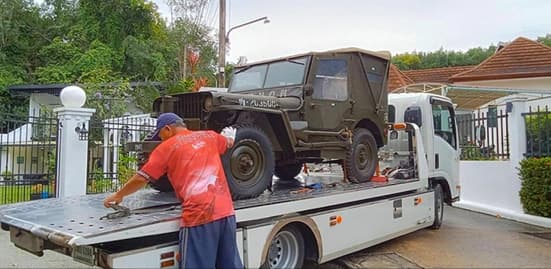
What You Need to Import a Vehicle
- Thai vehicle registration document (สมุดคู่มือจดทะเบียนรถ)
- Bill of sale or purchase invoice for the NOVA declaration (if you bought the vehicle more than 6 months ago, a current valuation carried out in person in the UK by a garage, dealership or other recognised business)
- Vehicle Identification Number (VIN) or chassis number documentation
- Thai Customs export declaration
- HMRC import declaration, with your ToR reference if the vehicle is covered by the relief or duty and VAT payment confirmation if it is not
- UK vehicle approval: Individual Vehicle Approval (IVA), or Motorcycle Single Vehicle Approval for a motorcycle, unless the vehicle is exempt
- DVLA registration application (form V55/5 for a used vehicle) after your NOVA declaration is processed, with the £55 registration fee
- UK motor insurance in place before you drive the vehicle on UK roads
Import Costs to Expect
UK import duty: 10% of a car's customs value (cost plus insurance and freight to the UK) if the car does not qualify for Transfer of Residence relief. For example, a car with a customs value of £30,000 would carry about £3,000 of import duty.
VAT: 20% on the car's value plus shipping, insurance and the import duty, unless relief applies. In the same example that is about £6,600, so duty and VAT together add about 32% to the customs value. Vehicle approval: DVSA's published inspection fee for an Individual Vehicle Approval of a personally imported car is £199 in working hours (£294 outside them), with re-inspections charged separately, and DVLA charges a £55 registration fee. Sea freight is an extra cost, so ask for a quote. Many people who have been living in Thailand find that selling locally and buying a used UK vehicle on arrival works out cheaper.
Importing Pets from Thailand to the UK
Thailand is not a 'listed' country in the UK's pet travel rules. A dog or cat arriving from Thailand needs a Great Britain pet health certificate and a rabies blood test on top of the usual microchip and rabies vaccination, and you cannot bring a banned breed of dog into Great Britain unless it already has a valid Certificate of Exemption. The process is manageable but takes time: the blood sample can only be taken at least 30 days after the rabies vaccination, and your pet can travel only 3 months after the sample, so start at least 4 to 5 months before your planned UK arrival date. Pets travelling for non-commercial reasons can be covered by Transfer of Residence relief. ToR1 asks for each animal's health certificate or passport; if you are bringing more than one animal and do not have these yet, HMRC says you can still apply for your belongings and add them to the approved application later.
The Animal and Plant Health Agency (APHA) approves the airlines and airports that can bring pets into Great Britain. Pets from Thailand travel as cargo on a plane, and only approved carriers and routes can be used: APHA's list, last updated on 9 October 2026, includes Thai Airways and British Airways flights into London Heathrow, among others. Approved routes serve England and Scotland only, and there are no approved routes to Wales. If your pet will arrive more than 5 days before or after you, or its ownership is being transferred, extra rules (known as Balai rules) apply. You can collect your pet only after it has been taken through customs, and an agent, travel company or airline can usually do this for you.

UK Pet Import Requirements from Thailand
- ISO 11784/11785-compliant microchip, implanted before or at the same time as the rabies vaccination (otherwise your pet must be vaccinated again)
- Rabies vaccination given after the microchip, when your pet is at least 12 weeks old
- Rabies blood test: a sample taken at least 30 days after the rabies vaccination and sent to an EU-approved laboratory, with a result of at least 0.5 IU/ml
- A wait of 3 months from the date the blood sample was taken before your pet can travel to Great Britain
- Great Britain pet health certificate signed, stamped and dated by an official veterinarian authorised by the Thai government; your pet must enter Great Britain within 10 days of the date it is issued
- Tapeworm treatment for dogs (not cats), given by a vet no less than 24 hours and no more than 5 days (120 hours) before arrival in Great Britain and recorded on the certificate
- Booking with an airline and airport route on APHA's approved list; check that the airline accepts your pet and what proof of fitness to fly it asks for
- Thai export check: take your pet to the Animal Quarantine Station for a health check no more than 3 days before departure, to get the Thai export permit and health certificate (Suvarnabhumi Airport guidance)
Because of the 30-day wait after vaccination and the 3-month wait after the blood sample, the minimum preparation time from Bangkok is about 4 months from the rabies vaccination, and 4–5 months is a sensible planning allowance: microchip and vaccination, then 30+ days before the blood sample, then the 3-month wait, then the health certificate and travel. Start the process the moment your UK move date is confirmed. Swift Cargo can recommend Thailand-based veterinary clinics experienced with UK pet export requirements.
Thai Ports and UK Arrival Points
The principal departure point for household goods containers shipped from Thailand to the UK is Laem Chabang Port (LCB), in Chonburi province in eastern Thailand. Laem Chabang is Thailand's main deep-water container port, and most household goods containers from Thailand leave from here. For customers in Chiang Mai or northern Thailand, goods are transported overland to Laem Chabang for stuffing and loading. Customers in Bangkok's central areas can also use Bangkok Port (Klong Toey) for some LCL groupage services, though capacity is more limited.
Containers from Thailand reach the UK through container ports including Felixstowe, one of the UK's largest (about 3.2 million TEU handled in 2023, according to Department for Transport statistics), Southampton, London Gateway and Tilbury. The UK port depends on the carrier service booked, and your Move Manager confirms it when your container is booked. HMRC customs clearance is conducted at the port of arrival. After clearance, goods are transported by Swift Cargo to your UK delivery address.
Shipping Routes from Thailand to the UK
From Laem Chabang Port, FCL and LCL containers travel on Asia–Europe services, either direct or with a transhipment at a regional hub such as Singapore or Port Klang (Malaysia). Vessels go west through the Strait of Malacca and across the Indian Ocean, then either through the Suez Canal or around the Cape of Good Hope into the North Sea. In 2026 Maersk and Hapag-Lloyd have moved several of their Asia–Europe services back through the Suez Canal (Maersk's notices of 14 September and 7 October 2026), and they say further changes depend on Red Sea security. Sailing time therefore depends on the carrier service and routing, and we confirm the sailing and the expected UK arrival date when your container is booked.
For LCL (groupage) shipments, Swift Cargo consolidates cargo weekly from Laem Chabang. LCL adds time for consolidation at origin and deconsolidation at a UK container freight station after arrival, so door-to-door time is longer than for FCL. Air freight from Bangkok Suvarnabhumi Airport (BKK) to London Heathrow (LHR) takes 2–3 days including HMRC clearance, and is available for urgent or high-value consignments. Air freight is suited to items needed immediately on arrival, with the main sea freight container following on the standard timeline.
Thailand to UK Transit Times
| From | To | Transit Time |
|---|---|---|
| Bangkok (Laem Chabang) | UK container port (for example Felixstowe) | Depends on service; confirmed at booking |
| Bangkok (Suvarnabhumi) | London (Heathrow) | 2–3 days |
Peak Months
Moves from Thailand tend to cluster at the turn of the year and in August and September, before the UK school and university year starts (January to March and August to September). Carriers plan for rising demand towards year-end (Maersk's October 2026 market update), so book early: 6–8 weeks before loading is a sensible minimum.
UK Visa Requirements for Thailand Residents
Anyone relocating from Thailand to the UK needs the right to live there. British citizens have the right of abode and do not need a visa. Most other people, including Thai nationals, need a visa for a long stay, and GOV.UK advises not to book your travel until you have a decision on your visa application. Customs relief is a separate matter handled by HMRC, which grants Transfer of Residence relief to people making the UK their main home.
For Thai nationals, a long stay in the UK for work, family or study needs a visa applied for before you travel. British citizens returning from Thailand do not need a visa, but should still apply for ToR relief before their goods are shipped. UK visa applications are made online and decided by UK Visas and Immigration; the British Embassy in Bangkok does not provide visas. GOV.UK says that Skilled Worker, Global Talent and Student visa applications made from outside the UK usually get a decision within 3 weeks, and family visas for partners within 12 weeks, although some take longer.
Main UK Visa Categories
Thailand-based movers to the UK commonly use one of the following visa routes:

Skilled Worker Visa
For people with a confirmed job offer from an approved UK employer (sponsor) in an eligible occupation. The salary must be at least £41,700 a year or the going rate for the job, whichever is higher, with lower thresholds in some cases. The sponsor assigns a Certificate of Sponsorship (CoS) before you apply. The visa lasts up to 5 years before you extend it, and after 5 years you may be able to apply to settle permanently, although the Home Office has announced plans to lengthen the qualifying period for most routes, so check the current rules.
Global Talent Visa
For leaders and potential leaders in academia or research, arts and culture, or digital technology. You need an endorsement from an organisation approved by the Home Office, unless you have won an eligible prestigious prize, and you can apply from outside the UK. You can live and work in the UK for up to 5 years at a time, and you may be able to settle after 3 or 5 years, depending on your field and how you applied.
Family Visa (Partner or Spouse)
For the partner or spouse of a British or Irish citizen, or of someone settled in the UK (GOV.UK lists a few other partner groups). You and your partner usually need to show combined income of at least £29,000 a year and a good knowledge of English. GOV.UK says you will usually get a decision within 12 weeks if you apply from outside the UK; start well before your planned shipping date.
Student Visa
For people aged 16 or over with a place on a course with a licensed student sponsor (university, college or school). Your course provider issues a Confirmation of Acceptance for Studies (CAS), which you need to apply, and you can apply up to 6 months before the course starts. Students coming for full-time study do not apply on ToR1: your agent declares your goods under customs procedure code 40 00 C06, with evidence of your period of study.
Important: Get your visa decision before you fix your travel and shipping dates. GOV.UK advises not to book travel until you have a decision, and a refused or delayed visa moves your whole timeline.
To find out which visa you need and how to apply, see GOV.UK's guide to applying for a UK visa.
Frequently Asked Questions
Living in the UK: What to Expect
Cost of Living
People arriving in the UK from Thailand face a significant adjustment in day-to-day costs. London is the most expensive region for rent, and Scotland and Wales are far cheaper while still offering urban amenities. The Office for National Statistics put average private rent at £2,332 a month in London and £1,400 across the UK in August 2026, with one-bedroom homes averaging £1,136 across the UK. Average rents were £1,013 in Scotland and £846 in Wales.
UK supermarkets include Tesco, Sainsbury's, ASDA and Lidl, and Thai food is widely available in UK cities. Cooking at home is usually cheaper than eating out.
Transport costs vary significantly by location. London's public transport network (TfL, the Tube, buses) is comprehensive; an annual Zone 1–2 Travelcard costs £1,788 in 2026 (TfL). Outside London, car ownership is more common and public transport less frequent. Ofgem's price cap puts a typical household's gas and electricity at £1,723 a year (about £144 a month) from October 2026; the cap covers gas and electricity only.
Safety and Security

Safety and Security
Safety in the UK varies by area, and neighbourhood safety varies substantially within cities, so research specific postcodes before renting. Petty crime such as phone theft, bike theft and bag snatching occurs in UK cities, particularly London, and standard urban precautions apply.
Local crime data is published online, for example at police.uk for England, Wales and Northern Ireland, so you can check an area before committing to it.
The Office for National Statistics publishes crime statistics for England and Wales, and says survey-based crime against individuals and households has generally decreased over the last 10 years, with fraud a notable exception. Scotland and Northern Ireland publish their own statistics.
Salaries and Wages
The UK National Living Wage (for workers aged 21 and over) is £12.71 per hour from April 2026, which is about £24,800 a year for a 37.5-hour week. The Office for National Statistics put median gross annual earnings for full-time employees at £39,039 in April 2025.
Pay varies widely by sector and region, and the ONS publishes median earnings by occupation and region in its Annual Survey of Hours and Earnings. Skilled Worker visa holders must be paid at least £41,700 a year or the going rate for their job, whichever is higher, with lower thresholds in some cases.
Skilled Worker salary thresholds are set by the Home Office. The effective purchasing power depends heavily on UK location: the same salary typically goes further in Leeds, Newcastle or Cardiff than in London or the Home Counties.
UK Tax System
The UK levies Income Tax and National Insurance Contributions (NICs) on employment income. For 2026/27 in England, Wales and Northern Ireland, Income Tax is 0% on the first £12,570 (Personal Allowance), 20% (basic rate) on £12,571–£50,270, 40% (higher rate) on £50,271–£125,140 and 45% (additional rate) above £125,140; Scotland has its own bands. Employees pay NICs of 8% on earnings between £12,570 and £50,270, and 2% above £50,270. Employers pay NICs of 15% on earnings above £5,000 a year, which affects total employment cost.
UK tax residence is decided by the Statutory Residence Test. Spending 183 or more days in the UK in a tax year makes you UK resident, and other tests (such as having your only home in the UK or working full-time in the UK) can make you resident sooner. When you move to or from the UK, the tax year is usually split into a non-resident part and a resident part (split-year treatment, if you qualify), so you pay UK tax on foreign income only for the time you live here. The 1981 UK–Thailand Double Taxation Convention (in force since 20 November 1981) covers income taxed in both countries. Consulting a tax adviser familiar with it is recommended before your first UK tax return.
Job Market
Skilled Worker visa holders must have a confirmed job offer before they apply, so the employment question is settled before the move. British citizens returning from Thailand have the right of abode, which lets them live and work in the UK without immigration restrictions.
Professional registration bodies in sectors such as medicine, law and finance may require overseas practitioners to demonstrate UK-equivalent qualifications before practising, so check the requirements of your profession's regulator before you move.
If you start working for yourself in the UK, you will usually need to register for Self Assessment: GOV.UK says you must tell HMRC by 5 October following the end of the tax year (6 April to 5 April) for which you need to send a return, if you have not sent one before, or you could get a penalty. Visa conditions govern whether visa holders can take on self-employment alongside their sponsored role, so check your conditions before accepting freelance work.
Infrastructure and Services
The UK's healthcare system is the National Health Service (NHS). Most visa holders pay the Immigration Health Surcharge as part of their visa application, which lets them use the NHS free of charge from the date their visa starts (some services, such as prescriptions, dental treatment and eye tests, are still charged). Registering with a GP surgery in England is free, and you do not need ID, proof of address or proof of immigration status, although a surgery can refuse if it is not accepting new patients or you live outside its area. NHS waiting times for non-emergency specialist care can be long; private healthcare is available as a supplement for faster access.
The UK has a well-developed rail network connecting major cities, though services vary considerably in frequency and reliability by region. Fast intercity services between London and Birmingham, Bristol, Manchester and Edinburgh take roughly 1.5–4.5 hours; check National Rail for current timetables. Broadband is widely available in UK cities, and prices and speeds vary by provider and address.
In England, children must be in education from the term after their fifth birthday until the last Friday in June of the school year they turn 16, and young people must then stay in education or training until 18. State schools are free; Scotland, Wales and Northern Ireland have their own rules. State school quality varies significantly by local authority; many families research Ofsted ratings for local schools before choosing a residential area. International and independent schools are available in most UK cities for families who prefer a curriculum familiar from Thailand-based international schools (British, IB), and their fees vary widely by school.
Banking and Currency
The UK's currency is Pound Sterling (GBP). The main high-street banks are Barclays, HSBC, Lloyds, NatWest, and Santander. Opening a traditional bank account in the UK typically requires proof of UK address and identity documentation. Digital banks such as Monzo, Starling and Revolut are an alternative for new arrivals; each sets its own identity and address requirements, so check them before you arrive.
For regular transfers between Thailand and the UK, such as moving savings, settling Thai financial obligations or supporting family, compare exchange rates and fees across providers. Wise (formerly TransferWise), for example, says it uses the live mid-market exchange rate plus a small upfront fee.
Your UK credit history starts to build once you have UK accounts and credit. UK credit reference agencies (Experian, Equifax and TransUnion) keep the UK credit files, and using a credit card regularly and paying it in full each month is a common way to build one; several UK banks offer cards designed for people with limited credit history.
Climate and Weather

Climate and Weather
The UK has a temperate maritime climate characterised by mild temperatures, moderate rainfall year-round, and considerable variation in daylight hours. Met Office averages for Hampstead in London (1991–2020) put winter (December–February) daily highs at about 7–8°C and lows at about 2–3°C, and summer (June–August) highs at about 20–23°C. Around the shortest day, daylight lasts about 7.5 to 8 hours in England and about 7 hours in Edinburgh, while London has about 16.5 hours around the summer solstice. Snow falls occasionally in winter.
People arriving from Thailand will notice the contrast immediately. Bangkok's year-round heat and high humidity bear no resemblance to a UK autumn or winter. The adjustment to grey skies, rain, and short winter days is a genuine lifestyle change that Thailand-to-UK movers can find challenging in the first year. Practical steps: invest in quality winter clothing before or shortly after arrival, ensure your new UK home has adequate heating and insulation, and expect higher energy bills from October to March.
Regional variation is significant. Edinburgh and the Scottish Highlands are cooler than London and the South East, and the west of England and Wales generally receive more rainfall than the east. If you are free to choose where in the UK you settle, climate is a meaningful factor alongside job market, cost of living, and proximity to family.
Door-to-Door Relocation from Thailand
Swift Cargo's door-to-door service covers the full relocation from your address in Thailand — Bangkok, Phuket, Chiang Mai, or Koh Samui — to your door in any UK city. The service coordinates Thai export compliance, sea or air freight, HMRC ToR customs clearance, and UK delivery in a single managed process with one point of contact throughout.
- Home survey and quote:
Your Move Manager assesses your volume (in-person in Thailand or via video walkthrough), confirms packing requirements, and produces a fixed-price quote covering Thai-side packing, export documentation, sea freight, HMRC clearance, and UK delivery. - Thai export packing:
Our Thailand packing team attends your Bangkok, Phuket, Chiang Mai, or Koh Samui address. All items are inventoried, wrapped in export-grade materials, and loaded into cartons or wooden crates. The itemised packing list produced at this stage becomes your HMRC customs declaration inventory. - Thai export clearance:
Swift Cargo prepares and files the necessary Thai Customs export declaration. Your Move Manager reviews the inventory for Thai-restricted items — particularly Buddha images, antiques, and artworks — before goods reach the port. - HMRC ToR01 application:
Your Move Manager prepares your ToR01 application package: the online ToR1 form, a list of your items, proof of your UK and non-UK addresses, and your passport photo page. HMRC says to apply before the goods are shipped, so the reference number can go on the import declaration. - Sea freight from Laem Chabang:
Your container is booked onto a confirmed carrier service from Laem Chabang. You receive a Bill of Lading with vessel name, voyage number, and estimated arrival date at the UK port. - HMRC customs clearance at the UK port:
Swift Cargo's UK customs broker files the HMRC import declaration with your confirmed ToR reference. We monitor the container through HMRC's systems and manage any additional documentation requests or inspection queries. - UK delivery:
Once cleared at the UK port, your container is transported to your UK address. Our delivery team unloads, places items as directed, and removes all packing materials.
Your Move Manager stays available from first contact through delivery, and is reachable by phone, email, or WhatsApp throughout the transit period.
What Our Customers Say
Thailand to UK moves
Your Next Steps
Your Next Steps
Request a quote with your inventory list, origin address in Thailand (Bangkok, Phuket, Chiang Mai, or Koh Samui), and UK delivery address. Provide your target move date and visa status.
Start your HMRC ToR01 application at gov.uk/guidance/transfer-of-residence-to-great-britain as soon as your move date is confirmed — HMRC says to apply before your goods are shipped.
Check your inventory against Thai export restrictions: Buddha images and antiques need a Fine Arts Department export permit before packing, art objects do too unless they are up to five years old and not registered, and the department's guidance lists religious images 100 years old or more as examples of items not permitted to leave.
If you have a pet travelling with you, begin the microchip, rabies vaccination, blood test and 3-month waiting period immediately; allow at least 4–5 months from Bangkok.
Professional packing at your Thailand address: our team attends, produces an itemised inventory, and wraps goods in export-grade materials. The packing list supports your HMRC customs declaration.
Container departs Laem Chabang on a confirmed carrier service. You receive the Bill of Lading, vessel tracking, and estimated UK arrival date. Your ToR01 reference, applied for before the goods were shipped, goes on the import declaration.
After HMRC customs clearance at the UK port, your container is delivered to your UK door. Your Move Manager is available throughout and after delivery.