
Shipping from Thailand to Australia
Swift Cargo is rated 4.87 by 25k+ customers.
Planning a move to Australia?
International relocations from Thailand to Australia: taxes, customs and more.
Applies to people shipping their used household and personal goods from Thailand to Australia as Unaccompanied Personal Effects (UPE)
You must lodge the Unaccompanied Personal Effects Statement (B534) and provide a detailed inventory, transport document, and identity.
Biosecurity checks apply to all UPE. Risk items like wood, food, plant material, and used outdoor gear need extra care and cleaning.
Low value rules use A$1,000 (AUD) as a customs value threshold for duty assessment. GST may still apply in some cases.
Minimum shipment size: Small studio apartment. There is no maximum size limit.
There are important things to know before you pack your boxes. From strict customs regulations to choosing the right visa, successful relocation requires preparation and the right partner by your side.
This page covers what you need to know about shipping your belongings from Thailand to Australia. You’ll find clear information about customs clearance, peak shipping seasons, and the minimum shipment size required. We also explain our door-to-door service, our insurance options, and more.
Work relocations, family moves, and study-abroad placements: Swift Cargo and our local partners coordinate each stage of the move, packing, freight, customs, and final delivery, so the logistics stay in one place instead of spread across separate providers.
Customs
Australia has some of the world’s most detailed and strict customs procedures. When shipping household goods or personal items from Thailand, you must comply with all documentation and inspection requirements — including DAFF biosecurity checks that are particularly thorough for goods with Thai-origin organic materials such as wood, bamboo, rattan, and natural fibres.
Documents you need for importing Personal Goods from Thailand
To clear your items through Australian Customs, you’ll need the following:
- Ocean Bill of Lading or Airway Bill
- Completed B534 form (Unaccompanied Personal Effects Statement, version 6/00)
- Passport ID and signature page (Signature must match the one on the B534 form)
- Detailed inventory list, written in English
- Each package labelled with a list of contents, in English
- Copy of your visa and passport identification page
- Visa grant letter , if the visa is not stamped in the passport
- Full name and residential address in Australia (no business addresses)
Quarantine and Delays
All household and personal goods entering Australia are subject to quarantine inspection by the Department of Agriculture, Fisheries and Forestry (DAFF) — Australia's biosecurity rules trace back to over a century of border legislation that defines exactly what constitutes a risk material.
- This examination can take up to 14 working days after your shipment arrives.
- To reduce the risk of delays, clean all items thoroughly before packing — especially anything that may have touched soil, plants, or outdoor materials.
What you can import to Australia

Personal belongings

Used clothing

Household appliances

Fragile items

High-value items

Large items & furniture
Timber furniture inspected for pests, at your cost

Excess luggage

Pets
Permit and quarantine for cats/dogs, except compliant arrivals from New Zealand

Vehicles
Import approval before shipping; duty payable
Restricted Goods

Drug Contraband

Explosives

Biohazard

Chemicals

Corrosives

Counterfeit

Ivory

Batteries

Flammables

Firearms

Drugs

Fake Notes

Poison

Pornography

Knife

Tobacco

Hazardous

E-cigarettes & vapes
Controlled import; permit needed

Asbestos
Banned, including in vehicles
Minimum Shipment Size for Australia
When shipping to Australia with Swift Cargo, there are minimum volume requirements to ensure efficient handling and delivery.
- Minimum shipment: Studio Apartment
This is the smallest shipment size accepted for freight or relocation services to Australia.
- No maximum size limit
Swift Cargo can manage shipments of any size, from small personal moves to full household relocations.
These minimums apply specifically to shipments entering Australia from or through Thailand.
Download the Customs Forms
- Unaccompanied Personal Effects (UPE) Statement (Form B534): https://www.abf.gov.au/form-listing/forms/b534e.pdf
- Letter of Authority (template): https://www.service.nsw.gov.au/letter-of-authority/generic-grant-template
Contact Australian Customs

Taxes and Duties
Understanding Australia’s import tax rules can help you avoid surprises during customs clearance. Here’s what you need to know:
General Tax Rules
- Goods valued under AUD 1,000 (around 23,100 THB) are usually not subject to import duties or taxes during customs clearance.
- However, since July 2018, certain low-value goods may still be charged a 10% Goods and Services Tax (GST). This especially applies to online purchases and commercial goods.
Tax Exemptions
- Most personal goods under AUD 1,000 (around 23,100 THB) are duty-free, with some exceptions like alcohol or tobacco.
- This exemption applies to unaccompanied personal effects as long as they meet Australian Border Force (ABF) conditions.
Duty-Free Status for Official Use
Some individuals or organisations may import goods without paying duties, provided the items are for official use. This includes:
- Diplomatic missions
- Government posts
- Administrative or humanitarian staff on official assignment
To qualify, you must:
1. Contact the ABF’s ACT Regional Office
2. Request a Customs Identification Number
3. Provide supporting documents to claim the exemption
This status may apply to embassy staff, foreign aid workers, or volunteers under specific missions.
Import your Vehicle
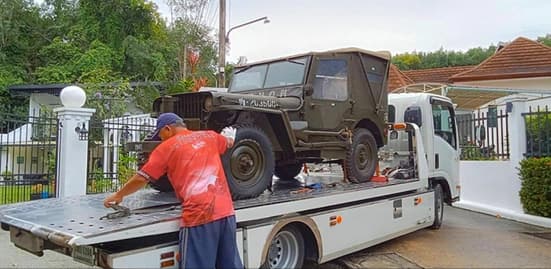
Bringing a car from Thailand into Australia is possible but requires approval and strict compliance with local rules.
What You Need
What You Need
- Vehicle Import Approval (VIA) – Apply before the car arrives
- Key documents – Passport, registration papers, bill of lading, sales invoice, customs form B534
- Compliance – Your car must meet Australian safety and emissions standards (ADRs)
Costs to Expect
- 5% duty
- 10% GST
- Luxury Car Tax – 33% on value over AUD 80,809 (FY 2026–27; approx. 1,870,000 THB)
Extra fees may apply for inspection, cleaning, or modifications.
We Can Help - Swift Cargo handles the process from start to finish: paperwork, transport, and customs.
Import your Pets
Australia has very strict biosecurity rules to protect its environment, agriculture, and native wildlife. Only pets meeting exact health, vaccination, and import conditions are allowed.

Key Requirements
- Valid Import Permit
Apply through Australia’s BICON system before travel. - Microchip & Vaccinations
Your pet must be microchipped and up to date on rabies and core vaccines. - Rabies Blood Test
A rabies titer test may be required, done in an approved lab. - Quarantine
All pets must complete at least 10 days in a government quarantine facility on arrival.
List of Shipping Ports in Australia
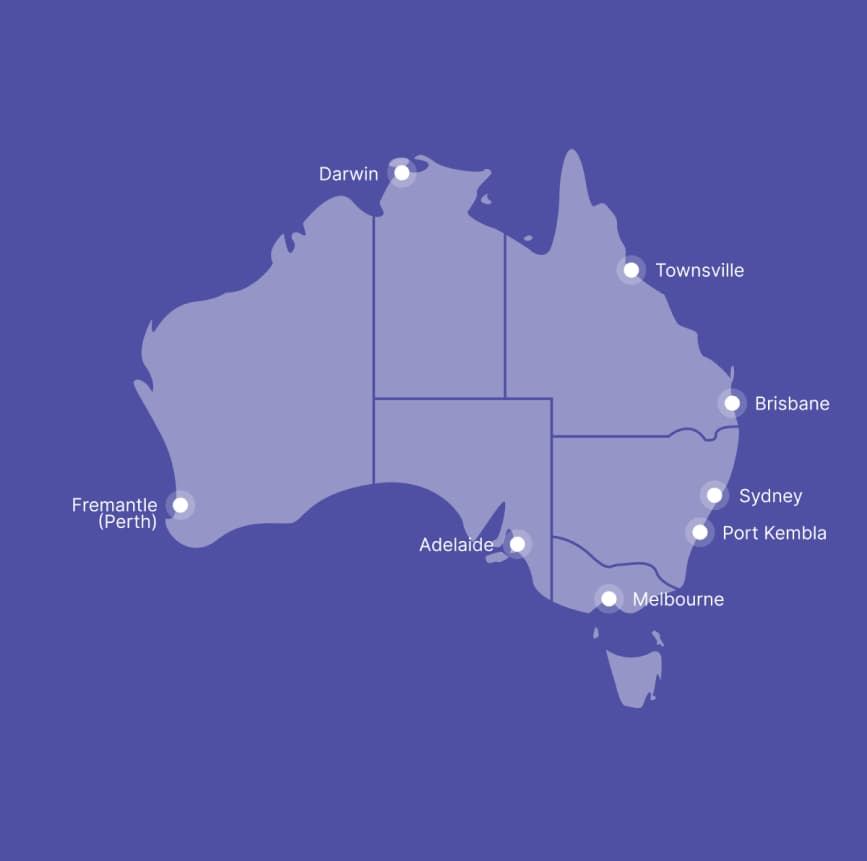
Swift Cargo operates through all major international ports across Australia. We provide both sea freight and air freight options for relocations and commercial shipments to the destinations below:
Ports and Shipping Methods
Ports and Shipping Methods
- Adelaide – Sea freight and air freight available
- Brisbane – Sea freight and air freight available
- Darwin – Sea freight and air freight available
- Fremantle (Perth) – Sea freight and air freight available
- Melbourne – Sea freight and air freight available
- Port Kembla – Sea freight and air freight available
- Sydney – Sea freight and air freight available
- Townsville – Sea freight and air freight available
Transit time per Destination
| From | To | Est. Transit Time |
|---|---|---|
| Bangkok | Adelaide | 22-24 days |
| Bangkok | Brisbane | 19-21 days |
| Bangkok | Darwin | 24-26 days |
| Bangkok | Fremantle | 14-16 days |
| Bangkok | Melbourne | 21-23 days |
| Bangkok | Port Kembla | 16-18 days |
| Bangkok | Sydney | 23-25 days |
| Bangkok | Townsville | 33-35 days |
Peak Months
Planning your freight shipments around Australia’s peak seasons can save time and reduce costs. Here’s what to expect throughout the year:
- September to November
The lead-up to the Australian summer and Christmas is the busiest commercial import period, so ports get congested and container space tightens. Household shipments share that congestion — book early if your goods need to arrive before the new year. - December to January
Australian public holidays slow port and depot operations, and biosecurity inspection queues can lengthen. Expect longer clearance and delivery times for goods arriving in this window. - February to August
Generally a steadier stretch on the Thailand-to-Australia lane once the holiday peak clears, which usually makes it a smoother window for household-goods moves.
Visa Requirements for Moving to Australia
If you are planning to relocate to Australia, you’ll need to hold a valid visa. There are many visa types available, and the names can often be confusing. The best way to choose the right one is to check the official requirements and see which options you are eligible for.
Main Visa Categories
Most Australian visas fall into one of the following categories:

Visitor visas
For short stays, tourism, or business visits
Working and skilled visas
For temporary or permanent jobs
Student and training visas
For education or professional development
Family and partner visas
For joining relatives or spouses in Australia
Note: If you are moving to Australia permanently, a working visa or family visa is usually the most appropriate.
For detailed and up-to-date information, visit the official Australian Government Immigration website.
Frequently Asked Questions (FAQ)
The best method depends on your timeline, budget, and the volume of your household goods.
Most expats choose either sea freight (cost-effective for full homes) or air freight (fast for time-sensitive items). When handled door-to-door, Swift Cargo manages packing, export documents, customs clearance, and final delivery so your entire relocation runs smoothly.
We help you compare LCL (shared container), FCL (full container), and air cargo options to match your move plan.
Sea freight typically takes 4–10 weeks, while air freight arrives in 5–12 days depending on the route.
Transit times can vary due to:
- Departure and arrival port schedules
- Customs inspections
- Local delivery logistics
Swift Cargo provides route-specific timelines, real-time updates, and a dedicated Move Manager so expats always know where their shipment is during the move.
Costs depend on volume, destination, transport method (air vs sea), packing requirements, and customs regulations.
Swift Cargo offers transparent, all-inclusive door-to-door quotes—no surprise fees, no hidden surcharges.
Typical expat relocations include:
- LCL (shared container): Ideal for 1–2 bedrooms
- FCL (20ft or 40ft container): Best for full-family homes
- Air freight: Higher cost but significantly faster
Our team prepares a personalized estimate based on your inventory and destination.
Yes. Swift Cargo manages all customs documentation, clearances, and required government filings on your behalf.
This includes:
- Inventory lists
- Proof of residence or employment
- Duty-free eligibility documents
- Restricted items guidance
- Arrival customs processing
We ensure your shipment meets the destination country’s requirements—reducing delays, penalties, or complications.
Yes. We offer full professional packing, export wrapping, and itemised inventory creation for all international relocations.
This service includes:
- Specialist packing for fragile or high-value items
- Furniture disassembly and reassembly
- Export-grade materials
- Labelling and digital inventory records
Proper packing significantly reduces the risk of damage during long-distance moves.
Air freight is faster; sea freight is more budget-friendly and better for larger volumes.
Method highlights:
- Air Freight: Best for urgent items and small shipments; fastest option but higher cost.
- Sea Freight – LCL: Ideal for 1–2 bedrooms; affordable and flexible; slightly slower.
- Sea Freight – FCL: Best for full-home moves; most cost-efficient; longer transit.
Swift Cargo helps expats choose the right method based on deadlines and inventory size.
Yes—containerised shipping is one of the safest ways to move household goods internationally.
Options include:
- Full Container (FCL): Your items occupy the container alone.
- Shared Container (LCL): You pay only for the space you use.
Swift Cargo uses secure loading, moisture protection, and tracking to protect your belongings throughout the journey.
Yes. Our door-to-door service covers everything from packing your home to delivering items into your new residence abroad.
This includes:
- Packing and inventory
- Freight booking
- Customs clearance
- Delivery and unpacking
Expats choose us because they want a single, accountable partner for every step of their international relocation.
We support moves to 120+ countries, including popular expat destinations such as:
- UK, Germany, France, Netherlands
- Singapore, Thailand, Japan, South Korea
- Australia, New Zealand
- UAE, Qatar, Saudi Arabia
If your route is uncommon, we source the most reliable carrier and customs partner for your destination.
Most expats book 4–8 weeks before departure, especially for sea freight that needs container scheduling and customs prep.
Booking early helps with:
- Better pricing
- Guaranteed container space
- Smoother export procedures
Urgent relocations can be handled faster via priority air freight.
Yes. Your Move Manager helps compare freight costs to replacement value—common for expats.
We assess:
- Furniture size and weight
- Local prices in your destination country
- Customs duties
- Emotional or irreplaceable items
This keeps your move both economical and practical.
You can request a quote online or through WhatsApp. A Move Manager will guide you through a quick inventory review and route options.
Most expats receive:
- A tailored door-to-door quote
- Recommended shipment method
- Estimated timelines
- A documentation checklist
We prioritise speed, transparency, and personal support.
Prepare your move to Australia
Duty-free personal effects
goods you have owned and used for 12 months generally enter Australia free of duty and GST
Laem Chabang → SYD / MEL
the main sea routing for household moves from Thailand to Australia
Biosecurity screening
wooden furniture and outdoor gear face close inspection under Australian rules
Australian Cost of living
Relocating to Australia usually comes with a noticeable increase in living expenses, especially if you’re coming from a country with a lower cost of living. On average, everyday costs in Australia are significantly higher than in Thailand. Rent is often the biggest adjustment. In major cities like Sydney or Melbourne, the average weekly rent for a single person can range roughly from AUD 500 to AUD 700 depending on location and housing type, which is much higher than what most Thai expats may be used to.
Utilities and internet are also relatively expensive. A standard home internet plan typically costs around AUD 70–90 per month, and electricity, water, and gas bills can add up depending on usage and season. Groceries are another major factor, with food and household goods generally costing significantly more than in Thailand. Eating out is also more expensive, with meals at casual restaurants often costing several times more than similar meals in Thai cities.
Transportation costs are also higher overall. Public transport fares, fuel, and car ownership expenses can represent a noticeable share of your monthly budget, although costs vary widely depending on the city and commuting habits.
The upside is that Australian salaries are among the highest globally, with a relatively high minimum wage and strong earning potential in many sectors. This helps offset the higher cost of living, although purchasing power varies depending on your profession, visa conditions, and the city or suburb you live in.
Overall, moving to Australia can significantly increase your monthly expenses compared to Thailand, particularly for housing, food, transport, and services. To make the transition smoother, it’s important to plan your budget carefully, compare cities based on affordability, and prepare for one-time relocation costs such as rental deposits (bond), insurance, and setup expenses. With proper planning, Australia offers a high quality of life, reliable infrastructure, and strong long-term opportunities.
Security in Australia

Security in Australia
Australia is widely regarded as a safe destination for expatriates, with relatively low rates of violent crime by international standards. However, like any country, safety levels can vary depending on the city and neighbourhood.
According to data from the Australian Bureau of Statistics, a small percentage of the population experiences physical assault or threats each year. Property-related offences such as theft, burglary, and motor vehicle theft are more common than violent crime. While these figures may appear significant in absolute terms, Australia’s homicide rate remains low (around or below 1 per 100,000 people), and most residents and expatriates live safely without direct exposure to serious crime.
That said, it’s important to stay alert, especially in urban areas where petty theft and home break-ins can occur. Choosing a safe neighbourhood, securing your home and vehicle, and staying informed about local conditions are simple but effective ways to reduce risk. With basic precautions and awareness, most people enjoy a safe and comfortable life in Australia.
Average salaries in Australia (by industry)
Salaries in Australia vary widely depending on industry, location (major cities usually pay more), company type (local or international), and seniority. As a general benchmark, the average full-time salary is around AUD 80,000–90,000 per year, although this varies significantly by role and experience level.
Below are typical salary ranges by industry (annual), especially relevant for roles that foreigners often access through international companies:
IT jobs
Tech remains one of Australia's strongest-paying sectors. Mid-level roles typically range from AUD 80,000 to 130,000 per year, while senior specialists and engineers can earn AUD 140,000–180,000+ depending on expertise, company, and location.
Finance / Corporate roles
Roles in banking, corporate finance, consulting, and business management generally range from AUD 70,000 to 150,000+ per year depending on seniority. Management-level roles often sit between AUD 100,000 and 160,000 annually, with higher compensation in major financial hubs like Sydney.
Sales jobs
Sales roles across industries typically range from AUD 60,000 to 110,000 per year, with commission and bonuses potentially increasing total compensation significantly depending on performance and sector.
Education
Teaching salaries vary depending on qualifications and institution. Public school teachers generally earn between AUD 70,000 and 110,000 per year, while roles in private or international schools may offer higher salaries. Entry-level or language teaching roles may be lower depending on certification.
Hospitality & tourism
Hospitality salaries are generally lower compared to other sectors. Entry-level roles often start near minimum wage, while supervisory and management positions can range from AUD 60,000 to 100,000+ per year depending on the establishment and location.
Australia's personal income tax system for expatriates
Income tax for foreigners living in Australia is primarily determined by tax residency, which is assessed based on several factors including physical presence, intention, and ties to Australia (not solely a 183-day rule). Tax residents are generally taxed on their worldwide income, while non-residents are taxed only on income sourced in Australia. Australia uses a progressive personal income tax system, with rates ranging from 0% to 45% (excluding Medicare levy), depending on income thresholds. Employment income, business income, rental income, and investment income may all fall within the tax base, depending on the individual’s situation.
Australia does not operate a remittance-based taxation system. Foreign income earned by Australian tax residents is typically taxable regardless of whether it is brought into Australia. Double Taxation Agreements (DTAs) between Australia and many countries help prevent the same income from being taxed twice. The Australian tax year runs from July 1 to June 30, and individual tax returns are generally due by October 31 (or later if lodged through a registered tax agent). Understanding residency status, applicable tax rates, and available offsets is essential for expatriates to remain compliant and manage their tax obligations effectively.
Finding a job in Australia as a foreigner
Starting a new career in Australia as an expat is absolutely possible, but it requires proper planning, relevant skills, and the right visa. Major employment hubs like Sydney and Melbourne offer the widest range of opportunities across industries, while cities like Brisbane, Perth, or Adelaide may have more specialized markets (such as mining, construction, healthcare, or tourism). Strong English proficiency is essential for most roles and significantly improves employability.
1. Start with the right job platforms
The easiest first step is applying through Australian job boards and professional platforms. Popular websites include Seek, Indeed Australia, and LinkedIn. Many foreigners find opportunities in sectors like tech, engineering, healthcare, education, and hospitality through these channels.
2. Use recruiters and agencies (especially in Sydney)
Recruitment agencies can help match your profile with employers who are open to hiring international candidates. This is particularly useful for skilled professionals. Well-known agencies in Australia include Robert Walters, Hays, Michael Page, and Adecco.
3. Network in real life and online
In Australia, networking plays an important role in finding job opportunities. Attending industry events, professional meetups, and using platforms like LinkedIn can open doors to roles that are not always publicly advertised.
4. Target industries that commonly hire foreigners
Foreign workers often find opportunities in sectors experiencing skill shortages, such as healthcare, construction, engineering, IT, and education. Hospitality and tourism may also offer entry-level opportunities, particularly in major cities and tourist areas.
5. Make sure you stay legal with VISA and work permits
To work legally in Australia, you must hold a valid visa with work rights. Common options include employer-sponsored visas (such as the Temporary Skill Shortage visa), skilled migration visas, or working holiday visas for eligible nationalities. Work rights and conditions depend on the visa type, and employers may need to sponsor your application.
Important update: Australia does not use a separate “work permit” system like some countries. All work authorisation is managed through the visa system administered by the Department of Home Affairs. Applications, updates, and visa conditions are handled online via the official portal: https://www.homeaffairs.gov.au/.
Education, healthcare and public services in Australia
Australia offers a well-developed mix of public and private infrastructure accessible to local residents and expatriates. Education options are extensive and include high-quality public and private schools, as well as international schools, particularly in major cities like Sydney, Melbourne, and Brisbane. While bilingual programmes exist, most education is delivered in English. Some international schools offer curricula such as IB, British, American, or Australian, depending on family preferences.
Healthcare is a key advantage for many people relocating to Australia. The country has a high-quality healthcare system combining public services (Medicare) and private providers. Public hospitals offer comprehensive care at low or no cost for eligible residents, while private hospitals provide shorter waiting times and additional comfort. In rural and remote areas, healthcare access can be more limited, although services remain well-structured compared to many countries in Southeast Asia.
Other public services such as utilities, emergency services, and administrative systems are reliable and efficient across Australia. Most government services, including immigration, taxation, and social services, are accessible online through well-developed digital platforms. English is the primary language used in all official processes, and digital payments are widely accepted, with minimal reliance on cash.
Overall, Australia’s infrastructure provides a strong foundation for expatriates settling in the country. Many administrative processes can be completed online, although some may still require in-person appointments and official documentation. If you wish to receive help from Swift Cargo for your relocation, let's get in touch.
Best ways to get Australian Dollars (AUD) in Australia
Planning your budget in Australia starts with choosing the right way to access Australian Dollars. Here are the most common options, with typical fees, pros, and cons.
1. Currency Exchange Booths
Currency exchange services are available in airports, city centres, and tourist areas, but rates and fees can vary significantly. In Australia, exchange booths are generally less competitive than digital options, with margins often higher than 1–3%, especially in airports.
Pros:
- Immediate access to cash
- Useful upon arrival
- Available in major cities and airports
Cons:
- Often less competitive exchange rates
- Potential hidden fees or commissions
- Less useful for long-term residents
2. ATM Withdrawals
Withdrawing cash from Australian ATMs is convenient and widely available. Fees vary depending on the ATM provider and your home bank. Some ATMs charge a direct fee (typically around AUD 2–5), while others may be fee-free. Additional foreign transaction and currency conversion fees may apply from your bank.
Pros:
- Easy and widely available
- No need to carry large amounts of cash
- Works with most international cards
Cons:
- Fees vary by ATM and bank
- Exchange rates depend on your card provider
3. Multi-currency cards & Digital Wallets
Multi-currency cards and digital banking apps (such as Wise or Revolut) are among the most cost-effective options. They usually offer near-market exchange rates with low markups (often below 1%) and are widely accepted across Australia, which is a highly cashless society.
Pros:
- Competitive exchange rates
- Widely accepted for payments
- Secure and easy to manage
Cons:
- ATM withdrawal limits or small fees may apply
- Requires setup before or shortly after arrival
4. Use your bank before leaving
Exchanging currency before travelling can be convenient but often comes with higher markups (typically 3–8%), making it less cost-effective than other options.
Pros:
- Immediate access to cash on arrival
- Reduced need to search for exchange services
Cons:
- Higher exchange costs
- Less flexibility
Our recommendation for foreign residents in Australia: prioritize multi-currency cards or digital banking solutions for everyday spending, and use ATMs when needed. Cash is less commonly used in Australia, so carrying large amounts is generally unnecessary.
Australian Climate and Weather

Australian Climate and Weather
Australia has a diverse climate that varies significantly across regions, which can be both appealing and challenging for newcomers. The country generally experiences four seasons:
- Summer (December–February), when daytime temperatures can exceed 35°C (95°F), especially in inland areas
- Autumn (March–May), with milder temperatures and generally stable weather conditions
- Winter (June–August), which is cooler, particularly in southern regions, with temperatures sometimes dropping below 10°C (50°F)
- Spring (September–November), characterized by warming temperatures and increasing rainfall in some areas
Humidity varies depending on the region. Northern areas, such as Queensland and the Northern Territory, experience high humidity and a tropical climate, while southern regions like Melbourne or Adelaide tend to have a more temperate and less humid climate.
For someone planning to move to Australia, daily life is often shaped by strong sun exposure and seasonal variations. Air conditioning is widely used in homes, offices, and transport, especially during summer. In tropical northern regions, a wet season (typically November to April) brings heavy but intermittent rainfall, high humidity, and occasional flooding, while the dry season is more comfortable. In contrast, southern cities experience more distinct seasonal changes, including cooler winters and milder summers compared to the interior.
Overall, Australia’s climate supports an outdoor-oriented lifestyle, but newcomers should be prepared for strong UV exposure, heatwaves in summer, and regional climate differences that can significantly impact daily living.
Door-to-Door Relocation Service
Swift Cargo offers a full door-to-door moving service from Thailand to Australia. From packing your goods to unpacking them in your new home, we take care of every step of the process.
1. Packing and Loading.
We offer professional packing services to make sure your items are safe and well protected during transport. Common Packing Materials:
- Packing boxes
Available in different sizes, designed to handle standard household items during shipping. - Bubble wrap
Used for fragile items like glasses, ceramics, and electronics to prevent breakage. - Wooden crates
Ideal for large or sensitive items. They offer extra resistance and protection, including against humidity.
Full Packing Service: Don’t want to pack yourself? No problem. Our team can pack all types of goods, including furniture and oversized items. Just fill out the contact form, and one of our consultants will get in touch to organise your packing needs.
2. Pickup
Our agents collect the packed goods from your location or warehouse in Thailand. All movements are tracked and documented, ensuring your shipment is handled securely.
3. Customs Clearance
We manage the customs process for Australia. See the Customs section above for required documents and inspection details.
4. Delivery and Unloading
Once your shipment arrives in Australia, we deliver it directly to your home. Our team unloads all boxes at your doorstep.
5. Unpacking and Setup
We also offer unpacking services. Our team places your goods where you want them, so you can settle in quickly.
Rated 4.87 by customers
What Our Customers Say - Australia Moves
Checklist for your Thailand to Australia relocation
Checklist for your Thailand to Australia relocation
Fill out the form with details about your move.
Receive custom quotes within 48 hours.
Choose the option that suits you best, and let our agents guide you through the process.
Request the required documentation to prepare for your arrival in Australia.
Track your shipment with our agents and receive updates at every step
(If necessary) Provide additional details to speed up customs clearance.
Move into your new home while we take care of delivering your goods.