
Shipping household goods to South Korea without customs guesswork
Plan around Korea Customs Service rules, used-goods duty relief, Busan or Incheon routing, and the documents that actually control release.
Planning a move to South Korea?
Moving to South Korea: customs, timelines, and duty-relief rules
This page is for foreigners and returning residents shipping used household goods and personal effects to South Korea as accompanied or unaccompanied moving goods.
Korea Customs Service states that used household goods can qualify for duty relief when they were used overseas for more than 3 months, remain within normal household quantity, and are clearly presented as moving goods rather than resale cargo. In practice, this route is built for long-stay movers, not short-term visitors.
Unaccompanied household goods should normally arrive within 6 months of your entry date. Before the shipment lands, keep your passport, visa or residence evidence, bill of lading or air waybill, and carton-level inventory aligned so customs does not have to reconstruct the file for you.
Expect extra scrutiny for wood furniture, outdoor gear, food, supplements, plant material, animal-origin goods, luxury items, and anything that looks new enough to trigger valuation questions. Cars are taxed separately and are limited to one vehicle per household under the moving-goods route.
A realistic South Korea quote should cover origin packing, main freight, terminal handling, customs brokerage, inspection contingencies, delivery to residence, and the operational cost of getting the paperwork right before cargo reaches Busan or Incheon.
South Korea is one of the more structured Asian destinations for household-goods imports, but that only helps when the file is prepared properly. The clearance logic is straightforward: prove prior use, prove residence timing, and make the inventory readable enough that customs does not have to guess what is in the shipment.
That matters because the biggest South Korea delays usually come from weak inventories, late-arriving immigration documents, or goods that drift into quarantine, valuation, or mandatory-tax territory. Strong movers reduce those risks before cargo is packed, not after a container is already sitting at port.
The sections below turn the KCS rules into an operational checklist: what documents to prepare, what usually gets inspected, which gateways make sense, where costs start to climb, and how to avoid turning a duty-relief move into an expensive customs problem.
Our import process
We build South Korea moves around documents first, then freight mode, then clearance sequencing, so the shipment is ready before Korean customs starts asking questions.
Peak shipping months to South Korea
If your dates are flexible, avoid the busiest holiday and summer windows to reduce port stress and last-minute storage exposure:
- January to early February
Lunar New Year pressure can slow origin handling, feeder schedules, and final delivery capacity. Leave extra time if you need a shipment cleared close to holiday travel. - September to early October
Chuseok can compress trucking, warehousing, and customs-adjacent operations. Cargo that arrives just before the holiday often waits longer for delivery slots. - July to August
Summer relocation demand, student moves, and tighter air capacity push rates up, especially on time-sensitive routes. - November to December
Year-end commercial volume raises the risk of rollover, terminal delays, and peak surcharges on some ocean and air lanes.
Understanding South Korea customs
South Korea household-goods clearance is document-driven from start to finish. Korea Customs Service looks at your immigration status, intended length of stay, prior use of the goods, and whether the shipment still looks like legitimate personal effects rather than undeclared commercial cargo.
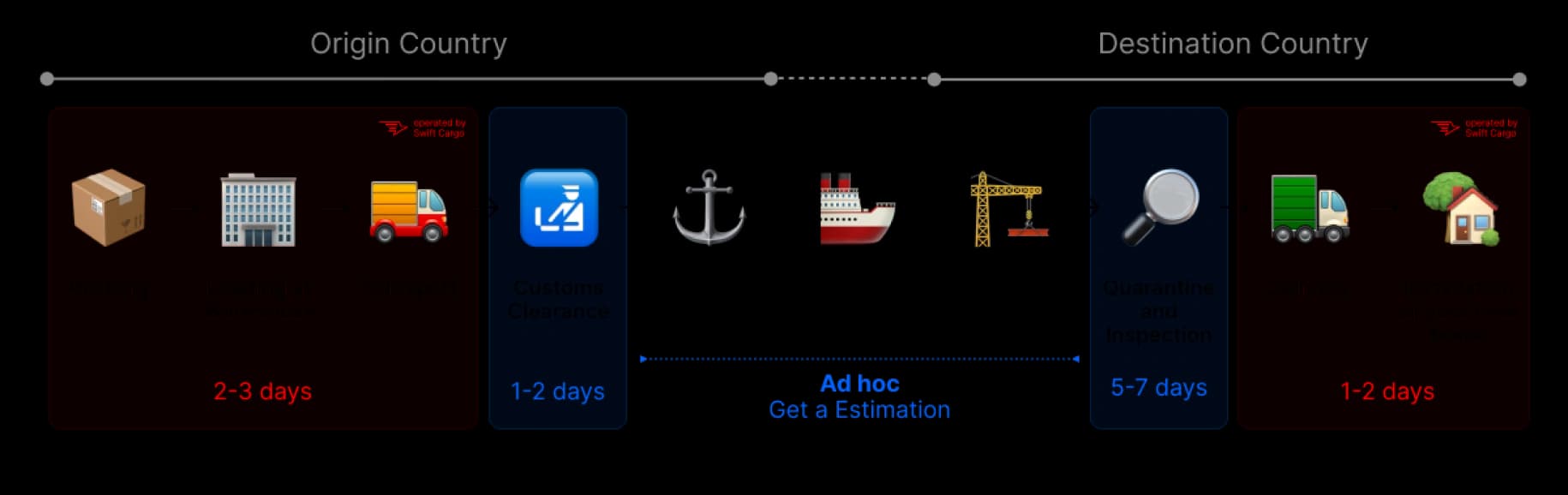
Required documents to import household goods to South Korea
The standard document pack for South Korea household-goods clearance usually includes:
- Ocean Bill of Lading or Air Waybill matching the consignee and shipment details
- Passport copy and the immigration page proving your entry into Korea
- Visa, residence card, employment letter, or other stay evidence supporting your right to reside in South Korea
- Detailed packing inventory showing each carton or package in plain language
- Power of attorney if your broker or mover will clear customs on your behalf
- Proof that the goods were used overseas when you are claiming moving-goods duty relief
- Korean delivery address and contact details for final release and delivery scheduling
Quarantine and potential delays
The categories most likely to draw extra inspection in South Korea are:
- Outdoor furniture, bicycles, golf clubs, strollers, camping gear, or tools that may carry soil or organic residue
- Natural wood furniture, crates, or decor that may trigger wood-packaging or plant-health checks
- Food, supplements, spices, grains, seeds, teas, and other edible goods
- Plant material, dried flowers, traditional remedies, and animal-origin goods
- Pet accessories, bedding, cages, and carriers if they are not clean and clearly declared
For travellers entering South Korea by sea or air
Your moving-goods file is easier to clear when your arrival date, immigration status, and shipment paperwork line up. If your cargo is unaccompanied, make sure the timeline still fits the KCS window before the shipment reaches Busan, Incheon, or another gateway.
Products subject to restrictions in South Korea

Plants, seeds, soil, and untreated wood

Food, supplements, animal products, and agricultural goods

Alcohol, tobacco, and excise-sensitive products

Prescription medicines and controlled health products

Weapons, firearms, drones, and controlled devices
Minimum and maximum shipment size
We are strongest on real household-goods moves rather than parcel forwarding or very small consignments:
- Best fit: around a one-bedroom apartment or larger
Below that level, private-freight pricing is usually not competitive compared with parcel, courier, or small-consignment options.
- No practical maximum
We can handle larger household moves, including partial-home, full-family, and multi-container relocations when the customs file is prepared correctly.
If your shipment is smaller than a one-bedroom move, ask us anyway, but expect parcel, courier, or lighter freight options to be more price-efficient than a private relocation service.
Official customs guidance
Useful contacts

Taxes and duties when importing to South Korea
South Korea can be duty-light for legitimate moving goods and expensive for everything that falls outside that category. The difference usually comes down to prior use, shipment timing, quantity, valuation risk, and whether the item sits on the KCS mandatory-tax list.
General rules for goods entering South Korea
- Used household goods may qualify for duty exemption when they were used overseas for more than 3 months and are accepted as moving goods under Korea Customs Service rules.
- Goods used for less than 3 months, luxury items, and goods outside normal household quantity can be dutiable even if the rest of the shipment clears as personal effects.
- South Korea VAT is generally 10% on taxable imports, with customs duty and other internal taxes added where applicable.
Tax exemptions
- Foreigners and returning residents who qualify as moving-goods importers can often clear used furniture, clothing, books, and normal home contents without duty.
- The exemption logic gets weaker when the shipment contains obviously new goods, duplicate appliances beyond household scale, or items customs treats as luxury or resale cargo.
- Unaccompanied goods should normally arrive within 6 months of your entry if you want the standard moving-goods treatment.
Goods subject to mandatory taxation
Even where the shipment is fundamentally a household-goods move, the following categories commonly remain taxable:
- Motor vehicles and motorcycles, except limited cases involving vehicles previously exported from Korea
- Jewelry and other high-value luxury goods above the KCS taxable threshold
- Household goods used less than 3 months before entry
- Goods beyond the quantity normally accepted for moving goods
For vehicles, Korea Customs Service applies a separate calculation model and limits imports to one vehicle per household under the moving-goods route.
KCS guidance indicates estimated vehicle duties of roughly 19% for engines up to 1,000cc and about 24% for engines above 1,000cc, before registration and compliance costs are added.
In practice, South Korea is generous on genuine used household effects and much less forgiving on anything that looks new, high-value, or automotive.
Insuring your shipment
Importing household goods across borders always involves some level of risk. For this reason, cargo insurance is strongly recommended when shipping personal effects and valuable items to South Korea.
Why you need cargo insurance
Moving household goods by sea or air exposes your shipment to potential risks during international transport and handling.
- Rough weather conditions during sea or air transit
- Improper storage or handling at ports, terminals, or warehouses
- Fumigation or quarantine treatments required during customs clearance
- Accidental loss, breakage, or damage during transport
What is covered
Coverage depends on your insurance provider and policy terms. Most cargo insurance policies for household goods imports include:
- Protection during international transport by sea or air
- Coverage for specific risks such as fire, theft, or moisture damage
- Policy limits, exclusions, and conditions based on your declared shipment value
Always review policy terms, exclusions, and declared values carefully with your broker or insurer before finalising coverage.
How to get insured by Swift Cargo
You can arrange cargo insurance for your shipment to South Korea through:
- A general insurance company offering marine or cargo insurance
- A specialist cargo or relocation insurance broker
- Your bank or financial institution, where available
- Swift Cargo’s own cargo insurance program.
Note: Our insurance is charged at 3% of your declared shipment value.
Visa requirements for foreigners in South Korea
Your visa category matters because customs wants to see that your stay in Korea is real and long enough to support a moving-goods claim. Tourist-style entry is usually a weak foundation for a full household shipment.
Main visa categories
The most common South Korea visa buckets relevant to relocation are:

Visitor visas
Short-stay entry such as tourism or brief business visits. Usually not the ideal basis for a full household-goods move.
Working visas
Employment-linked categories such as E-series visas, often supported by a Korean employer or sponsoring entity.
Student visas
Study-linked categories such as D-2 or D-4 for university, language, or approved training programs.
Family and residence visas
Longer-stay categories tied to marriage, family reunion, overseas Koreans, or other residence-based status.
Note: check the Korea Visa Portal or your consulate before you book freight. Customs clearance gets easier when your immigration status is already defensible.
Use the official Korea Visa Portal to confirm current document requirements and stay eligibility before you schedule your shipment.
Top import hubs in South Korea
Most household-goods freight into South Korea is planned around Busan for ocean cargo and Incheon for air freight. Those two gateways cover most relocations, with secondary options used when inland delivery economics or sailing schedules justify it.
Main ports and airports
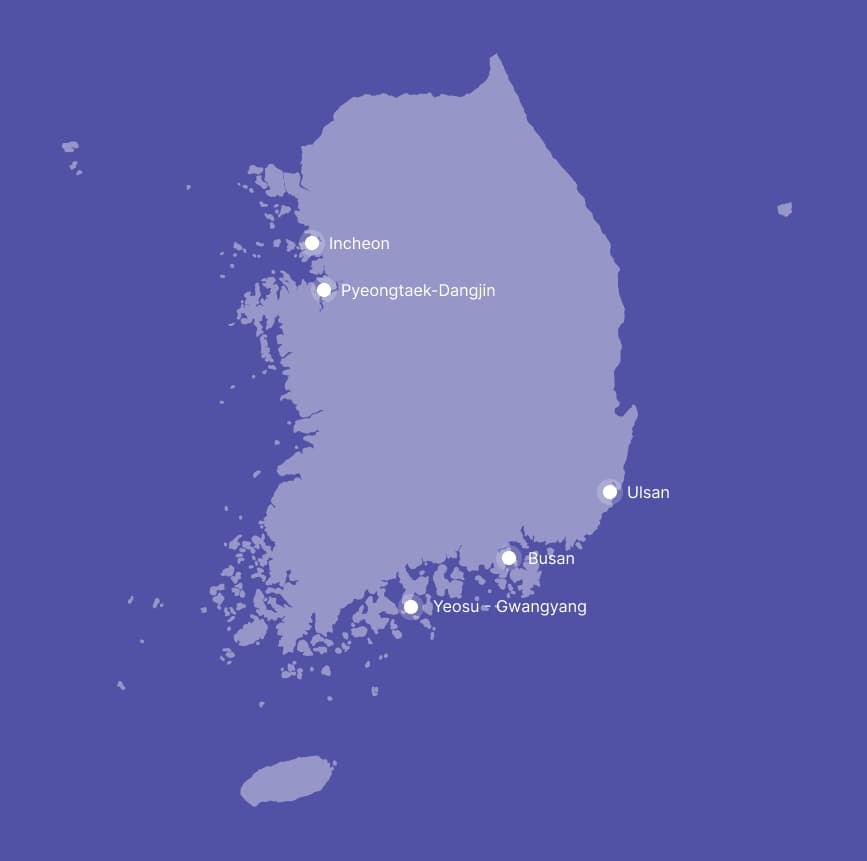
Main ports and airports
- Busan Port – South Korea’s main container gateway and the default ocean-freight entry point for many household-goods moves
- Incheon Port – useful for cargo serving the Seoul metro area and some west-coast routings
- Pyeongtaek-Dangjin Port – secondary option for selected vehicle and container movements
- Incheon International Airport (ICN) – primary air-freight gateway for urgent personal effects
- Gimhae International Airport (PUS) – regional air option for Busan-bound and southeast Korea deliveries
Global route timings
| From | To | Est. transit time |
|---|---|---|
| Los Angeles, United States | Busan, South Korea | 18-24 days |
| New York City, United States | Busan, South Korea | 28-35 days |
| London, United Kingdom | Busan, South Korea | 35-45 days |
| Sydney, Australia | Busan, South Korea | 24-32 days |
| Singapore | Busan, South Korea | 12-18 days |
| Shanghai, China | Busan, South Korea | 5-10 days |
| Tokyo, Japan | Busan, South Korea | 5-9 days |
| Bangkok, Thailand | Busan, South Korea | 14-21 days |
Swift Cargo's door-to-door relocation service
Since 1999, we have built relocation projects around the part most movers underplay: document discipline before the cargo ships. That matters in South Korea because customs is predictable only when the paperwork is.
1. Packing your household goods
Our packing team builds the shipment around customs readability as well as physical protection:
- Packing boxes
For books, clothing, kitchenware, and standard home contents. - Bubble wrap and cushioning
For fragile pieces, electronics, and breakables. - Custom crating
For artwork, high-value furniture, and items that need extra protection on long ocean lanes.
2. Pickup at origin
We collect from your residence, check the inventory against what is actually loaded, and flag any item that may need separate customs treatment.
3. Shipping and South Korea customs clearance
We route the shipment by air or sea, coordinate brokerage, and prepare the clearance file before the cargo reaches Busan, Incheon, or the selected gateway.
4. Delivery to your new residence
Once customs releases the shipment, we schedule delivery, unloading, and handover at your South Korea address.
5. Optional unpacking and setup
For full-service moves, we can place furniture, remove debris, and help shorten the gap between customs release and normal family life.
Support team
Swift Cargo assigns one specialist to your move and keeps them on it from the first quote through to delivery confirmation. That person handles your shipment directly instead of passing it between departments, so you are not re-explaining your situation each time you make contact.
Your specialist knows your inventory, your route, and your timeline. They prepare and check your documentation, coordinate customs clearance, and flag anything that needs your attention before it turns into a problem at the border or on delivery.
From pickup coordination through tracking, documentation, customs, and delivery confirmation, you deal with the same contact at every stage. When you need an answer, you write once and the person who replies already knows your shipment.
Talk to an agent now
Importing vehicles to South Korea
Vehicle imports into South Korea are materially tougher than standard household effects. Korea Customs Service treats cars and motorcycles as separately taxable, compliance-heavy cargo, even when the rest of your move qualifies for duty relief.
Car import essentials
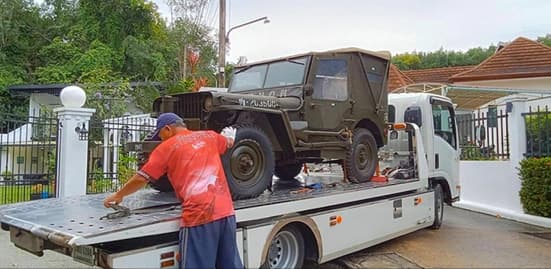
Car import essentials
- Vehicle registration history
The car or motorcycle should normally have been registered overseas in your name or an accompanying family member’s name for more than 3 months before entry. - Owner documents
Passport, transport document, registration papers, purchase invoice or value evidence, and any residence documents customs requests. - Compliance follow-up
After customs, you may still need inspection, self-certification or exemption handling, environment certification, and Korean vehicle registration.
Costs to expect
- Customs duty and tax
KCS estimates roughly 19% duty for engines up to 1,000cc and about 24% for larger engines under the moving-goods guidance. - Freight and insurance
Ocean or air transport, origin handling, terminal charges, and marine insurance still sit outside the tax calculation. - Compliance costs
Inspection, certification, and registration work can add meaningfully to the final bill.
South Korea allows only one vehicle per household under the standard moving-goods route, so vehicle imports need a separate go / no-go decision early in the move.
We can help: Swift Cargo can map the freight and document side of the vehicle move, but we usually advise clients to compare the full landed cost against buying locally in Korea.
Moving to South Korea with your pets
Pets entering South Korea must satisfy animal-health controls before arrival. The usual pressure points are microchip records, rabies timing, health certification, and whether the country of origin triggers extra checks.
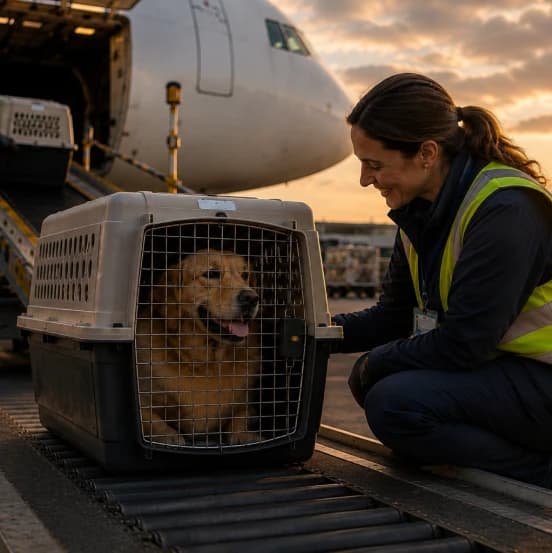
Key requirements for importing pets to South Korea:
- ISO-compatible microchip
Your pet should be clearly identified before the rest of the health paperwork is issued. - Rabies vaccination and timing compliance
Vaccination dates need to align with Korean animal-import rules and your travel schedule. - Official health certificate
Issued by the relevant authority in the origin country before departure. - Advance confirmation with APQA or your airline
Rules can vary by species, route, and country of origin, so confirm details before booking.
Eligibility by Origin Country
APQA keeps a list of regions it treats as free of rabies. Dogs and cats arriving from one of them are exempt from the rabies neutralising antibody test. They still need an ISO 11784/11785 microchip and a health certificate issued by the government veterinary authority of the exporting country, showing the microchip number.
A region drops off the list as soon as it reports rabies to WOAH, so confirm the current version with APQA before you book the flight.
Dogs and cats aged 90 days or older from a region that is not on the APQA list need a rabies neutralising antibody titre of at least 0.5 IU/ml. The blood sample must be tested by FAVN or RFFIT at an approved laboratory or by the competent authority of the exporting country between 30 days and 24 months before shipment.
Both the titre result and the microchip number have to appear on the official health certificate. Animals that arrive without them go to quarantine inspection instead of being released on the day.
Dogs and cats under 90 days old are exempt from the antibody test. They still need a microchip and a health certificate stating the microchip number and the date of birth.
Some origins carry extra certification: cats from Australia need Hendra virus certification, and dogs and cats from Malaysia need Nipah virus certification.
Restricted Dog Breeds in South Korea
South Korea does not close the border to particular breeds, but five of them count as dangerous dogs under the Animal Protection Act. Anyone importing one must file a dangerous-dog import declaration with the Ministry of Agriculture, Food and Rural Affairs (MAFRA). Keeping one also requires a separate permit from the metropolitan or provincial authority, so both steps run alongside the quarantine paperwork.
Breeds designated as dangerous dogs:
- American Pit Bull Terrier
- American Staffordshire Terrier
- Staffordshire Bull Terrier
- Tosa (Japanese Mastiff)
- Rottweiler
- Crossbreeds of any of the five
Since 27 April 2024 the permit requirements include animal registration, liability insurance, neutering (subject to the exception for dogs under 8 months old), and a temperament evaluation. Keeping a dangerous dog without the permit carries up to one year in prison or a fine of up to 10 million won.
Rated 4.8 by customers
Verified reviews from people who moved household goods with Swift Cargo:
Prepare your move to South Korea
South Korea attracts a different expat profile from low-cost lifestyle destinations. A large share of inbound moves are tied to corporate transfers, teaching, university study, overseas Korean family links, and professionals who want a dense, high-functioning city environment.
That changes what competitive relocation advice looks like. People moving to Seoul, Incheon, or Busan usually care less about generic destination fantasy and more about customs timing, housing deposits, school calendars, visa evidence, and whether their shipment can be released without storage drama.
If you start early, South Korea is very manageable. The infrastructure is strong, the gateways are reliable, and the customs rules are clearer than in many neighboring markets. The work is mainly in preparation, not improvisation, which is exactly why weak mover copy underperforms here.
6 months
Typical KCS window for unaccompanied moving goods after your entry
3+ months
Prior overseas use often expected for duty-relief on household effects
2 gateways
Busan and Incheon handle most household-goods planning decisions
Understanding South Korea cost of living
South Korea is usually a stronger value proposition than London, New York, Singapore, or Sydney, but it is not a bargain destination once you factor in Seoul housing, deposits, schooling, and imported goods.
The biggest budget shock for many expatriates is housing structure rather than groceries. Key money deposits, agency fees, and apartment size expectations often shape the move more than food or transport costs.
Day-to-day life becomes easier once you use local transit, local e-commerce, and Korean service providers. Imported lifestyle habits are what tend to make South Korea feel expensive.
Security and risks of living in South Korea

Security and risks of living in South Korea
South Korea is widely regarded as a safe place to live by big-city standards. Violent crime risk is low for most expatriates, and public transport is dependable enough that many households do not need a car.
The more realistic day-to-day risks are housing-contract misunderstandings, digital scams, weather disruption during the monsoon season, and compliance mistakes around visas or customs.
For most relocating families, South Korea feels orderly rather than chaotic. That is one reason customs and delivery planning can work well there when the paperwork is ready.
Infrastructure and services
South Korea performs well on transport, internet, parcel delivery, and urban convenience. That operational reliability is one reason it works well for time-sensitive family relocations.
The trade-off is density. Apartment layouts, elevator access, unloading windows, and building-management rules all need to be considered when you plan final delivery.
Frequently asked questions
Often, yes. Korea Customs Service says used household goods can qualify for duty exemption when they were used overseas for more than 3 months, are in reasonable household quantity, and are accepted as moving goods rather than resale cargo.
The strongest cases are long-stay relocations with a clean inventory, clear residence documents, and timing that still fits the standard KCS moving-goods window.
On many routes, sea freight to South Korea lands in the rough range of 3 to 8 weeks door-to-port, then customs release and delivery add time. The real transit depends on origin port, transshipment, season, and whether you are routing to Busan, Incheon-linked cargo handling, or another gateway.
Air freight is faster, but for household moves most families still use sea freight for the main volume and reserve air for documents, clothing, and first-weeks essentials.
Korea Customs Service guidance states that unaccompanied moving goods should normally arrive within 6 months of your entry into Korea.
If your shipment is likely to miss that window, check the consequences before cargo departs rather than arguing the timing after arrival.
The core file usually includes your passport, bill of lading or air waybill, detailed packing inventory, and visa or residence evidence.
If a mover or broker is clearing on your behalf, expect a power of attorney and additional identity documents as well. For duty-relief cases, proof that the goods were genuinely used overseas also matters.
The common delay points are weak inventories, missing immigration paperwork, undeclared restricted goods, quarantine-related items, and cargo that looks too new or too commercial to pass comfortably as personal effects.
Most of those problems can be reduced before packing starts, especially if you separate sensitive categories instead of burying them inside a generic household list.
For many families, yes. South Korea offers strong infrastructure, good transit, urban convenience, and a generally safe living environment.
The real planning challenges are housing deposits, school timing, visa evidence, and making sure the shipment clears without storage or redelivery issues.
Use air freight for a small volume of essentials you need quickly. Use sea freight for the main body of furniture, boxes, and household goods.
Many successful South Korea relocations use a hybrid model: air for the first weeks, sea for the rest.
Spring and autumn are usually the easiest windows for comfort and delivery planning. Summer can be humid and capacity-tight, while holiday periods around Lunar New Year and Chuseok can slow operations.
If your dates are flexible, avoid pushing a full household shipment directly into a major Korean holiday window.
You can, but it is a separate decision from the rest of the household move. Korea Customs Service applies separate taxation logic and limits the moving-goods route to one vehicle per household.
In many cases, clients should compare the full landed cost against buying locally in Korea.
Yes. Pet entries are controlled through animal-health rules rather than the household-goods customs file. The pressure points are usually microchip records, rabies compliance, health certification, and route-specific airline requirements.
Confirm the animal-import steps before you finalize your travel date.
Busan is the dominant ocean gateway for many moves, while Incheon is central for air freight and cargo serving the Seoul area.
The best gateway depends on your origin, final address, and whether speed or cost matters more.
In many cases, yes. Household-goods entries into South Korea are documentation-heavy enough that most movers use a broker or a relocation company coordinating brokerage on their behalf.
The question is usually not whether brokerage exists, but whether the inventory, immigration file, and timing are strong enough that the broker can clear the shipment without storage, rework, or unnecessary valuation disputes.
Checklist for your South Korea relocation
Checklist for your South Korea relocation
List the goods you actually plan to ship and separate anything new, high-value, or restricted.
Confirm your visa or residence timeline before booking freight.
Choose sea, air, or a hybrid model based on urgency and volume.
Prepare the inventory, passport copy, transport documents, and brokerage authority early.
Book the route with enough margin for Korean holiday congestion and inspections.
Track the shipment through customs release and final delivery to your new home.