
Your move to Singapore, handled.
Swift Cargo is rated 4.87 by 25k+ customers.
Planning a move to Singapore?
Moving to Singapore in 2026: shipping times, customs & duty-free rules
Applies to people shipping their own used household goods and personal effects to Singapore as manifested cargo, intended for personal use and not for resale.
To claim GST relief, you or your Declaring Agent must file an online Declaration of Facts with Singapore Customs before the goods arrive. Once Customs approves your relief, apply for a Customs In-Non-Payment (GST Relief) permit through TradeNet within 10 working days. You also need a transport document, valid identity, and a detailed English inventory for clearance.
Singapore may inspect incoming personal effects, especially controlled or higher risk items. Clean and pack carefully, and declare anything that could trigger extra checks, such as used outdoor gear or items with soil or plant contact.
Goods imported into Singapore generally incur GST unless you qualify for GST relief. If relief does not apply, GST is payable on the customs value and any applicable duties.
Minimum shipment size is a small studio apartment. There is no maximum size limit.
There are important things to know before you pack your boxes. From Singapore Customs clearance rules to any visa or pass you may need, a smooth relocation depends on preparation and the right partner.
This page walks through what you need to know before shipping to Singapore: the Declaration of Facts and Customs In-Non-Payment (GST Relief) permit, controlled items, peak shipping periods, and minimum shipment size. It also covers our door-to-door service, insurance options, and practical tips for a clean clearance.
For work relocations, family moves, and study-abroad placements, your specialist and our local partners manage each stage of the move and the Singapore import process, so you can focus on settling in.
Our Process
Fill out our standardized application on our platform.
Request a Quote
Tell us your route and inventory. You get a clear plan, timeline, and cost upfront.
Get Connected
Your Move Manager builds the plan, checks documentation, and makes sure nothing is missed before shipment.
Finalise your Plan
We execute the move. Packing, shipping, customs, delivery. Everything runs to plan.
Peak Periods
Planning your shipments around Singapore’s peak periods can save time and reduce costs. Here is what carriers and ports typically see during the year:
- Around Lunar New Year
Shipping volumes often rise before the holiday and backlogs can follow after. Space can tighten and clearance may take longer if documents are not prepared early. - Mid year carrier peaks
Regional trade flows and promotional cycles can create busier weeks at PSA terminals and Changi. Expect higher demand for sailing slots and longer lead times for some routes. - Disruption driven surges
Global rerouting or port congestion can temporarily increase dwell time in Singapore. When this happens, building buffer time and confirming schedules with your carrier helps.
Customs
Singapore Customs requires clear documentation for imported household goods and personal effects. If you are shipping personal items, you must follow permit, inventory, and inspection rules to ensure smooth clearance.
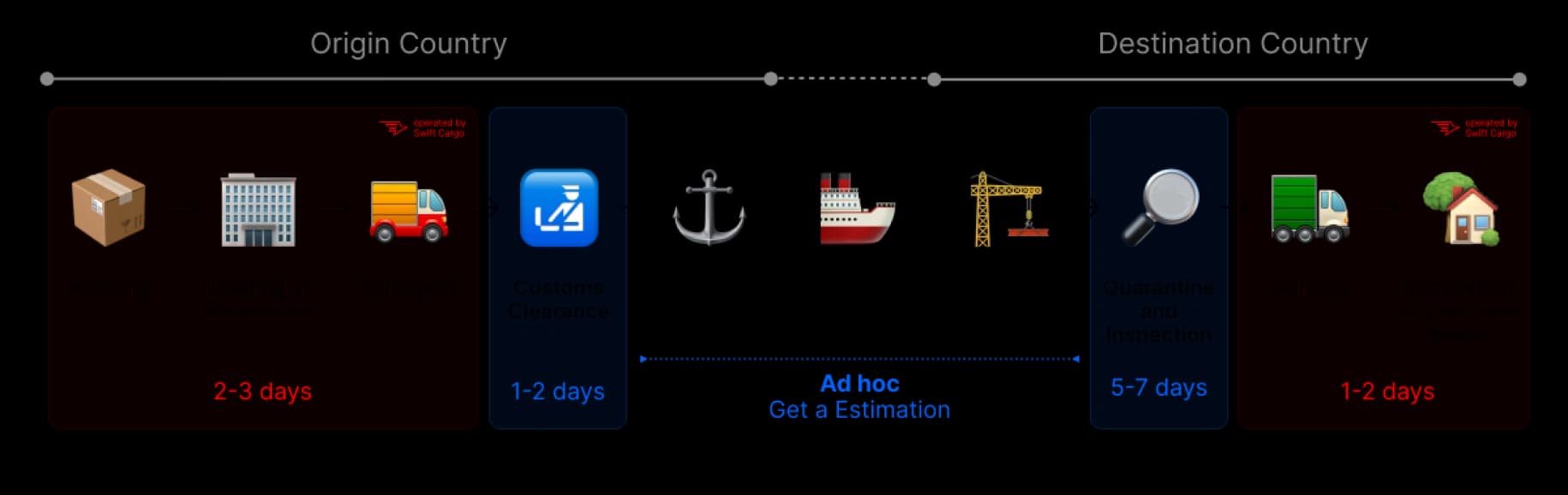
Documents you need to import Personal Goods
To clear your items through Singapore Customs, you will need the following:
- Ocean Bill of Lading or Air Waybill
- Completed Customs In-Non-Payment (GST Relief) permit via TradeNet, applied for within 10 working days after Customs approves your GST relief. If relief is refused or you do not claim it, a Customs In-Payment (GST) permit applies and GST is payable
- Passport or Singapore NRIC matching the importer’s details
- Detailed inventory list, written in English
- Each package labelled with a list of contents, in English
- Copy of your visa or pass, if relevant to your import
- Proof that you are moving to Singapore, if you are claiming GST relief, such as an Employment Pass, Dependant’s Pass, Student’s Pass or MOM in-principle approval letter. Permanent Residents also need their ICA Re-Entry Permit
- Full name and residential address in Singapore for delivery and clearance
Inspections and Delays
Household goods and personal effects entering Singapore may be inspected by Customs or relevant competent authorities, especially if items are controlled or require licences.
- Clearance can be quick when documents are correct, but inspections extend timelines.
- To reduce delays, clean items thoroughly before packing, and clearly describe and declare goods that may be inspected or fall under a controlled category.
For Sea Freight Travellers
If you are also travelling to Singapore, follow ICA arrival requirements for travellers separately from your cargo clearance.
What you can import to Singapore

Personal belongings

Used clothing

Household appliances

Fragile items

High-value items

Large items & furniture

Excess luggage

Pets
Import licence; quarantine depends on origin

Vehicles
Under 3 years old, right-hand drive; COE needed
Restricted Goods

Drug Contraband

Explosives

Biohazard

Chemicals

Corrosives

Counterfeit

Ivory

Flammables

Firearms

Drugs

Fake Notes

Poison

Hazardous

E-cigarettes & vapes
Chewing tobacco and shisha also banned

Chewing gum

Alcohol & tobacco products
No relief; duty and GST payable
Minimum Shipment Size for Singapore
When shipping to Singapore with Swift Cargo, there are minimum volume requirements to ensure efficient handling, clearance, and delivery.
- Minimum shipment: Studio Apartment
This is the smallest shipment size accepted for freight or relocation services to Singapore.
- No maximum size limit
Swift Cargo can manage shipments of any size, from small personal moves to full household relocations.
These minimums apply specifically to shipments entering Singapore.
Download the Customs Forms
- Customs In-Non-Payment (GST Relief) permit, applied for through TradeNet: Singapore Customs
- Declaration of Facts (SG): you or your Declaring Agent files this online before the goods arrive (one per Bill of Lading or Air Waybill), as part of the GST relief claim; see the official Singapore Customs import procedures
Contact Singapore Customs

Taxes and Duties
Understanding Singapore’s import tax rules can help you avoid surprises during customs clearance. Here is what you need to know:
General Tax Rules
- Used household goods and personal effects imported into Singapore generally incur GST unless GST relief applies.
- If you do not qualify for relief, GST applies on the customs value (CIF) and any duties. Duty also applies to certain dutiable goods.
Tax Exemptions
- Most used personal effects may qualify for GST relief when you move your residence to Singapore, but liquor, tobacco, motor vehicles, private aircraft, boats and yachts, and commercial goods are excluded.
- Relief applies only when you meet Singapore Customs’ conditions. You must be moving your residence to Singapore from overseas, own the items, and have used and possessed them for at least 3 months. You must import them within 6 months of your first arrival in Singapore and undertake not to sell, give away or dispose of them within 3 months of their arrival in Singapore. File the Declaration of Facts before the goods arrive: if they have already arrived, Customs rejects the claim and GST is payable.
Duty Free Status for Official Use
Some individuals or organisations may import goods without paying duties when items are for official use and meet Singapore Customs requirements. This can include:
- Diplomatic missions
- Government posts
- Staff on official assignment
To qualify, you must:
1. Contact Singapore Customs
2. Confirm your exemption basis
3. Provide supporting documents with your permit
This status may apply to embassy staff, foreign aid workers, or volunteers under specific missions, subject to Singapore’s official conditions.
Cargo Insurance
Shipping goods across borders always comes with some risk. That is why cargo insurance is recommended when sending valuable items to Singapore.
Why You Need Insurance
Moving cargo by sea or air exposes your shipment to potential damage. Insurance can protect you against:
- Rough weather in transit
- Improper storage or handling
- Inspection treatments
- Accidental loss or damage
What Is Covered
Coverage depends on your insurance provider. Most policies include:
- Protection during transport
- Coverage for specific risks like fire, theft, or moisture damage
- Limitations and exclusions based on your declared value
Always review the terms with your broker before finalising.
How to Get Insured
You can arrange cargo insurance through:
- A general insurance company
- A specialist broker
- Your bank
- Swift Cargo’s own insurance program.
Note: Our insurance is priced as a small percentage of your declared shipment value.
Visa Requirements for Moving to Singapore
If you are planning to relocate to Singapore, you may need a valid visa or pass depending on your nationality and purpose of stay. Categories and names can be confusing. The best way to confirm the right option is to check the official ICA or MOM requirements and verify which pass you are eligible for.
Main Visa Categories
Most Singapore visas or passes fall into one of these categories:

Visitor visas
For short stays, tourism, or business visits
Working and skilled visas
For temporary or long term jobs
Student and training visas
For education or professional development
Family and partner visas
For joining relatives or partners in Singapore
Note: If you are moving to Singapore long term, a work pass or family related pass is usually the most appropriate.
For detailed and up to date information, visit the official ICA and MOM websites.
List of Shipping Ports in Singapore
Swift Cargo operates through Singapore’s major sea and air gateways. We provide sea freight and air freight options for relocations and commercial shipments to the destinations below:
Ports and Shipping Methods
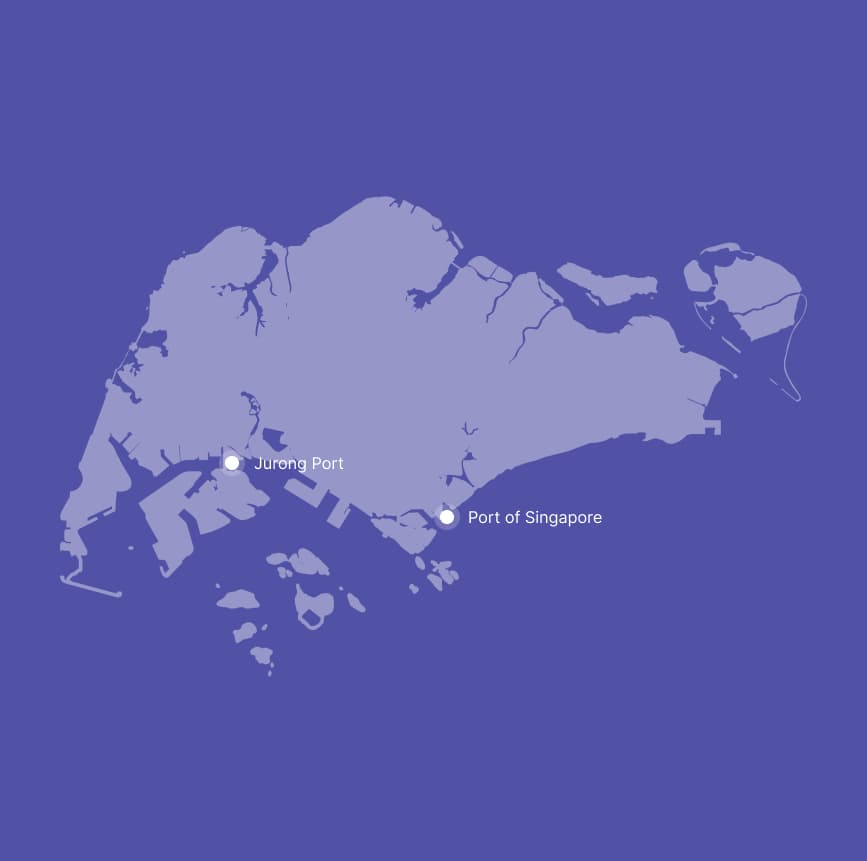
Ports and Shipping Methods
- Singapore (PSA terminals) – Sea freight and air freight available
- Jurong – Sea freight available
- Pasir Panjang Terminal – Sea freight available
- Keppel Wharves – Sea freight available
- Changi (SIN) – Air freight available
- Seletar (XSP) – Air freight available
- Singapore mainland hubs – Sea freight and air freight available
- Free Trade Zone depots – Sea freight and air freight available
Door to Door Relocation Service
Swift Cargo offers a full door to door moving service to Singapore. From packing your goods to unpacking them in your new home, we take care of every step of the process.
1. Packing and Loading.
We offer professional packing services to make sure your items are safe and well protected during transport. Common packing materials:
- Packing boxes
Available in different sizes, designed to handle standard household items during shipping to Singapore. - Bubble wrap
Used for fragile items like glassware, ceramics, and electronics to prevent breakage in transit. - Wooden crates
Ideal for large or sensitive items. They offer extra resistance and protection, including against humidity during sea freight.
Full Packing Service: Do not want to pack yourself? No problem. Our team can pack all types of goods, including furniture and oversized items. Fill out the contact form, and one of our consultants will get in touch to organise your packing needs.
2. Pickup
Our agents collect the packed goods from your location or warehouse. All movements are tracked and documented, ensuring your shipment is handled securely from origin to Singapore.
3. Customs Clearance
We manage the customs process for Singapore. See the Customs section above for permit, document, and inspection details.
4. Delivery and Unloading
Once your shipment arrives in Singapore and clears Customs, we deliver it directly to your home. Our team unloads all boxes at your doorstep.
5. Unpacking and Setup
We also offer unpacking services. Our team places your goods where you want them, so your home is ready to use on arrival.
Support team
You work with one specialist from first quote to final delivery. This cuts handover errors, keeps communication direct, and means one person already knows your shipment.
Your specialist coordinates the TradeNet import permit, checks your inventory and documents, guides you through GST relief where it applies, and arranges delivery, so you are not passed between teams or repeating the same information.
You get clear updates at each stage: collection, departure, Singapore customs clearance, and delivery timing. The same specialist stays reachable throughout, so you always know what is happening and what comes next.
Talk to an agent now
Import your Vehicle
Bringing a car into Singapore is possible only if it qualifies. The car must be right-hand drive, a used car must generally be under 3 years old at registration, and the Land Transport Authority (LTA) must approve it before you can register it.
What You Need
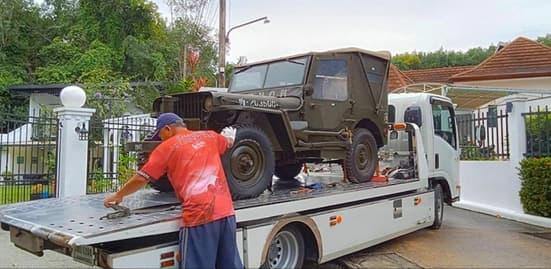
What You Need
- LTA vehicle approval – Apply through LTA’s Vehicle Inspection and Type Approval System (VITAS) with the Bill of Lading and the Inward Cargo Clearance Permit, at least 3 months before the car reaches 3 years old
- Key documents – Passport, original foreign registration papers, bill of lading, and original purchase invoice
- Compliance – Your car must be right-hand drive and meet Singapore safety, exhaust and noise standards
Costs to Expect
- Excise duty of 20% of the car’s open market value (2026)
- GST of 9% on the car’s cost, insurance and freight (CIF) value plus the excise duty
- A S$10,000 surcharge for registering an imported used car, the Additional Registration Fee (ARF) and a Certificate of Entitlement (COE)
Extra fees may apply for inspection, cleaning, or modifications.
We Can Help - Swift Cargo handles the process from start to finish: paperwork, transport, and Customs clearance.
Import your Pets
Singapore has strict rules to protect public and animal health. Pet imports are regulated by NParks and AVS. Only pets meeting the required health, vaccination, and import conditions are allowed, and some cases may require quarantine on arrival.
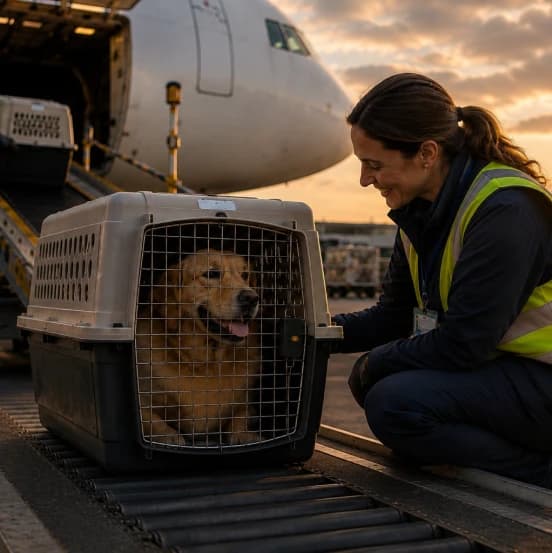
Key Requirements
- Valid Import Licence
Get a cat or dog licence on the AVS Pet Animal Licensing System (PALS) first, then apply for the import licence through the GoBusiness Licensing Portal before your pet travels. The import licence is valid for 90 days from the date of issue. - Microchip & Vaccinations
Your pet needs an ISO microchip, core vaccinations given at least 2 weeks before export, and an official health certificate dated no more than 7 days before export. Pets from Schedule II and III origins also need a valid rabies vaccination, but pets from Australia, New Zealand, Ireland and the United Kingdom (Schedule I) do not. - Rabies Blood Test
Required for Schedule II and III origins. The blood sample must be taken at least 28 days after a valid rabies vaccination, and at least 90 days and no more than 12 months before export. The result must be at least 0.5 IU/ml, from a WOAH reference laboratory or an approved laboratory in a Schedule I or II country. - Quarantine
Schedule I: none if all conditions are met. Schedule II: none if your pet arrives less than 5 days after your own entry into Singapore and has lived with you at the same address for more than 6 months, otherwise at least 10 days (at home for a personal import). Schedule III: at least 30 days at the Animal Quarantine Centre, with a rabies vaccination on arrival.
Eligibility by Origin Country
Banned Dog Breeds in Singapore
Some breeds cannot be imported under any circumstances:
- Dogs: Pit Bull types (including the American Pit Bull Terrier, American Staffordshire Terrier, Staffordshire Bull Terrier and American Bulldog), Akita, Boerboel, Dogo Argentino, Fila Brasileiro, Neapolitan Mastiff, Tosa and Perro de Presa Canario, and crosses of these breeds
- Cats: first to fourth generation Bengal and Savannah crosses (fifth generation and later need documentary proof)
- The ban applies whatever the origin country
- Confirm eligibility before booking
- Follow NParks and AVS guidance
We Can Help - From paperwork and vet checks to booking flights and any required quarantine. We make sure your pet arrives safely and legally.
Rated 5 stars by customers
What Our Customers Say - Singapore Moves
About Singapore
Shipping Activity in Singapore
Singapore is a major global shipping and aviation hub. Large volumes of sea freight move through PSA terminals, and air cargo flows through Changi, making the country a key gateway for regional and international trade.
National Freight Volume (All operators):
High volume
cargo shipments handled weekly
High throughput
containers processed daily across ports
Significant air cargo
air freight managed each month
Singapore Cost of living
Relocating to Singapore can come with a noticeable increase in living expenses, especially if you are coming from a lower cost country. Everyday costs are often higher than in many parts of Southeast Asia or other regions. Rent is usually the biggest adjustment. Housing in central areas can be expensive, and many newcomers find that location and apartment size have the largest impact on their monthly budget.
Utilities, mobile plans, and home internet can add up, and prices vary by provider and usage. Groceries and household items are another major factor. Imported products and branded goods tend to cost more, while local staples can be more affordable. Eating out ranges widely, from hawker centres with lower prices to mid range and fine dining options that can increase costs quickly.
Transportation is efficient and widely used. Public transit is reliable, while taxis and private hire costs depend on time and distance. If you plan to drive, vehicle ownership and running costs can be significant, so many expats rely on public transport instead.
The upside is that Singapore offers strong earning opportunities in many sectors. How far your income goes depends on your profession, pass conditions, and lifestyle choices, especially your housing location and schooling needs.
Overall, moving to Singapore can raise your monthly expenses, particularly for housing, schooling, and everyday services. Plan your budget early, consider different neighbourhoods, and prepare for one time relocation costs like deposits, shipping, and insurance. With good preparation, Singapore offers a high quality of life, strong infrastructure, and a convenient base for travel across Asia.
Security in Singapore

Security in Singapore
Singapore is widely regarded as a safe destination for expatriates, with low levels of street crime and strong public order. As in any city, staying aware of your surroundings is still sensible.
Official briefings from the Singapore Police Force indicate that physical crime is stable and generally low. The main risks for residents are usually non violent issues like scams or cybercrime. Most expatriates live safely without direct exposure to crime, especially when using common sense precautions.
That said, it is still wise to stay alert in busy areas and protect your personal information online. Use secure passwords, be cautious with unsolicited calls or messages, and keep valuables close in crowded places. With basic awareness, most people enjoy a safe and comfortable life in Singapore.
Infrastructure and Public Services in Singapore
Singapore offers strong public infrastructure and well developed services. The education system is widely regarded as high quality, with a mix of public schools, international schools, and private providers. Admission pathways and eligibility depend on your residency status, so it helps to check school options early if you are moving with children.
Healthcare in Singapore combines public and private hospitals and clinics. Access is generally efficient, and many expatriates use a mix of public services and private insurance depending on their pass type and employer coverage. It is worth confirming insurance arrangements before arrival.
Public services such as government administration, emergency response, and transport are well distributed across the city state. Most residents have easy access to major facilities, and digital services handle many everyday needs.
For newcomers, Singapore’s infrastructure often feels modern and efficient, with high service standards and easy access to transport, schools, and healthcare. Your day to day experience depends on where you live and work, but most districts offer good connectivity and public amenities. Planning your neighbourhood around commute and schooling can make settling in smoother.
Frequently Asked Questions (FAQ)
Shipping times to Singapore depend on the origin country and the method you choose.
- Sea freight: Usually takes several weeks. Timing varies by departure port, routing, and whether your cargo is selected for inspection.
- Air freight: Typically takes a few days door to door, including Customs clearance and local delivery.
Peak periods, such as Lunar New Year surges or temporary port congestion, can add delays. We will provide a personalised timeline based on your shipment details and preferred method.
Sea freight is the most cost-effective option for full household moves and larger shipments. Air freight is significantly faster but costs more per kilogram.
For a typical household relocation, sea freight in a shared container (LCL) or a full container (FCL) balances cost and transit time well. If you have urgent items or a small, high-value shipment, air freight may be worth the premium. Swift Cargo will recommend the right mode for your volume, budget, and timeline when you request a quote.
LCL (Less than Container Load) means your goods share space in a container with other shippers. FCL (Full Container Load) means you occupy an entire container.
LCL is generally more cost-effective for smaller volumes — roughly up to 15 cubic metres. FCL becomes more competitive from a mid-sized apartment move upward, and also reduces handling risk since your goods are not moved alongside other cargo. Swift Cargo will help you decide based on your volume and origin port.
Entitled travellers moving to Singapore may claim GST (Goods and Services Tax) relief on personal effects and household goods, subject to conditions set by Singapore Customs.
To qualify, you must be moving your residence to Singapore, own the items, and have used and possessed them for at least three months. You must import them within six months of your first arrival in Singapore and undertake not to sell, give away or dispose of them within three months of their arrival in Singapore. File the Declaration of Facts before the goods arrive: if they have already arrived, Customs rejects the claim and GST is payable. New or unused items do not qualify. Liquor, tobacco, motor vehicles, private aircraft, boats and yachts, and commercial goods are excluded and may attract GST and duty. Confirm eligibility and the correct import permit process with Swift Cargo when you book.
Our door-to-door service covers every stage: professional packing at your current home, collection, international transport, Singapore customs coordination, and delivery to your new address.
We work with local partners at both ends so handoffs are managed, tracked, and documented throughout. We handle the Singapore Customs import permit (TradeNet) coordination and can arrange delivery directly to your new residence including upper-floor delivery. If you want unpacking support on arrival, we can organise that too.
Only if the car qualifies. The Land Transport Authority (LTA) registers only right-hand drive cars, and an imported used car must also be under 3 years old at registration, counted from its first registration abroad. Classic and vintage cars follow separate LTA rules. Older cars generally cannot be registered in Singapore. A S$10,000 surcharge applies to each imported used car, and diesel cars (other than diesel-electric) can no longer be newly registered.
Motor vehicles are excluded from GST relief. As of 2026, Singapore Customs charges excise duty of 20% of the car's open market value, plus 9% GST on the cost, insurance and freight (CIF) value and the duty. You also need a Certificate of Entitlement (COE), pay the Additional Registration Fee (ARF), and pass LTA approval and inspection. Documents include the Bill of Lading, the original purchase invoice, the original foreign registration documents and the Inward Cargo Clearance Permit. Check eligibility with LTA before you ship. Swift Cargo can coordinate the freight and customs steps for a car that qualifies.
A licensed Singapore Customs agent (declaring agent) is typically required to submit import declarations via TradeNet on your behalf. This is the standard process for personal effects and household goods entering Singapore.
Swift Cargo works with accredited local agents who handle the TradeNet permit application, GST relief claims where applicable, and any inspections. Using an experienced agent helps avoid delays at the port or airport.
Swift Cargo provides milestone updates at the key stages: collection, departure, transit, arrival at PSA port or Changi Airport, and final delivery.
For sea freight this typically covers a 7–30 day journey depending on origin, with updates at each logistics handoff. For air freight, updates are more frequent over a 2–5 day transit. If you need a status update at any point, our team is reachable directly.
Yes. Swift Cargo can support the logistics and documentation for pet transport to Singapore in line with requirements from the Animal and Veterinary Service (AVS) of NParks.
AVS sorts every origin country or region into Schedule I, II or III. Dogs and cats of permitted breeds from any country can be imported if they meet the conditions for their schedule: licences, a microchip, vaccinations, an official health certificate dated no more than 7 days before export and, for Schedule II and III origins, a rabies antibody blood test. Schedule III pets are vaccinated again on arrival and quarantined for at least 30 days at the Animal Quarantine Centre. Schedule II pets need at least 10 days of quarantine unless they meet the AVS exemption conditions. Plan ahead: the blood sample is taken at least 28 days after a valid rabies vaccination, and your pet can travel only 90 days or more after the sample, so a pet that still needs vaccinating needs about four months before departure. Contact us for guidance specific to your animal and origin country.
If Singapore Customs selects a shipment for inspection, the goods are held at the port or airport facility until the inspection is complete or the issue is resolved. Timelines vary depending on the nature of the hold.
Common causes include incomplete or missing import permits, undeclared restricted items (such as certain medications, food products, or controlled goods), or mismatches between the packing list and actual contents. Swift Cargo assists with documentation preparation to minimise this risk, and our local agents handle communication with Singapore Customs if a query arises.
Sea freight to Singapore arrives at PSA Singapore Terminals, primarily through Pasir Panjang Terminal — one of the world's busiest container ports. Tanjong Pagar Terminal also handles some cargo. Air freight arrives at Changi Airport Cargo, served by Singapore's FreePort and cold-chain facilities.
Singapore's port infrastructure is highly efficient, and clearance timelines are typically predictable when documentation is correct. Swift Cargo coordinates arrival logistics and customs clearance at whichever gateway your shipment enters.
Checklist for your Singapore relocation
Checklist for your Singapore relocation
Fill out the form with details about your move.
Receive custom quotes within 48 hours.
Choose the option that suits you best, and let our agents guide you through the process.
Request the required documentation to prepare for your arrival in Singapore.
Track your shipment with our agents and receive updates at every step
(If necessary) Provide additional details to speed up customs clearance.
Move into your new home while we take care of delivering your goods.