
Shipping household goods to Hong Kong with clearer customs planning
Swift Cargo is rated 4.87 by 25k+ customers.
Planning a household-goods shipment to Hong Kong?
✦ TL;DR
Applies to people shipping their own used household and personal goods to Hong Kong as unaccompanied personal effects or household items.
Hong Kong Customs clears personal effects under general cargo procedures, so your carrier or broker usually needs the transport document, a detailed inventory or packing list, any required permit documents, and matching consignee identity details.
Customs screening applies to all personal effects. Items that may trigger inspection include plants, soil, wood products, foodstuffs, and used outdoor gear, so clean and describe these clearly.
Hong Kong is a free port with no general import tariffs or VAT/GST. Only selected excisable goods such as spirits above 30% alcohol by volume or tobacco may attract duty if included in your shipment. Wine, beer and other drinks at or below 30% carry no duty.
Swift Cargo is generally not cost-competitive for private-freight moves smaller than roughly a one-bedroom apartment. Larger household shipments are a better fit.
Hong Kong is not difficult because it needs more generic relocation filler. It is difficult because customs screening, excisable-goods treatment, and higher-risk plant or animal controls matter more than broad destination copy.
This page focuses on the practical issues that matter most when shipping household goods to Hong Kong: what customs actually expects, which goods are still dutiable even in a free-port system, where inspections tend to appear, and how holiday windows or typhoons affect timing.
Work relocations, family moves, and study-abroad placements: Swift Cargo and our local partners help you plan around Hong Kong's real clearance process rather than relying on destination-page boilerplate. The avoidable problems are usually vague inventories, under-declared dutiable goods, plant or animal risk items, and underestimated final-mile complexity.
Our process
Fill out our standard application on our platform.
Request a Quote
Tell us your route and inventory. You get a clear plan, timeline, and cost upfront.
Get Connected
Your Move Manager builds the plan, checks documentation, and makes sure nothing is missed before shipment.
Finalise your Plan
We execute the move. Packing, shipping, customs, delivery. Everything runs to plan.
Peak periods
Planning around Hong Kong's busiest periods helps reduce delay risk and set better expectations. These are the periods that usually matter most for household-goods shipments:
- Chinese New Year
Capacity can tighten quickly before the holiday, and post-holiday normalization takes time. Book early if the shipment needs to land around this window. - Typhoon season
From roughly May to October, severe weather can interrupt sea and air operations and create backlogs after service resumes. - Golden Week spillover
Regional factory closures and schedule shifts can bunch cargo before and after the holiday window, even when Hong Kong itself remains operational.
Customs
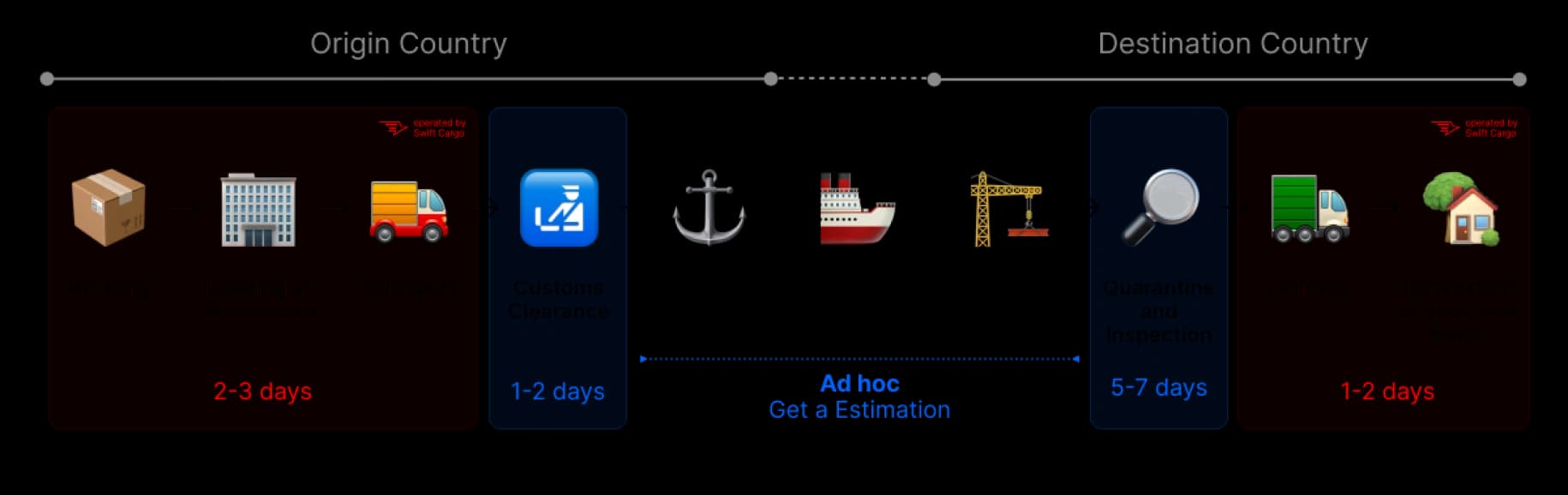
Hong Kong Customs clears personal effects under the same procedures used for general cargo. The practical issue is not whether a shipment is labelled personal effects, but whether the transport paperwork, inventory, consignee details, and any permit requirements line up cleanly for clearance.
No duty-free concession applies to dutiable goods just because they are packed inside household effects. If your shipment includes spirits above 30% alcohol by volume, tobacco, or any controlled goods, assume Customs will expect the correct licence, permit, and declaration basis from the start. Wine, beer and other drinks at or below 30% carry no duty and need no licence or permit.
Documents for importing personal goods
To clear your items through Hong Kong Customs, you will usually need:
- Ocean Bill of Lading or Air Waybill
- Carrier or broker clearance documents required under Hong Kong's general-cargo process
- Passport ID and matching consignee details for the shipment
- Detailed inventory or packing list, written in English
- Each package labelled with a list of contents, in English
- Copy of your entry permit or visa and passport identification page
- Any required licence or permit for dutiable or controlled goods
- Full name and residential address in Hong Kong (no business addresses)
Inspections and delays
Household and personal goods entering Hong Kong may be risk-screened by Customs, with inspections by AFCD when plant, animal, soil, or other bio-risk items are involved.
- If an inspection is directed, release can take several additional working days.
- To reduce delays, clean items thoroughly before packing, especially anything that may carry soil, plant material, or outdoor residue, and describe them clearly in your inventory.
For sea freight travellers
If you are travelling by sea, complete any standard arrival or customs card required for passengers when you enter Hong Kong.
What you can import to Hong Kong

Personal belongings

Used clothing

Household appliances

Fragile items

High-value items

Large items & furniture

Excess luggage

Pets
Special permit; quarantine for some origins

Vehicles
Emissions approval, right-hand drive, registration tax
Restricted goods

Drug Contraband

Explosives

Biohazard

Chemicals

Corrosives

Counterfeit

Ivory

Flammables

Firearms

Drugs

Fake Notes

Poison

Hazardous

E-cigarettes & vapes

Alcohol & tobacco products
Spirits over 30% and tobacco are dutiable
Minimum shipment size for Hong Kong
For private home-relocation freight into Hong Kong, Swift Cargo is generally a better commercial fit for larger household moves rather than small-box shipments.
- Best fit: around a one-bedroom apartment or larger
Below that level, private-freight pricing is usually not competitive compared with parcel or small-consignment alternatives.
- No maximum size limit
Swift Cargo can manage larger household relocations, including partial-home and full-home moves into Hong Kong.
If your shipment is smaller than a one-bedroom move, ask us anyway, but expect parcel, courier, or lighter freight options to be more price-efficient than private relocation handling.
Key customs guidance and controlled-goods links
- Hong Kong Customs personal effects guidance: https://www.customs.gov.hk/en/service-enforcement-information/cargo-clearance/personal-effects/index.html
- Hong Kong Customs import and export clearance procedures: https://www.customs.gov.hk/en/service-enforcement-information/cargo-clearance/import-export-clearance/index.html
- Hong Kong Customs prohibited articles and permit controls: https://www.customs.gov.hk/en/service-enforcement-information/trade-facilitation/prohibited-articles/index.html
- Hong Kong Customs dutiable commodities guidance: https://www.customs.gov.hk/en/service-enforcement-information/trade-facilitation/dutiable-commodities/index.html
Contact Hong Kong Customs

Taxes and duties
Understanding Hong Kong’s import duty rules can help you avoid surprises during customs clearance. Here is what you need to know:
General tax rules
- Most personal goods entering Hong Kong are not subject to general import duties or taxes during customs clearance.
- However, excisable goods such as spirits above 30% alcohol by volume, tobacco, hydrocarbon oil, and methyl alcohol may still attract duty even when included in personal effects. Wine, beer and other drinks at or below 30% do not.
Tax exemptions
- Most used personal goods are duty-free in Hong Kong, with key exceptions like spirits above 30% alcohol by volume or tobacco and other excisable items.
- This treatment applies to unaccompanied personal effects as long as they meet Hong Kong Customs and relevant licensing conditions.
Duty-free status for official use
Some individuals or organisations may import goods with duty relief when items are for official use and approved under Hong Kong procedures. This can include:
- Diplomatic missions
- Government posts
- Staff on official assignment
To qualify, you must:
1. Contact Hong Kong Customs
2. Request any required exemption reference
3. Provide supporting documents to claim relief
This status may apply to embassy staff, foreign aid workers, or volunteers under specific missions, subject to Hong Kong approval.
Cargo insurance
Shipping goods across borders always comes with some risk. Cargo insurance is strongly recommended when sending valuable items to Hong Kong, so you are protected if something unexpected happens in transit.
Why you need insurance
Moving cargo by sea or air exposes your shipment to potential damage. Insurance can protect you against:
- Rough weather during transit
- Improper storage or handling
- Fumigation treatments
- Accidental loss or damage
What is covered
Coverage depends on your insurance provider. Most policies include:
- Protection during transport
- Coverage for specific risks (e.g. fire, theft, moisture damage)
- Limitations and exclusions based on your declared value
Always review the terms with your broker before finalising.
How to get insured
You can arrange cargo insurance through:
- A general insurance company
- A specialist broker
- Your bank
- Swift Cargo’s own insurance program.
Note: Our insurance is priced as a small percentage of your declared shipment value.
Visa requirements for moving to Hong Kong
If you are planning to relocate to Hong Kong, you will need a valid visa or entry permit that matches your purpose of stay. Categories can be confusing, so the safest approach is to review official Immigration Department requirements and confirm which options you qualify for.
Main visa categories
Most Hong Kong visas fall into one of these categories:

Visit visas
For short stays, tourism, or business visits
Employment visas
For work in Hong Kong
Study visas
For education or training
Dependant visas
For joining family members in Hong Kong
Note: If you are moving to Hong Kong long term, an employment or dependant visa is usually the most appropriate, depending on your situation.
For detailed and up-to-date information, visit the official Hong Kong Immigration Department website.
List of shipping ports in Hong Kong
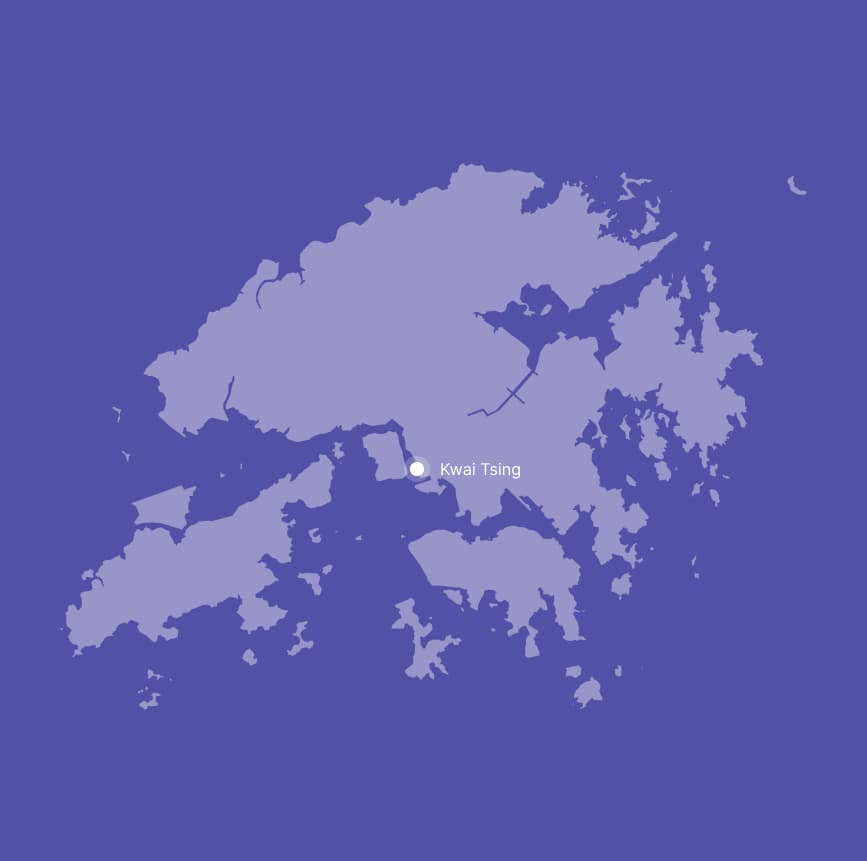
Swift Cargo operates through major gateways serving Hong Kong. We provide sea freight and air freight options for relocations and commercial shipments through the destinations below:
Ports and shipping methods
Ports and shipping methods
- Kwai Tsing (Port of Hong Kong) – Sea freight available
- River Trade Terminal – Sea freight available
- Hong Kong International Airport (HKG) – Air freight available
- Shenzhen – Sea freight and air freight available
Door-to-door relocation service
Swift Cargo offers a full door-to-door moving service to Hong Kong. From packing your goods to unpacking them in your new home, we take care of every step of the process.
1. Packing and loading.
We offer professional packing services to keep your items safe during transport. Common packing materials:
- Packing boxes
Available in different sizes and built for standard household items, helping keep your goods stable and protected during shipping. - Bubble wrap
Used for fragile items such as glassware, ceramics, and electronics to reduce vibration and prevent breakage. - Wooden crates
Ideal for large or sensitive items. They provide extra rigidity and protection, including for longer sea routes or humid conditions.
Full Packing Service: Do not want to pack yourself? No problem. Our team can pack all types of goods, including furniture and oversized items. Fill out the contact form and one of our consultants will organise your packing needs.
2. Pickup
Our agents collect the packed goods from your location or warehouse. All movements are tracked and documented, so your shipment is handled securely.
3. Customs clearance
We manage the customs process for Hong Kong. See the Customs section above for required documents and inspection details.
4. Delivery and unloading
Once your shipment arrives in Hong Kong, we deliver it directly to your home. Our team unloads all boxes at your doorstep.
5. Unpacking and setup
We also offer unpacking services. Our team places your goods where you want them, so you can settle in quickly.
Support team
Swift Cargo assigns one specialist to your move and keeps them on it from the first quote through to delivery confirmation. That person handles your shipment directly instead of passing it between departments, so you are not re-explaining your situation each time you make contact.
Your specialist knows your inventory, your route, and your timeline. They prepare and check your documentation, coordinate customs clearance, and flag anything that needs your attention before it turns into a problem at the border or on delivery.
From pickup coordination through tracking, documentation, customs, and delivery confirmation, you deal with the same contact at every stage. When you need an answer, you write once and the person who replies already knows your shipment.
Talk to an agent now
Import your vehicle
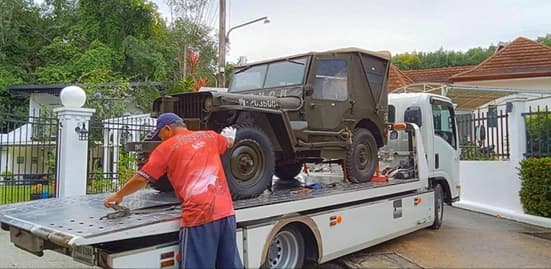
Bringing a car into Hong Kong is possible but requires advance approval and compliance with local import and registration rules.
What you need
What you need
- Emissions and noise approval – The Transport Department advises getting approval from the Environmental Protection Department (EPD) before the car ships, and you need the approval letter to register the car. Battery-electric and hydrogen fuel-cell cars do not need this approval.
- Key documents – Passport, registration papers, bill of lading, sales invoice, and your Customs filings: an import declaration within 14 days of importation and an Import Return (form CED336, with CED336A for personal use) within 30 days
- Compliance – The car must pass a roadworthiness examination before it is registered. The Transport Department does not accept left-hand-drive cars for registration unless there are special circumstances.
Costs to expect
- No import duty, but Hong Kong charges First Registration Tax on the taxable value of the car (purchase price, insurance, freight, agent fees and repair charges). For a private car the rates, in force since 24 February 2021, are 46% on the first HK$150,000, 86% on the next HK$150,000, 115% on the next HK$200,000 and 132% on the rest.
- Registration and clearance fees
- If the car was registered in your name abroad, Customs may allow depreciation of its taxable value: 25% a year for petrol cars and 20% a year for other cars, counted from the overseas registration date to the import date. Keep proof of the registration.
Extra fees may apply for inspection, cleaning, or required modifications. Electric private cars: the First Registration Tax concession ended on 31 March 2026. A car whose first-registration application reaches the Transport Department from 1 April 2026 pays the full tax, apart from a one-off arrangement for cars ordered by 25 February 2026.
We Can Help - Swift Cargo handles the process from start to finish: paperwork, transport, and customs.
Import your pets
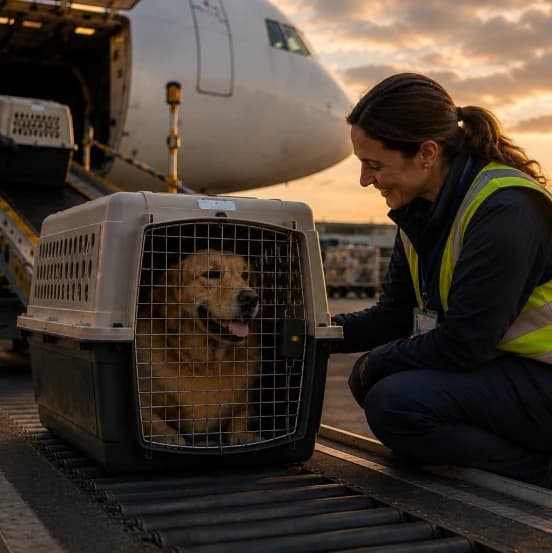
Hong Kong applies strict controls on animal imports to protect public health and the local environment. Only pets that meet health, vaccination, and permit requirements set by AFCD are allowed, and checks may be required on arrival.
Key requirements
- Special Permit
Apply through Hong Kong’s Agriculture, Fisheries and Conservation Department (AFCD) before your pet travels. Every dog and cat needs one, from every origin. In 2026 the fee is HK$432 for one animal plus HK$102 for each additional animal on the same permit. The permit is valid for 6 months and covers one shipment. Pets arriving by air must travel as manifested cargo, not as excess or hand-carried baggage. - Microchip & Vaccinations
Your pet needs an ISO or AVID microchip, and its number must match every certificate. AFCD counts the windows back from the export date, not the arrival date: distemper, hepatitis and parvovirus (dogs) or panleukopenia and cat flu (cats) vaccinations 14 days to 1 year before export, plus a rabies vaccination 30 days to 1 year before export for Groups 2 and 3A. The health certificate must be issued within 14 days of export (7 days for Group 3A). - Rabies Blood Test
Only Group 3A origins need a rabies antibody test: a result of at least 0.5 IU/ml on a blood sample taken 90 days to 1 year before export, tested at an AFCD-approved laboratory. Groups 1, 2 and 3B do not need it. - Quarantine
AFCD sets quarantine by origin group, not by species: normally none for Group 1, possibly none for Group 2 if you meet every permit term, at least 30 days for Group 3A and at least 120 days for Group 3B. Missing a permit term can mean 4 to 6 months of quarantine, and AFCD can extend any quarantine. Confirm AFCD requirements before your pet travels.
Eligibility by origin country
Banned dog breeds in Hong Kong
AFCD prohibits the import of these dogs from every origin:
- Pit Bull Terrier type, including the American Pit Bull Terrier, American Staffordshire Terrier and American Bully
- Japanese Tosa
- Dogo Argentino
- Fila Brasileiro
- Any crossbreed of these four types
We Can Help - From paperwork and vet checks to booking flights and quarantine. We make sure your pet arrives safely and legally.
Rated 5 stars by customers
What our customers say - Hong Kong moves
About Hong Kong
Shipping activity in Hong Kong
Hong Kong is a major transhipment and logistics hub in East Asia. Sea freight moves through the Port of Hong Kong, and air cargo flows through Hong Kong International Airport, serving regional and global routes.
National freight volume (all operators):
No general VAT
key tax feature shaping many Hong Kong household-goods moves
HKG / Kwai Tsing
gateway patterns most likely to matter for air and sea household-goods planning
Typhoon season
period most likely to distort normal timing assumptions
Hong Kong cost of living
Relocating to Hong Kong often comes with a noticeable increase in living expenses, especially if you are coming from a lower cost country. Housing is usually the biggest adjustment. Rents in central districts are high, and new arrivals should plan for sizable deposits and agency fees. Many people start with smaller apartments or shared housing, then upgrade once they understand neighbourhoods and commute patterns. Private education and childcare can also be significant for families, so it helps to research early if you are relocating with children.
Utilities and internet are generally reliable but can feel costly in smaller apartments where fees are fixed. Groceries range from affordable local markets to premium imported products, so your weekly spend will depend on where you shop. Eating out is common and convenient, with everything from inexpensive local cafes to high end restaurants. If you plan to dine out often or enjoy nightlife, those costs can add up quickly.
Transportation is efficient and easy to use. The MTR, buses, and ferries cover most areas, and the Octopus card makes daily travel simple. Costs are usually manageable, but they vary depending on your commute distance and whether you rely on taxis.
The upside is that many professional roles in Hong Kong offer competitive salaries and allowances. How far your income goes depends on your profession, visa conditions, and where you live. Budgeting for housing first, then adjusting lifestyle costs, usually makes the transition easier.
Overall, moving to Hong Kong can increase your monthly expenses, especially for housing and imported goods. To make the transition smoother, plan your budget carefully and expect one time relocation costs such as deposits, insurance, and delivery fees. Once you settle, you can find a comfortable balance between convenience and cost.
Security in Hong Kong
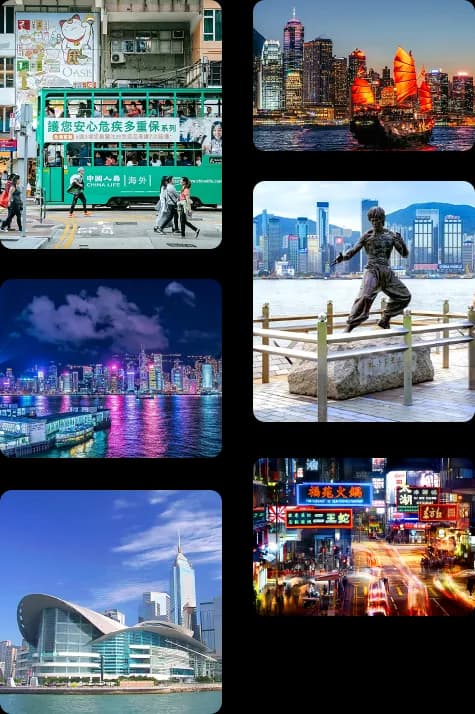
Security in Hong Kong
Hong Kong is widely regarded as a safe destination for expatriates, with comparatively low levels of violent crime. As in any large city, safety can still vary by district and setting.
Official crime reporting is transparent and overall rates are considered low by global standards. Most expats live comfortably without experiencing serious crime. The most common risks are the same as in other dense cities, such as pickpocketing or minor scams in busy areas. Using normal city precautions is usually sufficient for day to day life.
It is still worth staying alert in busy commercial areas and transport hubs. Choose secure buildings, lock doors and windows, and keep valuables out of sight. If you are new to the city, ask locals or your employer about neighbourhood norms. With basic awareness, most people enjoy a safe and comfortable life in Hong Kong.
Infrastructure and public services in Hong Kong
Hong Kong offers strong public infrastructure in a compact city setting. Education options include local public schools, subsidised schools, and international schools. Access and language of instruction vary by district and school type, so families often plan early and confirm admission timelines. The city is well connected, so commuting to schools across districts is common.
Healthcare is delivered through both public and private systems. Public hospitals are subsidised for eligible residents, while private clinics and hospitals provide faster access at higher cost. Many expats choose health insurance for flexibility and to cover private care if needed.
Public services such as government administration and emergency services are well organised across the territory. Because the city is dense, access is usually quick, though some outlying islands and rural areas can have fewer nearby facilities.
For expats, the main difference is the pace and density of city services. You will find excellent transport, high service availability, and many specialist providers, especially on Hong Kong Island and in Kowloon. The trade off is that popular services can be busy, so booking ahead and using digital government portals helps a lot.
Frequently asked questions
Shipping times to Hong Kong depend on the origin country, the gateway used, the transport mode, and whether the shipment clears cleanly on arrival.
- Sea freight: timing varies by route, carrier schedule, gateway congestion, and whether customs or AFCD checks are directed.
- Air freight: faster delivery is possible, but final timing still depends on screening, release, and local delivery scheduling.
Typhoon disruption and major holiday windows can stretch timelines, so the right estimate is route specific rather than generic.
Checklist for your Hong Kong relocation
Checklist for your Hong Kong relocation
Fill out the form with details about your move.
Receive custom quotes within 48 hours.
Choose the option that suits you best, and let our agents guide you through the process.
Request the required documentation to prepare for your arrival in Hong Kong.
Track your shipment with our agents and receive updates at every step
(If necessary) Provide additional details to speed up customs clearance.
Move into your new home while we take care of delivering your goods.