
Plan a Household Move to France
Customs, timing, and delivery handled properly.
Planning a move to France?
✦ TL;DR
This page is for people moving household goods and personal effects to France, especially when involving a transfer-of-residence.
For non-EU arrivals claiming relief, French Customs typically expects Cerfa n°10070*03, a detailed signed inventory, transport documents, ID, and evidence that you are genuinely transferring your main residence.
Used goods generally need to have been owned and used before the move, and relief is strongest when your inventory is specific, values are realistic, and supporting residence documents are consistent.
Food, plant material, animal products, dirty outdoor equipment, and non-compliant wood packaging can trigger extra checks or delays on arrival in France.
Swift Cargo is best suited to apartment-size and larger household moves. For less than 5-6 boxes, a lighter service is often the better option. If your goods originate in France and are bound for Australia, shipping from France to Australia involves EU export clearance and Australian UPE compliance on arrival — a different process from moving goods into France.
There are a few key things to understand before you start packing. France follows EU customs and sanitary rules, and visa choices matter for long stays. Good preparation and a reliable partner make the move smoother.
This page covers what you need to know about shipping your belongings to France, from customs clearance and seasonal demand to minimum shipment size. We also explain our door-to-door service, insurance options, and practical tips for packing and documentation.
Work relocations, family moves, and study-abroad placements: Swift Cargo and our local partners handle your move with care and efficiency. We coordinate your customs file, transport timing, and France-side delivery so your attention goes to settling in, not chasing paperwork.
Our process
Fill out our standard application on our platform.
Request a Quote
Tell us your route and inventory. You get a clear plan, timeline, and cost upfront.
Get Connected
Your Move Manager builds the plan, checks documentation, and makes sure nothing is missed before shipment.
Finalise your Plan
We execute the move. Packing, shipping, customs, delivery. Everything runs to plan.
France shipping peak season
Planning freight shipments around France's busier and quieter periods can help reduce delays. Demand changes through the year, so planning ahead is useful.
- April & May
Freight volumes often rise as businesses and households prepare for summer activity and seasonal turnover. Booking earlier and finalising documents helps avoid congestion in ports and airports. - September
In autumn, imports can become busier as European retail and end of year planning ramps up. Higher demand may mean longer carrier lead times, especially if customs or sanitary checks are triggered. - November & December
After Toussaint holidays, many lanes get busy. Shipments move less smoothly, and pressure intensifies through the end-of-year period.
Customs
France applies EU customs rules, with clearance managed by French Customs (Douanes). If you are shipping household or personal items, you must follow the required documentation process and be prepared for possible inspections — the same Douanes authority handles outbound moves, as covered in our guide to moving household goods from France to Thailand.
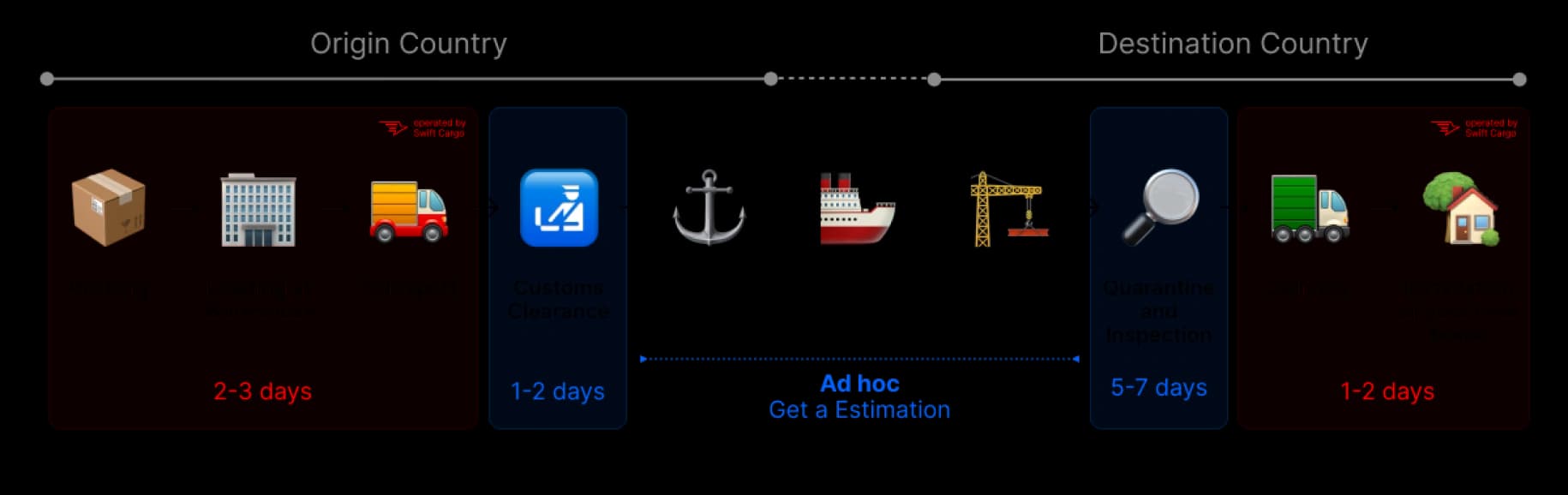
Documents you need for personal goods
For a non-EU household-goods shipment into France, destination agents or customs representatives will usually ask for the following core documents:
- Ocean Bill of Lading or Air Waybill
- Cerfa n°10070*03 when claiming relief for personal property from a third country
- Detailed, dated, signed inventory clearly describing the goods
- Passport or national ID matching the consignee and customs paperwork
- Proof you lived outside the EU and are now settling in France
- Transport and insurance paperwork where requested
- French delivery address and consignee contact details
- Extra permits or health documents if the shipment contains controlled or higher-risk goods
Sanitary checks and delays
Household and personal goods entering France may be inspected by French Customs, and plant or animal products can trigger veterinary or phytosanitary checks.
- Inspection time varies and depends on what you ship and your paperwork.
- To reduce the risk of delays, clean all items thoroughly before packing, especially anything that may have touched soil, plants, or outdoor materials.
For sea freight travellers
If you are travelling by sea, follow the carrier's arrival formalities and be ready to present your customs documents to French officers on entry.
What you can import to France

Personal belongings

Used clothing

Household appliances

Fragile items

High-value items

Large items & furniture

Excess luggage

Pets
EU pet rules; attack-type dogs banned

Vehicles
Customs certificate and French type approval required
Restricted goods

Pharmaceuticals

Explosives

Biohazard

Chemicals

Corrosives

Counterfeit Goods

Ivory

Batteries

Flammables

Weapons

Drugs and Narcotics

Hazardous

Meat & dairy products
Banned from outside the EU

Plants, seeds & soil-related items
Plant-health certificate required

Alcohol & tobacco products
No relocation relief; duty and excise payable
Minimum shipment size for France
When shipping to France with Swift Cargo, there are minimum volume requirements to ensure efficient handling and delivery.
- Minimum shipment: Studio Apartment
This is the smallest shipment size accepted for freight or relocation services to France.
- Smaller consignments need a routing check
For a few cartons or loose personal effects, we usually recommend a lighter service model instead of forcing a full freight setup.
There is no fixed maximum. We can plan anything from apartment moves to full family homes, depending on routing and service level.
Download the customs forms
- Transfer-of-residence relief form (Cerfa n°10070*03): Check the official form on Service-Public.fr
- French Customs guidance on transfer-of-residence relief: Review the current Douane explanation in English
Contact French Customs

Taxes and duties
For France moves, the real tax question is whether your shipment qualifies for transfer-of-residence relief. If it does not, VAT and potentially duty exposure can change the economics of the move quickly.
General tax rules
- Commercial imports from outside the EU are generally subject to import VAT in France, and customs treatment depends on classification, value, and origin.
- There is no general low-value VAT exemption for non-EU commercial imports, so assumptions based on older thresholds are no longer reliable.
Tax exemptions
- Used personal belongings can qualify for duty-and-tax relief when the move meets transfer-of-residence conditions and the customs file is properly supported.
- French Customs states that non-EU movers generally need to show at least 12 months abroad, prior personal use of the goods, and importation within the allowed timeline after the residence transfer.
Duty free status for official use
Some individuals or organisations may import goods into France without paying duties, provided the items are for official use. This includes:
- Diplomatic missions
- Government posts
- Official humanitarian staff
To qualify, you must:
1. Contact French Customs (Douanes)
2. Request any required clearance reference
3. Provide documents supporting your exemption claim
This status may apply to embassy staff, foreign aid workers, or volunteers on specific official missions.
Cargo insurance
Shipping goods across borders always comes with some risk. That is why cargo insurance is recommended when sending valuable items to France, whether you choose sea freight or air freight.
Why you need insurance
Moving cargo by sea or air exposes your shipment to possible damage. Insurance can protect you against:
- Rough weather during transit
- Improper storage or handling
- Fumigation treatments
- Accidental loss or damage
What is covered
Coverage depends on your insurance provider. Most policies include:
- Protection during transport
- Coverage for specific risks such as fire, theft, or moisture damage
- Limitations and exclusions based on your declared value
Always review the terms before you finalise cover.
How to get insured
You can arrange cargo insurance through:
- A general insurance company
- A specialist broker
- Your bank
- Swift Cargo's own insurance program.
Note: Our insurance is charged as a small percentage of your declared shipment value.
Visa requirements for moving to France
Visa planning for France is not just an immigration box to tick. It affects your move file, because long-stay status, work transfer documents, student enrolment, or family reunification papers often reinforce the credibility of the customs story you are telling.
Main visa categories
Most France visas fall into one of these categories:

Visitor visas
For short stays, tourism, or business visits
Working and skilled visas
For temporary or longer term work
Student and training visas
For education or professional development
Family and partner visas
For joining relatives or partners in France
Note: If you are moving to France for more than 90 days, a long stay visa is usually required.
For detailed and up to date information, use the official France-Visas assistant.
List of shipping ports in France
Swift Cargo can route France shipments through the major gateways most commonly used for household-goods imports and inland delivery planning.
Ports/Airports and shipping methods
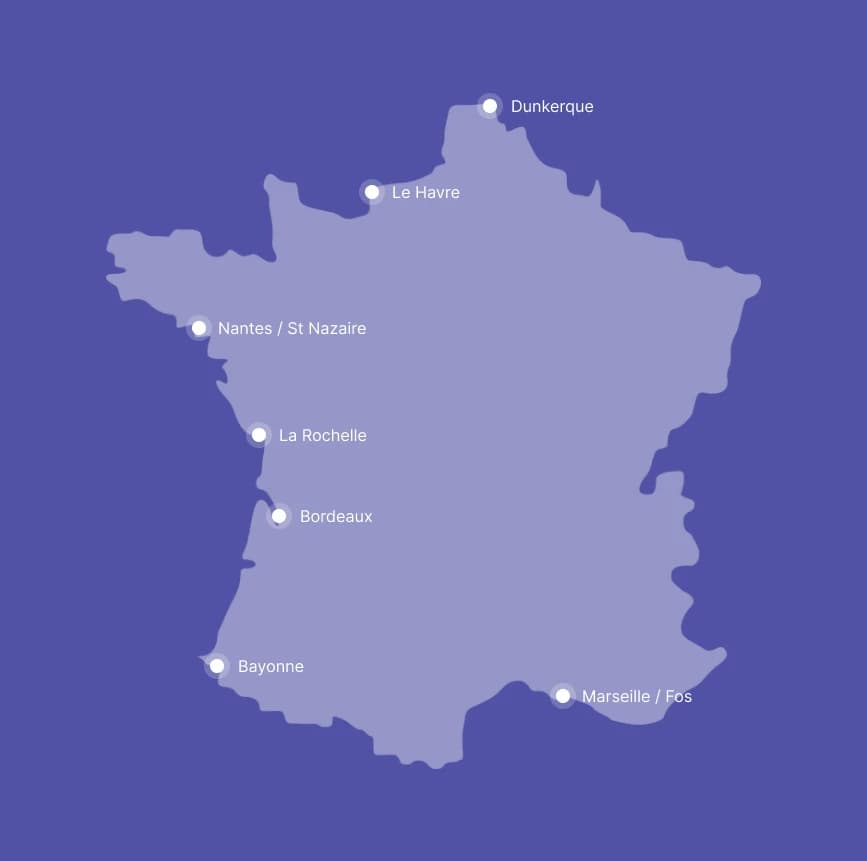
Ports/Airports and shipping methods
- Paris Charles de Gaulle (CDG) – Air freight gateway for faster personal-effects shipments
- Le Havre – Key container gateway for sea freight into northern and central France
- Marseille-Fos – Major southern option for sea freight and multimodal delivery planning
- Dunkirk – Northern port option for selected routes
- La Rochelle – Atlantic-side port coverage depending on route design
- Lyon-Saint Exupéry – Air freight option for time-sensitive moves into eastern France
- Nantes Saint-Nazaire – Western gateway option for selected freight profiles
- Bordeaux – Regional coverage via partner routing when appropriate
- Bayonne – Specialist or regional sea freight coverage on selected moves
Transit time per destination
| From | To | Est. transit time |
|---|---|---|
| London, United Kingdom | Le Havre, France | 2-3 days |
| New York, United States | Le Havre, France | 15-18 days |
| Dubai, United Arab Emirates | Marseille, France | 18-22 days |
| Seoul (Incheon), South Korea | Le Havre, France | 28-35 days |
| Milan, Italy | Paris, France | 3-5 days |
| Singapore | Marseille, France | 26-30 days |
| Sydney, Australia | Le Havre, France | 35-42 days |
| Johannesburg, South Africa | Marseille, France | 20-25 days |
Door to door relocation service
Swift Cargo can manage France relocations as a full door-to-door move, but the value is in how each stage is sequenced around customs and delivery rather than in generic promises about convenience.
1. Packing and loading.
We offer professional packing services to keep your items safe during transport to France. Common packing materials:
- Packing boxes
Available in different sizes and suited to standard household items, helping keep goods stable and protected through handling and transit. - Bubble wrap
Used for fragile items such as glassware, ceramics, and electronics to reduce shocks and prevent breakage. - Wooden crates
Ideal for large or sensitive items. For France, any non EU wood packaging must comply with ISPM 15 markings and treatment requirements.
Full Packing Service: Do not want to pack yourself? Our team can pack all types of goods, including furniture and oversized items. Fill out the contact form and a consultant will organise the right packing plan for your move to France.
2. Pickup
Our agents collect the packed goods from your home or warehouse. Movements are tracked and documented so your shipment to France is handled securely.
3. Customs clearance
We manage the customs process for France. See the Customs section above for required documents and inspection details.
4. Delivery and unloading
Once your shipment arrives in France, we deliver it directly to your home. Our team unloads all boxes at your doorstep.
5. Unpacking and setup
We also offer unpacking services. Our team places your goods where you want them, so your new home is ready to use.
Your France move specialist
You work with a real person who follows the file from quotation through delivery, instead of being passed through disconnected teams after booking.
That matters in France because customs support, inventory quality, and timing decisions often need quick clarification before they become delay points or extra charges.
From pickup planning to document follow-up, release updates, and delivery coordination, your specialist stays reachable and accountable throughout the move.
Talk to an agent now
Import your vehicle
Importing a vehicle into France should be assessed before the shipment moves. Taxes, technical conformity, registration, and supporting documents can become more expensive than the transport itself if the file is weak.
What you need
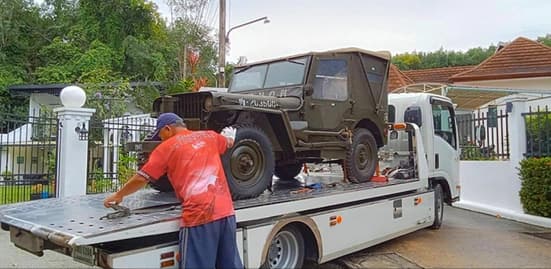
What you need
- Import authorisation or a clear admissibility route before the vehicle arrives
- Core documents such as passport, registration papers, bill of lading, invoice, and any customs valuation support
- Technical and regulatory compliance with French and EU safety, emissions, and registration requirements
Costs to expect
- Import duties or VAT may apply depending on origin, status, and customs treatment
- Registration, conformity, inspection, and environmental fees can matter as much as freight itself
- Additional tax exposure can appear if the vehicle does not qualify under a private-relocation logic
Extra costs often come from conformity work, inspections, storage, or delays while paperwork is being clarified rather than from the ocean or air leg alone.
We can help: Swift Cargo can map the document and routing side early, but we would still treat the vehicle as its own compliance project rather than folding it blindly into the household-goods move.
Import your pets
Pet moves into France are usually manageable, but they stop feeling simple when owners leave the health certificate too late, assume every origin country follows the same rabies rules, or underestimate airline timing windows.

Key requirements
- Correct travel documents
Use the right EU animal health certificate or pet passport format for the origin and travel pattern. - Microchip and rabies compliance
Your pet needs an accepted microchip and a valid rabies vaccination timeline that actually fits the travel date. - Rabies antibody test where required
For some non-EU origins, the titer test is a real timing gate and cannot be left to the last minute. - Breed and age restrictions
Young animals and banned attack-dog categories can create hard entry limits, not just paperwork issues.
Eligibility by origin country
Banned dog breeds in France
The following dogs (Category 1 - attack dogs) cannot be imported under any circumstances:
- Japanese Tosa
- Fila Brasileiro
- Pit Bull Terriers
- American Staffordshire Terriers
- Unregistered or non-pedigree Mastiff (Boerbull)
We Can Help - From paperwork and vet checks to booking flights and entry coordination. We make sure your pet arrives safely and legally in France.
Rated 5 stars by customers
What our customers say - France moves
About France
Why France relocations reward preparation
France remains a strong relocation destination, but it is not forgiving of weak preparation. The clearer your residence evidence, inventory, and delivery timing, the smoother the move usually becomes.
That is why a good France page should not drift into travel filler. It should help you judge customs readiness, choose the right entry point, and plan a realistic delivery into your destination city.
300M+
tonnes handled annually across French seaports
5M+
TEU handled annually across major French container gateways
2M+
tonnes of air cargo handled annually by major French airports
France cost of living
The real France budget shock for many movers is not groceries or coffee. It is the combination of housing deposits, short-term accommodation, staged delivery costs, and the cash buffer needed while paperwork and household setup overlap.
Paris and close-in suburbs can punish bad planning quickly, especially if your shipment arrives before you have a workable address, building access rules, or enough room to receive it. In secondary cities, the pressure often shifts from rent to timing and local service availability.
If you are arriving from outside the EU, treat customs-adjacent costs as part of the living-cost conversation. Storage, inspection delays, extra document work, or non-exempt tax exposure can distort the first-month budget far more than routine supermarket prices.
The useful planning question is not “Is France expensive?” but “What will my first 60 to 90 days cost once housing, delivery, admin setup, and temporary inefficiencies are included?” That is the version that actually helps a relocation decision.
The best-prepared movers separate steady-state living costs from arrival friction. France becomes much easier to budget when you price the move-in phase honestly instead of pretending the monthly rhythm starts on day one.
Security in France

Security in France
For most expats, France is less a security problem than an awareness problem. The majority of avoidable issues are not dramatic crimes but predictable petty theft patterns around stations, dense tourist corridors, and distracted arrivals carrying documents or electronics.
From a relocation perspective, the more important security question is often where you land, how you move through the city during the first weeks, and whether your building, parking, and delivery access are sensible for a newly arrived household.
Good France relocation advice should therefore go beyond “stay alert.” It should push people to think about neighbourhood fit, arrival routines, and the practical vulnerability of the first month, when you are still learning the city and handling move-related admin.
Infrastructure and public services in France
France has strong infrastructure, but the relocation experience depends on how well your housing choice lines up with work, school, and admin reality. A beautiful arrondissement or suburb can still become a poor relocation decision if daily logistics are awkward.
For families, school catchment, childcare availability, and commute structure often matter more than generic rankings. For professionals, the critical issue is whether the address you choose makes the first months simpler or more administrative.
Healthcare quality is a genuine strength, but new arrivals should think in process terms: registration, temporary coverage gaps, document readiness, and how quickly they can move from “eligible” to “usable” in practice.
The most valuable France guidance is therefore not broad praise for public services. It is showing how schools, healthcare, transport, and local admin affect the actual move plan and the first quarter after arrival.
Salaries and income tax in France
France uses a progressive income tax (impôt sur le revenu) with rates from 0% to 45% across five brackets. Tax residency is established when France is your primary place of residence, your main professional activity is in France, or your centre of economic interests is in France.
For expatriate employees, the impatriation regime (régime d'impatriation) introduced by the Finance Act 2004 and updated since allows a partial exemption on expatriate allowances and foreign-sourced income for up to 8 years. This applies to employees recruited abroad to work in France — not to those already in France who change employers.
Key income tax rates for 2024 (single filer):
- Up to €11,294: 0%
- €11,295 to €28,797: 11%
- €28,798 to €82,341: 30%
- €82,342 to €177,106: 41%
- Above €177,106: 45%
Double taxation and fiscal residency in France
France has double taxation agreements (conventions fiscales) with over 120 countries. The France-UK DTA (updated 2009), France-USA DTA, France-Canada DTA, and France-Australia DTA cover the most common origins for English-speaking movers.
If you move to France from the UK, you must notify HMRC of your departure by submitting a P85 form and completing a Self Assessment return for the tax year of departure. France then taxes your worldwide income from the date you become French tax resident.
The exit tax (exit taxation) applies if you hold company shares worth over €800,000 when you leave France after at least six of the previous ten years as a French tax resident — relevant mainly for those planning a subsequent move out.
Key fiscal residency tests (one is sufficient):
- Your foyer (habitual home) is in France
- Your main professional activity is in France
- Your centre of economic interests is in France
- You spend more than 183 days per year in France
Working in France: visas, permits, and the job market
EU nationals have the right to work in France without a work permit. Non-EU nationals require a work permit tied to a specific employer, applied for by the employer through the DREETS (Direction Régionale de l'Économie, de l'Emploi, du Travail et des Solidarités) — DRIEETS in Île-de-France.
The Passeport Talent visa category covers eight sub-types including highly-skilled employees, investors, founders, researchers, and international company employees. It allows up to 4 years residency and a faster administrative path than a standard work permit.
Paris is France's dominant employment hub with particular strength in finance, fashion and luxury goods, technology, media, and international organisations (OECD, UNESCO, ICC). Lyon has a significant life sciences and manufacturing cluster. Bordeaux is growing as a tech hub attracting companies from Paris and London.
Common work visa categories for non-EU nationals:
- Passeport Talent — Salarié qualifié (for employer-sponsored highly skilled)
- Passeport Talent — Créateur d'entreprise (for entrepreneurs)
- Passeport Talent — Investisseur économique (for investors)
- ICT (Intra-Company Transfer) permit for multinational secondments
- Working Holiday (PVT) for nationals of countries with bilateral agreements
Banking and money in France
France is a Eurozone country. All banking is in EUR and Eurozone wire transfers (SEPA) are low-cost and same-day or next-day. International wire transfers use SWIFT.
Opening a French bank account as a new resident requires proof of address (a rental lease or utility bill in your name), your passport, and your titre de séjour or visa. Société Générale, BNP Paribas, and Crédit Agricole are the three largest retail banks. Online banks (Boursorama, N26, Revolut) are faster to open and widely used by expats as a bridge account until a main account is established.
Wise is fully functional in France for EUR to/from GBP, USD, AUD, and most major currencies. Revolut and N26 are EU-regulated and available in France with IBAN accounts. Neither counts as a traditional French bank account for most landlord credit checks — a Boursorama or La Banque Postale account typically satisfies landlord requirements.
What you need to open a French bank account:
- Valid passport
- Titre de séjour or long-stay visa (VLS-TS)
- Proof of French address (rental lease, utility bill, host letter)
- Some banks require proof of income or employment contract
Climate and best time to move to France
France has significant regional climate variation. Paris and northern France have a temperate oceanic climate — mild, often overcast, with rain distributed evenly through the year. Summers are warm (22-25°C), winters are cool (3-8°C) but rarely extreme. The Mistral wind affects Provence and the Rhône valley — strong, dry, and cold in winter.
The Mediterranean coast (Nice, Marseille, Montpellier) has hot, dry summers (25-32°C) and mild winters (8-14°C). This is the climate most lifestyle movers from warmer countries find easiest to adapt to.
The best months for a household goods move to France are April through June and September through October — before the summer transport peak and outside the winter slowdown. Avoid moving in July and August if possible: French infrastructure slows significantly during the grandes vacances, and French tradespeople and customs agents take extended leave.
Seasonal considerations for moving to France:
- April-June: best window — good weather, no summer backlog
- July-August: grandes vacances — avoid if possible; 2-4 week delays common
- September-October: second-best window, autumn weather, manageable customs
- November-March: slower, cheaper, but wet weather can affect last-mile delivery
Frequently asked questions
It depends on the route, method, and how cleanly the customs file is prepared.
Air freight can move in days, while sea freight usually works on a weeks-based timetable. France-side release can still slow down if the inventory is vague, if transfer-of-residence relief is weakly documented, or if the shipment triggers sanitary or packaging checks.
You usually need transport documents, ID, and a detailed signed inventory at a minimum.
For non-EU moves, French Customs commonly expects Cerfa n°10070*03 when relief is claimed, plus evidence that you lived abroad and are now settling in France.
Yes, but only if your move genuinely qualifies for transfer-of-residence relief.
French Customs says non-EU movers generally need to show prior residence abroad, prior personal use of the goods, and importation within the permitted timeline after the move.
Not always.
If the shipment qualifies for transfer-of-residence relief, duty and VAT may be waived on eligible used personal goods. If it does not qualify, VAT and sometimes duty exposure can apply.
Food, plant material, animal products, dirty outdoor goods, and vague inventories are common problem areas.
France applies EU sanitary and customs controls, so anything that looks biosecurity-sensitive or poorly described can be held for clarification.
Non-EU nationals need a titre de séjour (residence permit) to stay beyond 90 days. The type depends on your reason for moving — work, family reunion, or independent means.
Applying before you arrive is not possible from abroad for most categories. You enter on a long-stay visa (VLS-TS), then validate it online within 3 months of arrival through the ANEF system (Administration Numérique pour les Étrangers en France) to convert it into a residence permit.
UK nationals post-Brexit have the same requirements as other non-EU nationals unless they held a French residence permit before 1 January 2021 and maintained their residence rights under the Withdrawal Agreement.
France follows EU customs rules for household goods. Personal effects in use for at least 6 months and being imported within 12 months of establishing French residence can qualify for the franchise de droits exemption — no import duty and no VAT on those items.
New items bought before the move — still in original packaging — typically do not qualify and are assessed for VAT (20%) and any applicable duty.
The key document is the Certificat de franchise de droits, supported by proof of prior residence and an itemised inventory. Swift Cargo prepares the inventory in the format French customs requires.
French customs requires an itemised inventory (in French or with certified translation), proof of change of domicile (utility bills, lease, prior residence evidence), and your titre de séjour or long-stay visa.
If you are returning to live in France after residing abroad for at least 12 months, you may qualify for the retour en France exemption — eligibility depends on your prior residence abroad, not your nationality. You declare this on the SD1 form (or equivalent digital form since 2024).
If any items are new, a purchase invoice is required. French customs conducts random physical inspections at Le Havre and Marseille — a clear, accurate inventory significantly reduces the chance of a hold.
Yes, under the franchise de droits exemption if the vehicle has been owned and registered in your name for at least 6 months before the move and is not being sold within 12 months of import.
To register the vehicle in France, you will need a Certificat de conformité européenne (or the equivalent for non-EU vehicles), a French-language technical inspection (contrôle technique), and proof of insurance with a French-registered insurer.
Right-hand-drive vehicles (UK) require headlight adjustment and speedometer conversion — a statutory requirement, not optional. Budget approximately €300-600 for the conversion and registration costs.
France follows EU pet entry rules. Dogs, cats, and ferrets from non-EU countries need an ISO 15-digit microchip, a valid anti-rabies vaccination (administered after microchipping), and an EU health certificate issued by an official veterinarian in the country of departure.
If your country of origin is not listed as approved for direct entry into France/the EU, a 3-month post-vaccination waiting period applies even if the vaccination is technically current. Check the EU TRACES system for your country's status before booking the move.
Some breeds are classified as dangerous in France under the loi sur les chiens dangereux — Category 1 breeds are prohibited; Category 2 require a permit and muzzle in public. Check your breed before arrival.
Le Havre is France's principal port for sea-freight household goods — the majority of UK, North American, and Asian shipments arrive here. Marseille-Fos handles Middle Eastern, African, and some Asian routes more efficiently due to routing. Dunkerque handles some northern Europe and UK cargo.
For air freight, Paris CDG is the main gateway. Lyon Saint-Exupéry and Marseille Provence handle regional air cargo. For moves to southern France or Corsica, Marseille is typically more practical on both cost and inland transit time than routing via Le Havre.
Swift Cargo selects the port based on your origin city and French destination — not on a fixed rule.
The two most common causes of delay are an inventory that does not match the contents of the shipment, and missing proof of prior residence at the declared address.
French customs is particularly thorough about the 6-month ownership and prior-use evidence for items claimed under the franchise de droits exemption. If an item looks new or is in original packaging, expect scrutiny.
A second frequent issue is OFII (Office Français de l'Immigration et de l'Intégration) process gaps for non-EU arrivals who have not completed their visa validation — customs can request evidence that the entry documentation is in order before releasing goods.
Checklist for your France relocation
Checklist for your France relocation
Share the size, origin, and timing of your move.
Review the route and service options that fit France best.
Confirm whether transfer-of-residence relief is realistic for your file.
Prepare the inventory, ID, and residence documents before export.
Track the shipment and stay reachable during customs review.
Respond quickly to any inspection or clearance questions.
Schedule delivery and settle in once the shipment is released.