
Shipping Household Goods to China: Customs Cleared, Delivered to Your Door
Swift Cargo guides you through Chinese customs, 行李清单 paperwork, and door-to-door delivery — rated 4.87 by 25k+ customers.
Planning a move to China?
Moving to China in 2026: duty-free, customs and shipping times.
Applies to people shipping their own used household and personal goods to China as unaccompanied baggage for personal use.
You must declare unaccompanied baggage at entry and provide a detailed inventory, your transport document, and valid identity such as a passport.
Health, quarantine, and inspection checks may apply to inbound personal goods. Items that could carry soil, plant material, food residue, or outdoor contamination should be cleaned and packed carefully to avoid delays.
China Customs may assess duties and import taxes based on classification and dutiable value. Do not assume new or high value items are tax free, even when shipped as personal effects.
Minimum shipment is a small studio apartment. There is no maximum size limit.
There are important things to know before you pack for China. Customs formalities, inspections, and travel requirements can be detailed. Good preparation and a reliable partner make the difference.
At Swift Cargo, we make international moving simple and secure. This page guides you through what you need to know about shipping your belongings to China. You will find clear information about customs clearance, seasonality, and shipment size expectations. We also explain our door to door service, insurance options, and practical steps from packing to delivery.
Work relocations, family moves, and study-abroad placements: Swift Cargo and our local partners handle your move to China with precision and follow-through. We manage the customs paperwork, logistics, and documentation so you can focus on getting settled from day one.
Our process
Tell us your route and inventory — we build the plan, cost, and timeline.
Request a Quote
Tell us your route and inventory. You get a clear plan, timeline, and cost upfront.
Get Connected
Your Move Manager builds the plan, checks documentation, and makes sure nothing is missed before shipment.
Finalise your Plan
We execute the move. Packing, shipping, customs, delivery. Everything runs to plan.
Peak periods
Planning your move around China’s busy periods helps you avoid delays and secure your preferred dates. Here is what to expect through the year:
- Late spring to summer
Relocation demand can rise ahead of mid-year job starts and international-school calendars. Space may fill faster, so booking early helps secure your dates. - Autumn
The 1 October Golden Week brings reduced port staffing, blank sailings, and possible customs delays. Check your route's sailing schedule and booking cut-offs, and allow additional time around the holiday. - Winter to early spring
Around Chinese New Year (typically January or February), holiday schedules can reduce capacity across ports, freight forwarders, and delivery teams. Check route-specific cut-offs and allow extra time.
Customs
China has detailed customs procedures for inbound household goods and personal items. If you ship used personal effects or unaccompanied baggage, you must follow China Customs documentation, declaration, and inspection requirements — and if goods are moving in the other direction, importing from China to Australia follows a different process governed by ABF and DAFF biosecurity.
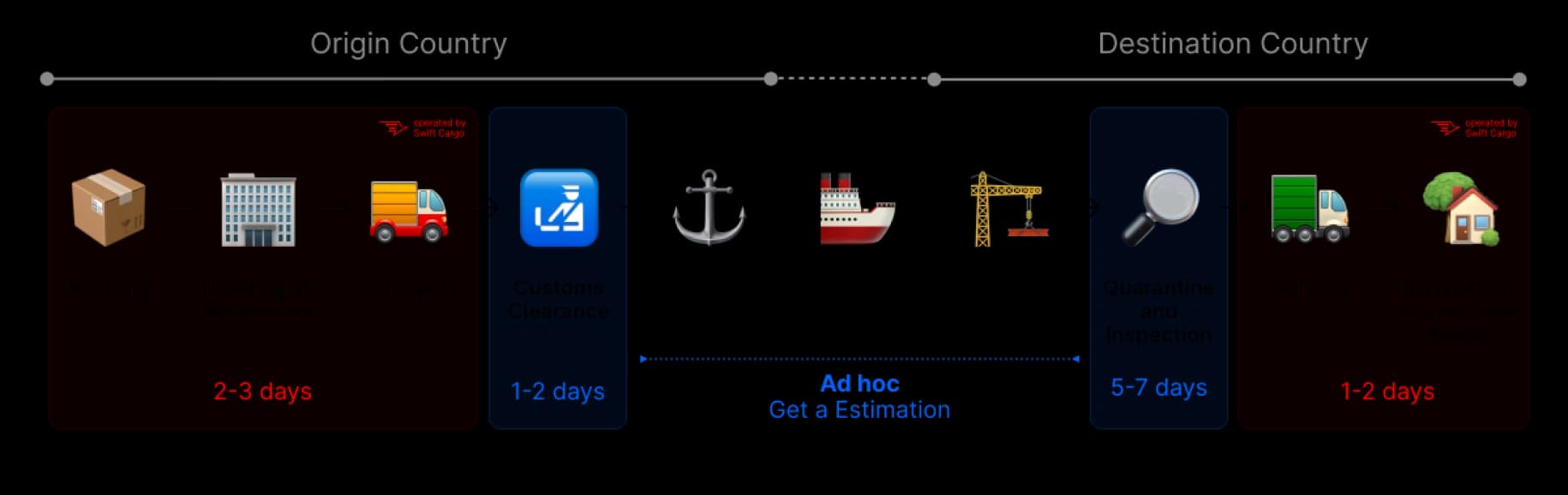
Documents you need for personal goods
To clear your items through China Customs, you will need:
- Ocean Bill of Lading or Air Waybill
- Completed China Customs baggage declaration and any unaccompanied baggage record required
- Passport ID matching the consignee details on your shipment
- Detailed inventory list, in English or Chinese
- Each package labelled with a list of contents, in English or Chinese
- Copy of your passport and relevant entry or residence documents
- Proof of entry or residence , if requested for clearance
- Full name and residential address in China
Quarantine and delays
Household and personal goods entering China may be inspected for health and quarantine risks by China Customs at the port of arrival.
- Inspection timelines vary by port and workload after your shipment arrives.
- To reduce the risk of delays, clean items well before packing, especially anything that may have touched soil, plants, or outdoor materials.
For sea freight travelers
If you are traveling by sea, complete your China Customs baggage declaration on arrival and declare any unaccompanied baggage or items that require inspection.
What you can import to China

Personal belongings

Used clothing

Household appliances

Fragile items

High-value items

Large items & furniture

Excess luggage

Pets
One per person; certificates and possible quarantine
Restricted goods

Drug Contraband

Explosives

Biohazard

Chemicals

Corrosives

Counterfeit

Ivory

Flammables

Firearms

Drugs

Fake Notes

Poison

Hazardous

Vehicles
Used vehicles banned for private import

Meat & dairy products

Plants, seeds & soil-related items

Banned publications & media

Alcohol & tobacco products
Limited allowance; more needs approval
Minimum shipment size for China
When shipping to China with Swift Cargo, minimum volume requirements help ensure efficient handling and delivery.
- Minimum shipment: small studio apartment
This is the smallest shipment size accepted for freight or relocation services to China.
- No maximum size limit
Swift Cargo can manage shipments of any size, from small personal moves to full household relocations.
These minimums apply specifically to shipments entering China.
Customs forms and guidance
- China Customs passenger clearance and baggage declaration guidance: Official GACC passenger clearance guide
- Letter of Authorization for a representative: your coordinator can advise which authorization format your appointed agent requires.
Contact China Customs

Taxes and duties in China
Understanding China’s import tax rules can help you avoid surprises during customs clearance. Here is what you need to know:
General tax rules
- Personal goods may be assessed for duty and import tax based on classification and dutiable value during clearance.
- Some low value or new items can still attract import tax, especially when they resemble commercial purchases. China Customs will confirm this during valuation.
Tax exemptions
- Some used personal effects may receive preferential treatment, but items like alcohol or tobacco are commonly controlled and may be taxed.
- Any exemption applies only when goods meet China Customs conditions for personal use and proper declaration.
Duty free status for official use
Some individuals or organisations may import goods without paying duties when items are for official use. This can include:
- Diplomatic missions
- Government posts
- Official humanitarian staff
To qualify, you must:
1. Contact China Customs at your port
2. Request any required reference number
3. Provide supporting documents for the exemption
This status may apply to embassy staff, foreign aid workers, or volunteers under specific missions, subject to China Customs confirmation.
Cargo insurance
Shipping goods across borders always comes with some risk. That is why cargo insurance is strongly recommended when sending valuable items to China.
Why you need insurance
Moving cargo by sea or air exposes your shipment to potential damage. Insurance can protect you against:
- Rough weather in transit
- Improper storage or handling
- Fumigation treatments
- Accidental loss or damage
What is covered
Coverage depends on your insurance provider. Most policies include:
- Protection during transport
- Coverage for specific risks such as fire, theft, or moisture damage
- Limitations and exclusions based on your declared value
Always review the terms with your broker before finalising.
How to get insured
You can arrange cargo insurance through:
- A general insurance company
- A specialist broker
- Your bank
- Swift Cargo’s own insurance program.
Note: Our insurance is priced as a small percentage of your declared shipment value.
Visa requirements for moving to China
If you are planning to relocate to China, you will need to hold a valid visa or residence document. There are several categories, and requirements depend on your purpose of stay. The best way to choose the right option is to check the official immigration requirements and confirm which category matches your situation.
Main visa categories
Most China visas fall into one of these categories:

Visitor visas
For short stays, tourism, or business visits
Work and skilled visas
For employment or long term work
Student and training visas
For study or training programs
Family and partner visas
For joining relatives or a spouse in China
Note: If you are moving to China for a long term stay, a work, student, or family based visa is usually the most appropriate.
For detailed and up to date information, visit the official Chinese immigration website.
List of shipping ports in China
Swift Cargo operates through major international ports across China. We provide both sea freight and air freight options for relocations and commercial shipments to the destinations below:
Ports and shipping methods
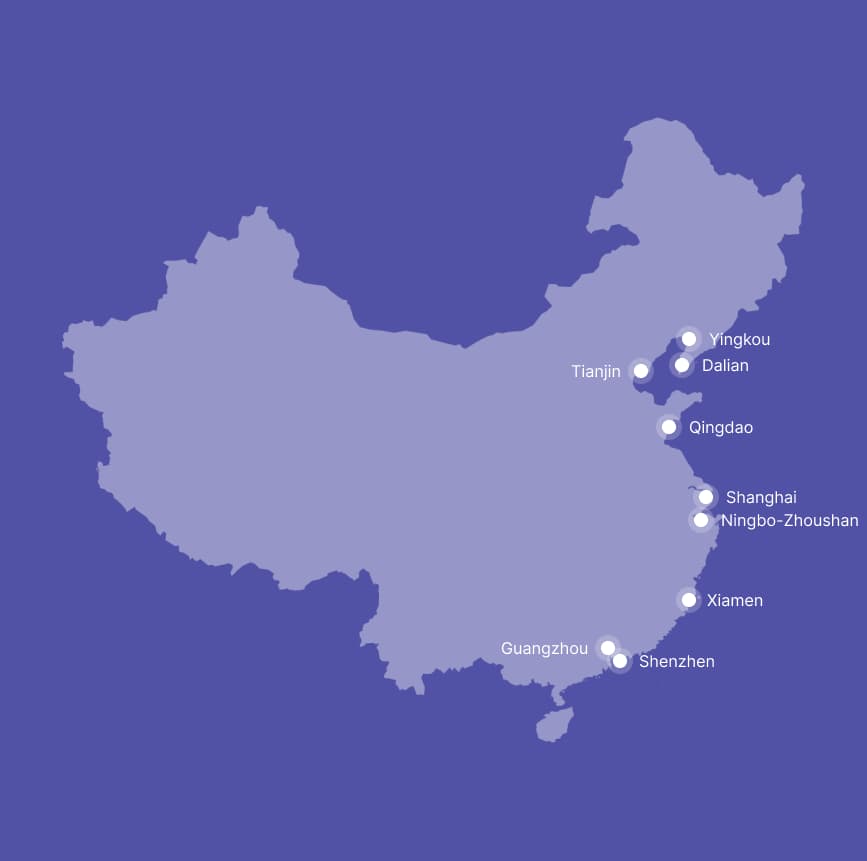
Ports and shipping methods
- Shanghai – Sea freight and air freight available
- Shenzhen – Sea freight and air freight available
- Ningbo – Sea freight and air freight available
- Qingdao – Sea freight and air freight available
- Tianjin – Sea freight and air freight available
- Guangzhou – Sea freight and air freight available
- Xiamen – Sea freight and air freight available
- Dalian – Sea freight and air freight available
Transit time per destination
| From | To | Est. transit time |
|---|---|---|
| London, United Kingdom | Shanghai, China | 30-35 days |
| Los Angeles, United States | Shanghai, China | 18-22 days |
| Dubai, United Arab Emirates | Shanghai, China | 16-20 days |
| Paris, France | Shanghai, China | 30-35 days |
| Milan, Italy | Shanghai, China | 28-32 days |
| Seoul (Incheon), South Korea | Qingdao, China | 2-3 days |
| Moscow, Russia | Shanghai, China | 20-25 days |
| Sydney, Australia | Shanghai, China | 20-23 days |
Door to door relocation service
Swift Cargo offers a full door to door moving service to China. From packing your goods to unpacking them in your new home, we take care of every step of the process.
1. Packing and loading.
We offer professional packing services to keep your items safe during transport to China. Common packing materials:
- Packing boxes
Available in different sizes and designed to handle standard household items during international shipping. - Bubble wrap
Used for fragile items like glassware, ceramics, and electronics to reduce the risk of breakage. - Wooden crates
Ideal for large or sensitive items. They offer extra resistance and protection, including against shocks and humidity.
Full Packing Service: Do not want to pack yourself? No problem. Our team can pack all types of goods, including furniture and oversized items. Fill out the contact form and one of our consultants will get in touch to organise your packing needs.
2. Pickup
Our agents collect packed goods from your location or warehouse. All movements are tracked and documented, ensuring your shipment is handled securely.
3. Customs clearance
We manage the customs process for China. See the Customs section above for required documents and inspection details.
4. Delivery and unloading
Once your shipment arrives in China, we deliver it directly to your home. Our team unloads all boxes at your doorstep.
5. Unpacking and setup
We also offer unpacking services. Our team places your goods where you want them so you are ready from day one.
Support team
Every Swift Cargo client is assigned a dedicated logistics specialist who stays with the move from first quote to delivery confirmation. One contact, consistent from start to finish.
Your specialist tracks your shipment, manages documentation, coordinates customs, and flags anything that needs attention before it becomes a problem. You don’t explain your situation to different people — your specialist already knows your shipment and your timeline.
From pickup coordination to tracking updates, customs guidance, and delivery confirmation, your specialist keeps you informed at each stage and stays available when questions come up. Reach us by WhatsApp or email — the same person responds, every time.
Talk to an agent now
Import your vehicle
Bringing a car into China is possible but requires prior approval and compliance with local customs, safety, and registration rules.
What you need
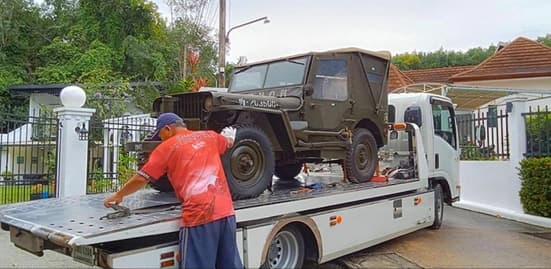
What you need
- Vehicle import approval from China Customs, arranged before the car arrives
- Key documents include passport, registration papers, bill of lading or air waybill, and purchase invoice
- Compliance with China’s safety and emissions requirements may be required before registration
Costs to expect
- Import duty may apply
- Import taxes may apply
- Additional taxes may apply to high value vehicles
Extra fees may apply for inspection, cleaning, or modifications.
We Can Help - Swift Cargo handles the process from start to finish, including paperwork, transport, and customs.
Import your pets
China has strict entry rules for pets to protect public health and animal safety. Only pets that meet health, vaccination, and import conditions are allowed. Pets must enter through a port with quarantine facilities, and procedures are checked by China Customs.
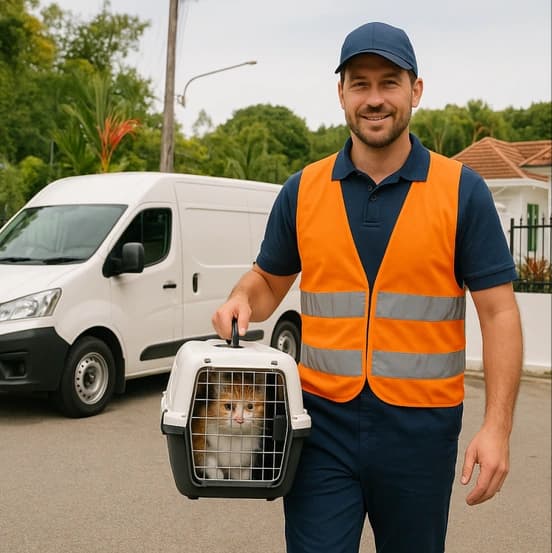
Key requirements
- Valid import approval
Confirm and obtain any required pet entry approval through China Customs and quarantine authorities before travel. - Microchip and vaccinations
Your pet must be microchipped and up to date on rabies vaccination and other core vaccines. - Rabies blood test
A rabies titer test may be required in some cases. - Quarantine
If required, pets complete quarantine for 30 days at a designated port facility on arrival.
Eligibility by origin country
Banned dog breeds in China
Some breeds may be restricted from import to China:
- Certain restricted dog breeds
- Breeds classified as high risk
- Dogs subject to local bans
- Breeds restricted by city rules
- Some hybrid or fighting types
We Can Help - From paperwork and vet checks to booking flights and quarantine, we make sure your pet arrives safely and legally in China.
Rated 5 stars by customers
What our customers say about China moves
About China
Shipping activity in China
China is one of the world’s largest shipping and logistics hubs. Major seaports and air cargo gateways handle a wide range of personal and commercial freight routes year round.
National freight volume (all operators):
High volume
cargo shipments handled weekly
Large scale
containers processed daily across major ports
Steady flow
air freight managed each month
China cost of living
Relocating to China can change your living expenses, depending on where you settle and your lifestyle. Everyday costs vary widely between tier one cities and smaller regional centers. Rent is often the biggest adjustment. In cities like Beijing, Shanghai, or Shenzhen, housing in central areas can be expensive by local standards, while suburban districts and smaller cities are more affordable. Many newcomers find it helpful to compare neighborhoods carefully, especially for commute time, school access, and proximity to services.
Utilities, internet, and groceries can also affect your budget in China. Costs tend to be higher in major cities and lower in smaller ones. Local markets often provide good value, while imported products can be noticeably pricier. Eating out is common and ranges from affordable neighborhood options to high end international restaurants. If you have specific dietary needs or prefer imported brands, plan for higher grocery costs.
Transportation costs in China depend on the city. Large cities usually have extensive metro and bus networks, while taxis and ride hailing are common supplements. Your monthly transport budget will be shaped by distance and commuting patterns.
The upside is that salaries and living costs in China are closely tied to industry and location. How far your income goes depends on your profession, contract terms, and whether you live in a major city or a smaller region. Many expats find that careful housing choices make the biggest difference to monthly expenses.
Overall, moving to China can shift your monthly budget, especially for housing, imported groceries, and lifestyle choices. Plan your budget early, compare cities and neighborhoods for affordability, and prepare for one time relocation costs like deposits, insurance, and school registration. With good preparation, China offers strong infrastructure, diverse city options, and a wide range of services for newcomers.
Salary and income in China
Salary levels in China vary significantly by industry, city tier, and whether you are on a local contract or an international expat package. Finance, technology, and professional services in Shanghai and Beijing command the highest pay. Corporate assignees on expat packages typically receive housing allowances, school fee support, and home leave flights — understand exactly what your package includes before making relocation decisions based on salary figures alone.
Individual Income Tax (IIT) in China is levied on a graduated scale from 3% to 45%. Tax residency triggers after 183 days in a calendar year. China has double taxation treaties with most major source countries for expats, which prevents double taxation but does not eliminate your Chinese IIT obligation. For the first full tax year, it is worth engaging a tax adviser familiar with both your home country obligations and Chinese IIT.
Self-employed or freelance work in China requires specific business registration — working informally on a tourist or Z visa is not permitted and carries serious legal risk. If you are moving to China without an employer-sponsored package, budget carefully for tax, mandatory social insurance contributions (which apply to Z visa holders), and the full cost of housing and schooling without employer support.
Taxes in China
Individual Income Tax (IIT) applies to all income earned in China by both residents and non-residents from Chinese sources. The graduated rate runs from 3% to 45%. Tax residency is established after 183 days in China within a tax year. Once resident, worldwide income from Chinese sources and China-connected income are taxable. China has comprehensive double taxation treaties with over 100 countries — these treaties determine how cross-border income and assets are treated.
There is no wealth tax in China. Property tax pilots exist in Shanghai and Chongqing but apply in limited circumstances and do not affect most expat movers. Value-added tax (VAT) applies at the standard 13% rate on most goods and services. Z visa holders are subject to mandatory social insurance contributions, deducted at source by employers — these cover basic healthcare, pension, and other social benefits.
Foreign asset reporting obligations vary by nationality and home country rules — check with a qualified adviser in your home country before moving. China itself does not impose a foreign asset reporting regime equivalent to the US FBAR, but your home country may. Keep records of the date your tax residency changes, as this affects your obligations in both China and your country of origin.
Jobs and working in China
Working in China requires a Z work visa, which must be sponsored by a licensed Chinese employer before you arrive. You cannot legally work in China on a tourist, business, or student visa. The Z visa application involves your employer obtaining a work permit approval from the relevant Chinese authority, which is then used to apply for the Z visa at a Chinese Embassy or Consulate in your home country. Processing timelines vary by nationality and employer type.
Sectors with strong demand for English-speaking expats include technology and AI (concentrated in Beijing and Shanghai), finance (Shanghai's Lujiazui financial district), international education (English teachers and school administrators), and manufacturing management (Guangzhou, Shenzhen, Dongguan, Suzhou). Mandarin proficiency is not always required but significantly expands your options, particularly outside the major expat hubs.
Some employers channel foreign hires through licensed foreign employment agencies (FESCO or CIIC) rather than direct employment. This arrangement affects how your IIT and social insurance are handled. Clarify this with your employer before accepting a contract, as it has practical implications for your tax filings and employment rights in China.
Money and banking in China
China's currency is the Renminbi (RMB), denominated in yuan (CNY). WeChat Pay and Alipay have replaced cash and cards for most daily transactions — both apps accept foreign Visa and Mastercard cards linked to your international account, subject to monthly spending caps for non-residents. Setting one or both up before or immediately upon arrival is strongly recommended. Many places in China simply do not accept foreign cards directly.
Opening a Chinese bank account requires your passport and a residence registration document (temporary residence certificate issued by your local police station). This is typically possible 2-4 weeks after arrival. Bank of China, ICBC, and China Merchants Bank are most commonly used by expats and have English-language services at some branches. Once you have a local account, WeChat Pay and Alipay limits lift considerably, and salary deposits become straightforward.
International money transfers from China are subject to annual limits for individuals (USD 50,000 equivalent per year). For larger transfers — bringing savings to China or repatriating earnings — use your bank's official transfer channels rather than informal services. SWIFT transfers work but can take several business days. Wise and similar services do not offer direct CNY rails; transfers typically route via Hong Kong or Singapore.
Climate in China
China spans an enormous geographic range, and climate varies sharply by region. Beijing has a continental climate: cold dry winters (typically −10°C in January, with occasional colder spells) and hot summers reaching 35°C+ with some humidity. Sandstorm season in spring affects Beijing and the north. Shanghai experiences four distinct seasons: humid and hot summers (38°C+ with 80%+ humidity in July-August), mild but damp winters around 5°C, and pleasant spring and autumn windows.
South China (Guangzhou, Shenzhen) is subtropical with a long wet season from April to September — typhoon risk applies along the coast. Chengdu and Chongqing in Southwest China are famously overcast year-round with high humidity and mild temperatures. Harbin in the northeast has some of China's coldest winters but dry and manageable. Most expat destinations (Shanghai, Beijing, Guangzhou) each require a full seasonal wardrobe.
For shipping purposes, plan around seasonal timing. Summer arrivals to Shanghai or Guangzhou mean your winter clothing can follow by sea freight several weeks later without hardship. Beijing-bound moves in autumn should include winter gear in the main shipment or as priority air freight, since temperatures drop sharply in November. Avoid scheduling container delivery during Spring Festival week (late January to early February) when port and customs processing slows significantly.
Security in China

Security in China
China is generally regarded as a safe destination for expatriates and travelers. As in any country, safety levels can vary by city and neighborhood, especially in busy urban areas.
Most expatriates in China live safely without serious incidents. Petty theft and scams can occur in crowded areas, transport hubs, or tourist districts. Local rules and enforcement are strict, so it is important to respect regulations, carry valid identification, and follow guidance from local authorities.
Stay alert in busy urban centers where pickpocketing or minor scams are more likely. Choose a secure neighborhood, lock your home and vehicle, and keep valuables out of sight. Simple precautions and awareness go a long way. With preparation and common sense, you can enjoy a safe and comfortable life in China.
Infrastructure and public services in China
China offers extensive public infrastructure, and availability can vary across provinces and cities. Education options include public schools, international schools, and bilingual programs in major cities. Admission rules depend on residency status and local district policies, so families often plan school choices early. In large urban areas, school networks are dense and well connected, while smaller cities may have fewer international style options.
Healthcare in China includes both public and private systems. Major cities have large public hospitals and growing private and international clinics. Quality and waiting times vary by facility. Expatriates often choose hospitals with international departments for language support and familiar care paths, especially for routine checkups or specialist visits.
Public services such as government administration and emergency services are strong in most urban centers. Rural and remote areas can have fewer specialist facilities and longer travel times. Newcomers should factor location into decisions about housing, work, and healthcare access.
For many expatriates, China’s largest cities provide the widest range of schools, hospitals, and public services, including international options. Smaller cities can still offer good facilities, but choices may be more limited. Your day to day experience will depend on where you live, so compare cities and districts based on your family needs, work location, and preferred services.
Frequently asked questions
Shipping times to China depend on the origin country and the method you choose.
- Sea freight: typically takes several weeks, depending on your departure port, routing, and any customs or quarantine inspections on arrival.
- Air freight: usually takes around one to two weeks door to door, including customs clearance and local delivery.
Keep in mind that peak periods or public holidays in China may cause delays. Our team will give you a personalised timeline based on your shipment details and preferred method.
The main visa categories for people relocating to China are:
- Z visa (work visa): Required for employment. Your employer must sponsor you and obtain approval from the relevant Chinese authorities before applying. This is the most common route for expat movers.
- S visa (family reunion): For spouses and immediate family members joining a Z visa holder in China. Issued for long-term stays.
- R visa (high-talent): For candidates classified as high-level talent under Chinese government programmes. Fewer restrictions on application process.
Visa requirements and processing times change. Always confirm current requirements with the Chinese Embassy or Consulate in your country of residence before making relocation plans.
Chinese customs distinguishes between used personal effects and new or commercially purchased items. Used household goods that are genuinely personal — furniture, clothing, kitchen items, books — and have been owned for six months or more are generally treated as unaccompanied baggage and can be exempt from duty when properly declared.
New goods, high-value items, or items that appear commercially purchased are assessed differently. Customs officers may apply import duty and VAT based on the declared or assessed value. Do not assume exemption applies to electronics, appliances, or branded items even if you personally owned them.
The key document is the 行李清单 (baggage manifest) — a detailed inventory you must prepare and declare at entry. Accuracy matters. Swift Cargo helps you prepare this inventory correctly before your shipment arrives in China.
Yes, but China has strict import rules for pets and advance planning is essential. Key requirements:
- ISO 15-digit microchip implanted before any vaccines or tests are done
- Rabies vaccination current and administered after microchipping
- Rabies titre test (neutralisation test): required for pets from most countries, must be done at an approved laboratory, and results must be available at least 180 days before travel — plan this step well in advance
- Health certificate issued by an accredited government vet within 10 days of travel
- 30-day quarantine at a designated port facility on arrival in China
Not all countries are on China's approved origin list. Confirm your origin country's status with China Customs (GACC) before booking anything. Only certain ports have quarantine facilities — your pet must arrive through an approved port.
Technically yes, but import duty on passenger vehicles in China is high — typically 25% on the vehicle value, plus 17% consumption tax and 13% VAT depending on engine size and vehicle category. Combined effective tax rates can reach 100% or more of the vehicle's customs value. For most personal moves, importing a car is not financially practical.
Additionally, your vehicle must be left-hand drive and comply with China's emissions and safety standards (GB standards). Non-compliant vehicles cannot be registered for road use. If you are moving for a multi-year corporate assignment and considering it, get a formal cost estimate from a licensed customs agent before shipping.
WeChat Pay and Alipay are the dominant payment methods for daily life in China — not optional, but essential. Many shops, restaurants, taxis, and services operate almost cashless using QR codes. Both apps can be linked to a foreign Visa or Mastercard with a spending cap, which covers initial weeks while you get set up. Set this up before or immediately upon arrival.
To open a Chinese bank account (needed for higher transaction limits and salary deposits), you will require your passport, residence registration documentation, and in some cases an employer letter. This is usually possible 2-4 weeks after arrival once your temporary residence certificate is issued. Bank of China, ICBC, and China Merchants Bank are commonly used by expatriates.
International bank cards (Visa, Mastercard) are accepted at ATMs and some larger international venues, but coverage is patchy in everyday settings. UnionPay is universally accepted. Cash remains useful for small local vendors and markets.
The right port depends on where in China you are moving to:
- Shanghai (Waigaoqiao / SPIL): the most common port for household goods. Handles the largest volume of personal effects shipments and has the most established customs clearance procedures for expat moves.
- Tianjin: the preferred port for Beijing-bound shipments. Inland trucking from Tianjin to Beijing is efficient.
- Guangzhou (Nansha): serves South China including Shenzhen, Guangzhou city, and surrounding provinces.
- Qingdao: well-positioned for northeastern China and receives direct ferry services from Korea — useful if shipping from Seoul or Busan.
Delivery time from the port to your home adds 3-10 days depending on destination city and clearance speed. Swift Cargo can route your shipment through the most appropriate port for your destination.
China's prohibited and restricted items list goes beyond standard dangerous goods. Key categories to be aware of:
- Printed material: Books, magazines, and printed matter with political content that contradicts Chinese law or could be classified as propaganda are prohibited. Religious materials in quantities suggesting distribution (rather than personal use) may be detained or confiscated.
- Electronic devices: Unregistered wireless transmitting devices, radio equipment, and some encrypted devices may be restricted or require prior approval.
- Food items: China's GACC has phytosanitary rules on fresh produce, seeds, soil, and certain processed foods. Fermented or wet food items (including kimchi and similar products) are strictly prohibited from being included in personal effects shipments.
- Tobacco and alcohol: Personal quantities are allowed with limits, but commercial quantities attract full duty.
When in doubt, declare the item through the Red channel at customs. Items declared honestly are far less likely to cause problems than undeclared items discovered during inspection.
Checklist for your China relocation
Checklist for your China relocation
Fill out the form with details about your move.
Receive custom quotes within 48 hours.
Choose the option that suits you best, and let our agents guide you through the process.
Request the required documentation to prepare for your arrival in China.
Track your shipment with our agents and receive updates at every step
(If necessary) Provide additional details to speed up customs clearance.
Move into your new home while we take care of delivering your goods.