
International moves to Australia made easy
Swift Cargo is rated 4.87 by 25k+ customers.
Planning a move to Australia?
✦ TL;DR
Applies to people shipping their own used household and personal goods to Australia as Unaccompanied Personal Effects (UPE)
You must lodge the Unaccompanied Personal Effects Statement (B534) and provide a detailed inventory, transport document, and identity.
Biosecurity checks apply to all UPE. Risk items like wood, food, plant material, and used outdoor gear need extra care and cleaning.
Low value rules use A$1,000 (AUD) as a customs value threshold for duty assessment. GST may still apply in some cases — the total cost of importing involves port handling, inspection fees, and last-mile delivery charges beyond the freight rate.
Minimum shipment size: Small studio apartment. There is no maximum size limit.
There are important things to know before you pack your boxes. From strict customs regulations to choosing the right visa, successful relocation requires preparation and the right partner by your side.
This page covers what you need to know before shipping your belongings to Australia. You’ll find clear information about customs clearance, peak shipping seasons, and the minimum shipment size required. We also explain our door-to-door service, our insurance options, and more.
Work relocations, family moves, and study-abroad placements: Swift Cargo and our local partners coordinate each stage of the move, packing, freight, customs, and final delivery, so the logistics stay in one place instead of spread across separate providers.
The total landed cost of importing to Australia involves more than the freight rate, with port fees, inspection charges, and last-mile delivery all adding to the final figure.
Our Process
Fill out our standardized application on our platform.
Request a Quote
Tell us your route and inventory. You get a clear plan, timeline, and cost upfront.
Get Connected
Your Move Manager builds the plan, checks documentation, and makes sure nothing is missed before shipment.
Finalise your Plan
We execute the move. Packing, shipping, customs, delivery. Everything runs to plan.
Peak Months
Planning your freight around Australia’s seasonal patterns — including the BMSB stink bug season that applies to goods shipped, loaded, or transhipped between September and April — can save time and reduce costs. Here’s what to expect through the year:
- September to April (BMSB season)
Australia applies brown marmorated stink bug measures to goods shipped, loaded, or transhipped during this window. Untreated risk goods may need offshore or onshore treatment, which adds time and cost, so book with this in mind. - December to January
Port and depot operations slow around the Australian public holidays, and container yards are busiest before the break. Expect longer clearance and delivery times if your goods land here. - June to August (Australian winter)
Demand is generally lower and ports run more predictably, which usually means shorter processing and delivery times for household-goods moves outside the BMSB-heavy months.
Customs
Australia has some of the world’s most detailed and strict customs procedures, including DAFF biosecurity requirements that apply across virtually all household goods categories. If you are shipping household goods or personal items, you must comply with all documentation and inspection requirements — Australian customs holds can involve ABF or DAFF separately, each with different clearance timelines and costs.
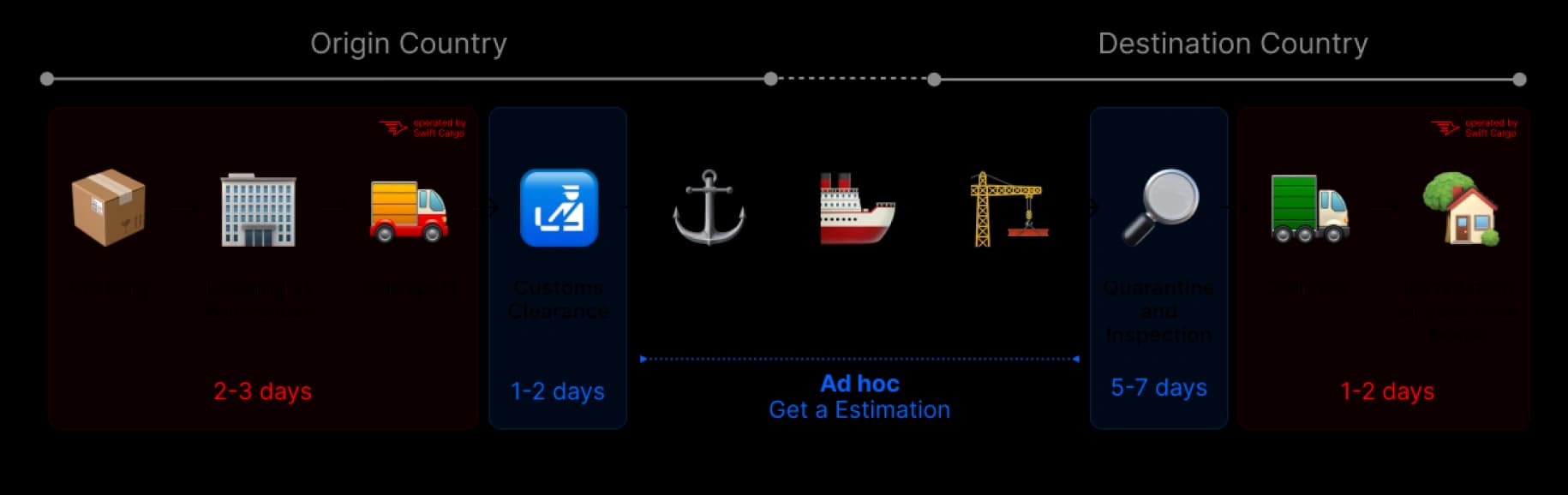
Documents you need for importing Personal Goods
To clear your items through Australian Customs — and claim the UPE duty concession if you are eligible — you’ll need the following:
- Ocean Bill of Lading or Airway Bill
- Completed B534 form (Unaccompanied Personal Effects Statement, version 6/00)
- Passport ID and signature page (Signature must match the one on the B534 form)
- Detailed inventory list, written in English
- Each package labelled with a list of contents, in English
- Copy of your visa and passport identification page
- Visa grant letter , if the visa is not stamped in the passport
- Full name and residential address in Australia (no business addresses)
Quarantine and Delays
All household and personal goods entering Australia are subject to quarantine inspection by the Department of Agriculture (DOA).
- This examination can take up to 14 working days after your shipment arrives.
- To reduce the risk of delays, clean all items thoroughly before packing — especially anything that may have touched soil, plants, or outdoor materials.
For Sea Freight Travellers
If you are travelling by sea, you will also need to submit an Incoming Passenger Card to customs officers upon arrival.
What you can import to Australia

Personal belongings

Used clothing

Household appliances

Fragile items

High-value items

Large items & furniture
Timber furniture inspected for pests, at your cost

Excess luggage

Pets
Permit and quarantine for cats/dogs, except compliant arrivals from New Zealand

Vehicles
Import approval before shipping; duty payable
Restricted Goods

Drug Contraband

Explosives

Biohazard

Chemicals

Corrosives

Counterfeit

Ivory

Batteries

Flammables

Firearms

Drugs

Fake Notes

Poison

Pornography

Knife

Tobacco

Hazardous

E-cigarettes & vapes
Controlled import; permit needed

Asbestos
Banned, including in vehicles
Minimum Shipment Size for Australia
When shipping to Australia with Swift Cargo, there are minimum volume requirements to ensure efficient handling and delivery.
- Minimum shipment: Studio Apartment
This is the smallest shipment size accepted for freight or relocation services to Australia.
- No maximum size limit
Swift Cargo can manage shipments of any size, from small personal moves to full household relocations.
These minimums apply specifically to shipments entering Australia.
Download the Customs Forms
- Unaccompanied Personal Effects (UPE) Statement (Form B534): https://www.abf.gov.au/form-listing/forms/b534e.pdf
- Letter of Authority (template): https://www.service.nsw.gov.au/letter-of-authority/generic-grant-template
Contact Australian Customs

Taxes and Duties
Understanding Australia’s import tax rules can help you avoid surprises during customs clearance. Here’s what you need to know:
General Tax Rules
- Goods valued under AUD 1,000 are usually not subject to import duties or taxes during customs clearance.
- However, since July 2018, certain low-value goods may still be charged a 10% Goods and Services Tax (GST). This especially applies to online purchases and commercial goods.
Tax Exemptions
- Most personal goods under AUD 1,000 are duty-free, with some exceptions like alcohol or tobacco.
- This exemption applies to unaccompanied personal effects as long as they meet Australian Border Force (ABF) conditions.
Duty-Free Status for Official Use
Some individuals or organisations may import goods without paying duties, provided the items are for official use. This includes:
- Diplomatic missions
- Government posts
- Administrative or humanitarian staff on official assignment
To qualify, you must:
1. Contact the ABF’s ACT Regional Office
2. Request a Customs Identification Number
3. Provide supporting documents to claim the exemption
This status may apply to embassy staff, foreign aid workers, or volunteers under specific missions.
Cargo Insurance
Shipping goods across borders always comes with some risk. That’s why cargo insurance is strongly recommended when sending valuable items to Australia.
Why You Need Insurance
Moving cargo (whether by sea or air) exposes your shipment to potential damage. Insurance can protect you against:
- Rough weather during transit
- Improper storage or handling
- Fumigation treatments
- Accidental loss or damage
What Is Covered
Coverage depends on your insurance provider. Most policies include:
- Protection during transport
- Coverage for specific risks (e.g. fire, theft, moisture damage)
- Limitations and exclusions based on your declared value
Always review the terms with your insurance broker before finalising.
How to Get Insured
You can arrange cargo insurance through:
- A general insurance company
- A specialist broker
- Your bank
- Swift Cargo’s own insurance program.
Note: Our insurance is charged at 3% of your declared shipment value.
Visa Requirements for Moving to Australia
If you are planning to relocate to Australia, you’ll need to hold a valid visa. There are many visa types available, and the names can often be confusing. The best way to choose the right one is to check the official requirements and see which options you are eligible for.
Main Visa Categories
Most Australian visas fall into one of the following categories:

Visitor visas
For short stays, tourism, or business visits
Working and skilled visas
For temporary or permanent jobs
Student and training visas
For education or professional development
Family and partner visas
For joining relatives or spouses in Australia
Note: If you are moving to Australia permanently, a working visa or family visa is usually the most appropriate.
For detailed and up-to-date information, visit the official Australian Government Immigration website.
List of Shipping Ports in Australia
Swift Cargo operates through all major international ports across Australia. We provide both sea freight and air freight options for relocations and commercial shipments to the destinations below:
Ports and Shipping Methods
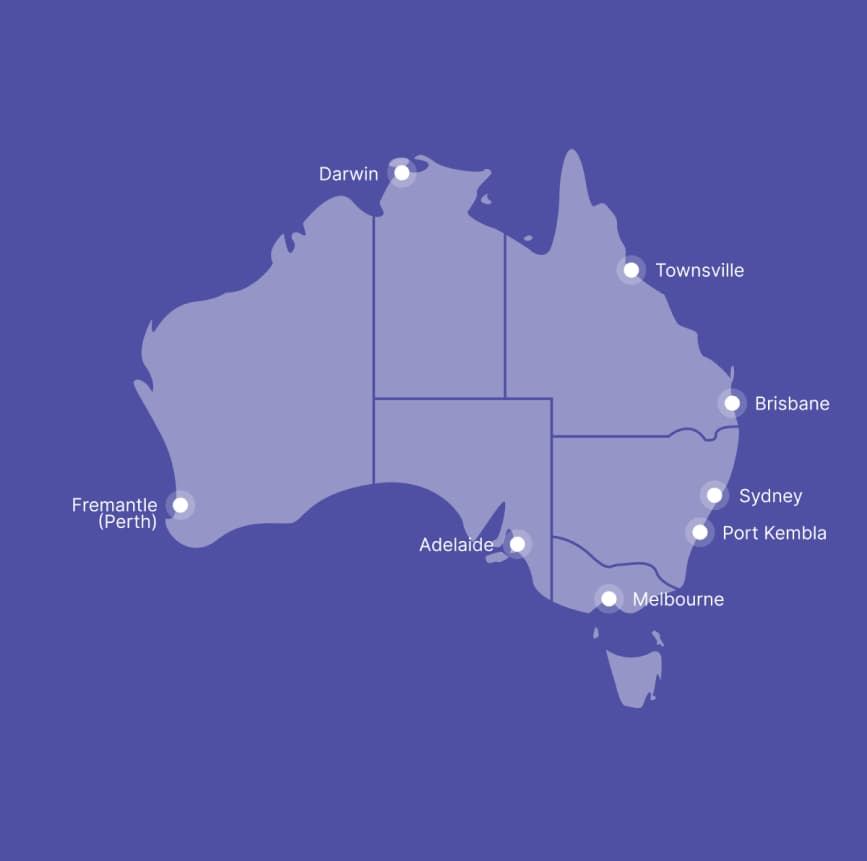
Ports and Shipping Methods
- Adelaide – Sea freight and air freight available
- Brisbane – Sea freight and air freight available
- Darwin – Sea freight and air freight available
- Fremantle (Perth) – Sea freight and air freight available
- Melbourne – Sea freight and air freight available
- Port Kembla – Sea freight and air freight available
- Sydney – Sea freight and air freight available
- Townsville – Sea freight and air freight available
Transit time per Destination
| From | To | Est. Transit Time |
|---|---|---|
| Bangkok | Adelaide | 22-24 days |
| Bangkok | Brisbane | 19-21 days |
| Bangkok | Darwin | 24-26 days |
| Bangkok | Fremantle | 14-16 days |
| Bangkok | Melbourne | 21-23 days |
| Bangkok | Port Kembla | 16-18 days |
| Bangkok | Sydney | 23-25 days |
| Bangkok | Townsville | 33-35 days |
Door-to-Door Relocation Service
Swift Cargo offers a full door-to-door moving service to Australia. From packing your goods to unpacking them in your new home, we take care of every step of the process.
1. Packing and Loading.
We offer professional packing services to make sure your items are safe and well protected during transport. Common Packing Materials:
- Packing boxes
Available in different sizes, designed to handle standard household items during shipping. - Bubble wrap
Used for fragile items like glasses, ceramics, and electronics to prevent breakage. - Wooden crates
Ideal for large or sensitive items. They offer extra resistance and protection, including against humidity.
Full Packing Service: Don’t want to pack yourself? No problem. Your specialist can arrange full packing for all types of goods, including furniture and oversized items. Fill out the contact form and your specialist will get in touch to organise the details.
2. Pickup
Our agents collect the packed goods from your location or warehouse. All movements are tracked and documented, ensuring your shipment is handled securely.
3. Customs Clearance
We manage the customs process for Australia. See the Customs section above for required documents and inspection details.
4. Delivery and Unloading
Once your shipment arrives in Australia, we deliver it directly to your home and unload all boxes at your doorstep.
5. Unpacking and Setup
We also offer unpacking services, placing your goods where you want them so you can settle in quickly.
Support team
Swift Cargo assigns one specialist to your move and keeps them on it from the first quote through to delivery confirmation. That person handles your shipment directly instead of passing it between departments, so you are not re-explaining your situation each time you make contact.
Your specialist knows your inventory, your route, and your timeline. They prepare and check your documentation, coordinate customs clearance, and flag anything that needs your attention before it turns into a problem at the border or on delivery.
From pickup coordination through tracking, documentation, customs, and delivery confirmation, you deal with the same contact at every stage. When you need an answer, you write once and the person who replies already knows your shipment.
Talk to an agent now
Import your Vehicle
Bringing a car into Australia is possible but requires approval and strict compliance with local rules.
What You Need
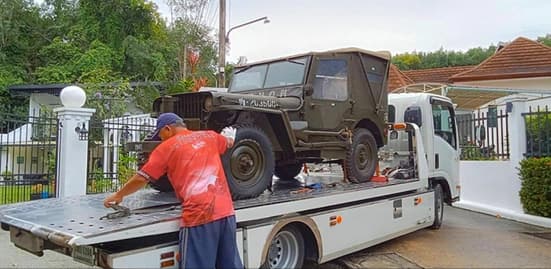
What You Need
- Vehicle Import Approval (VIA) – Apply before the car arrives
- Key documents – Passport, registration papers, bill of lading, sales invoice, customs form B534
- Compliance – Your car must meet Australian safety and emissions standards (ADRs)
Costs to Expect
- 5% duty
- 10% GST
- Luxury Car Tax – 33% on value over AUD $80,567
Extra fees may apply for inspection, cleaning, or modifications.
We Can Help - Swift Cargo handles the process from start to finish: paperwork, transport, and customs.
Import your Pets
Australia has very strict biosecurity rules to protect its environment, agriculture, and native wildlife. Only pets meeting exact health, vaccination, and import conditions are allowed. Bringing a dog specifically? Our dog transport to Australia guide covers breed-based crate sizing, the prohibited breed list, and real costs by dog size.

Key Requirements
- Valid Import Permit
Apply through Australia’s BICON system before travel. - Microchip & Vaccinations
Your pet must be microchipped and up to date on rabies and core vaccines. - Rabies Blood Test
A rabies titer test may be required, done in an approved lab. - Quarantine
All pets must complete at least 10 days in a government quarantine facility on arrival.
Moving pets to or from Australia



Eligibility by Origin Country
Banned Dog Breeds in Australia
The following breeds cannot be imported under any circumstances:
- Dogo Argentino
- American Pit Bull Terrier
- Fila Brasileiro
- Japanese Tosa
- Perro de Presa Canario
- All wolfdog hybrids
We Can Help - From paperwork and vet checks to booking flights and quarantine. We make sure your pet arrives safely and legally.
Rated 4.87 by customers
What Our Customers Say - Australia Moves
About Australia
Shipping Activity in Australia
Australia is one of the most active shipping hubs in the Southern Hemisphere, with high volumes of sea and air freight arriving from major Asia-Pacific gateways such as Singapore, as well as from Europe and North America, every day.
National Freight Volume (All Operators):
Strict biosecurity
every household shipment is risk-assessed on arrival in Australia
SYD / MEL / BNE gateways
the ports handling most inbound household-goods containers
Owned-and-used rule
personal effects owned and used for 12 months generally enter free of duty and GST
Australian Cost of living
Relocating to Australia usually comes with a noticeable increase in living expenses, especially if you’re coming from a country with a lower cost of living. On average, everyday costs in Australia are significantly higher than in many parts of Asia, Latin America, or Eastern Europe. Rent is often the biggest adjustment. In major cities like Sydney or Melbourne, the average weekly rent is around AUD 570 (approximately USD 350), which is much higher than what many expats may be used to. In some countries, equivalent housing can cost 50% to 70% less.
Utilities and internet are also more expensive. A standard home internet plan costs about $80 AUD per month, and electricity, water, and gas bills can quickly add up. Groceries are another major factor, basic food items and household goods can cost 40% to 60% more than in lower-cost countries. Eating out is also significantly more expensive. A meal at a local Australian restaurant can cost three to four times more than a similar meal in cities across Southeast Asia, Eastern Europe, or South America.
Transportation is not exempt from the price increase. Public transit fares, taxis, and fuel prices are all generally higher than the global average. In cities like Brisbane, Perth, or Adelaide, transport costs can take up a notable part of your monthly budget.
The upside is that Australian salaries are among the highest in the world. On average, a full-time income can cover around 1.7 months of basic expenses, helping to offset the cost difference. However, how far your salary goes depends heavily on your profession, visa conditions, and the city or suburb you live in.
Overall, moving to Australia may double or even triple your monthly expenses compared to what you’re used to, especially in terms of housing, food, transport, and basic services. Plan your budget carefully, compare cities based on affordability, and prepare for one-time relocation expenses like deposits, insurance, and registration. With good preparation, Australia offers a high quality of life, excellent infrastructure, and long-term financial stability.
Security in Australia

Security in Australia
Australia is widely regarded as a safe destination for expatriates, with relatively low rates of violent crime. However, like any country, safety levels vary depending on the city and neighbourhood.
According to the Australian Bureau of Statistics, 1.7% of people in 2023–24 experienced a physical assault, while 2.1% were threatened face-to-face. In 2024 alone, over 595,000 theft cases were recorded, and motor vehicle theft rose by 8% year-on-year. While these numbers may seem high, Australia’s homicide rate remains low (under 1 per 100,000 people), and most expatriates live safely without ever facing crime.
That said, it’s important to stay alert, especially in urban centres where petty theft and home break-ins are more likely. Choosing a secure neighbourhood, locking your home and vehicle, using basic security systems, and staying informed about local crime patterns are simple but effective ways to reduce risk. With a bit of preparation and awareness, you can enjoy a safe and comfortable life in Australia.
Infrastructures and Public Services in Australia
Australia offers a robust infrastructure of public facilities, though availability and quality vary by state and region. In education, as of 2024, 4,132,006 students are enrolled across 9,653 schools, with an average student‑teacher ratio of 12.9 students per teacher in government and non‑government schools combined. The school system encompasses 13 years of compulsory education, starting typically at age 5 and continuing through secondary school to age 17 or 18.
In healthcare, Australia maintains both public and private hospital systems. In 2023–24, 672 public hospitals provided admitted patient care services nationwide. Across all hospitals, daily operations cost about AUD 263 million (public + private) on average. Public hospitals recorded ~2.8 million hospitalisations in principal referral hospitals alone, and patient days numbered ~8.7 million in those hospitals.
Public services (government administration, emergency services, social welfare) are generally well distributed, but rural and remote regions may experience less frequent access or longer travel times to major facilities. Australia also funds public hospital care through a mix of federal and state funding, private health insurance, and out-of-pocket contributions.
For someone coming from Thailand, Australia’s facilities tend to offer higher standards of infrastructure, well‑trained staff, and greater specialization (e.g. teaching hospitals, advanced diagnostics). However, metropolitan regions will provide the richest options; in remote or regional areas, expect some limitations in specialty services or waiting times. Careful choice of city or suburb will affect your day‑to‑day access to schools, hospitals, and public services.
Frequently Asked Questions (FAQ)
The best method depends on your timeline, budget, and the volume of your household goods.
Most expats choose either sea freight (cost-effective for full homes) or air freight (fast for time-sensitive items). When handled door-to-door, Swift Cargo manages packing, export documents, customs clearance, and final delivery so your entire relocation runs smoothly.
We help you compare LCL (shared container), FCL (full container), and air cargo options to match your move plan.
Sea freight typically takes 4–10 weeks, while air freight arrives in 5–12 days depending on the route.
Transit times can vary due to:
- Departure and arrival port schedules
- Customs inspections
- Local delivery logistics
Swift Cargo provides route-specific timelines, real-time updates, and a dedicated Move Manager so expats always know where their shipment is during the move.
Costs depend on volume, destination, transport method (air vs sea), packing requirements, and customs regulations.
Swift Cargo offers transparent, all-inclusive door-to-door quotes—no surprise fees, no hidden surcharges.
Typical expat relocations include:
- LCL (shared container): Ideal for 1–2 bedrooms
- FCL (20ft or 40ft container): Best for full-family homes
- Air freight: Higher cost but significantly faster
Your specialist prepares a personalised estimate based on your inventory and destination.
Yes. Swift Cargo manages all customs documentation, clearances, and required government filings on your behalf.
This includes:
- Inventory lists
- Proof of residence or employment
- Duty-free eligibility documents
- Restricted items guidance
- Arrival customs processing
We ensure your shipment meets the destination country’s requirements—reducing delays, penalties, or complications.
Yes. We offer full professional packing, export wrapping, and itemised inventory creation for all international relocations.
This service includes:
- Specialist packing for fragile or high-value items
- Furniture disassembly and reassembly
- Export-grade materials
- Labelling and digital inventory records
Proper packing significantly reduces the risk of damage during long-distance moves.
Air freight is faster; sea freight is more budget-friendly and better for larger volumes.
Method highlights:
- Air Freight: Best for urgent items and small shipments; fastest option but higher cost.
- Sea Freight – LCL: Ideal for 1–2 bedrooms; affordable and flexible; slightly slower.
- Sea Freight – FCL: Best for full-home moves; most cost-efficient; longer transit.
Swift Cargo helps expats choose the right method based on deadlines and inventory size.
Yes—containerised shipping is one of the safest ways to move household goods internationally.
Options include:
- Full Container (FCL): Your items occupy the container alone.
- Shared Container (LCL): You pay only for the space you use.
Swift Cargo uses secure loading, moisture protection, and tracking to protect your belongings throughout the journey.
Yes. Our door-to-door service covers everything from packing your home to delivering items into your new residence abroad.
This includes:
- Packing and inventory
- Freight booking
- Customs clearance
- Delivery and unpacking
Expats choose us because they want a single, accountable partner for every step of their international relocation.
We support moves to 120+ countries, including popular expat destinations such as:
- UK, Germany, France, Netherlands
- Singapore, Thailand, Japan, South Korea
- Australia, New Zealand
- UAE, Qatar, Saudi Arabia
If your route is uncommon, we source the most reliable carrier and customs partner for your destination.
Most expats book 4–8 weeks before departure, especially for sea freight that needs container scheduling and customs prep.
Booking early helps with:
- Better pricing
- Guaranteed container space
- Fewer export delays
Urgent relocations can be handled faster via priority air freight.
Yes. Your Move Manager helps compare freight costs to replacement value—common for expats.
We assess:
- Furniture size and weight
- Local prices in your destination country
- Customs duties
- Emotional or irreplaceable items
This keeps your move both economical and practical.
You can request a quote online or through WhatsApp. A Move Manager will guide you through a quick inventory review and route options.
Most expats receive:
- A tailored door-to-door quote
- Recommended shipment method
- Estimated timelines
- A documentation checklist
We prioritise speed, transparency, and personal support.
Checklist for your Australia relocation
Checklist for your Australia relocation
Fill out the form with details about your move.
Receive custom quotes within 24 hours.
Choose the option that suits you best, and let our agents guide you through the process.
Request the required documentation to prepare for your arrival in Australia.
Track your shipment with our agents and receive updates at every step
(If necessary) Provide additional details to speed up customs clearance.
Move into your new home while we take care of delivering your goods.